

Ageratina altissima | White snakeroot
White snakeroot spans a broad North American range, so one climate number cannot represent the entire species. Lafayette provides a useful local example: cold-season dormancy, warm-season growth and autumn flowering.
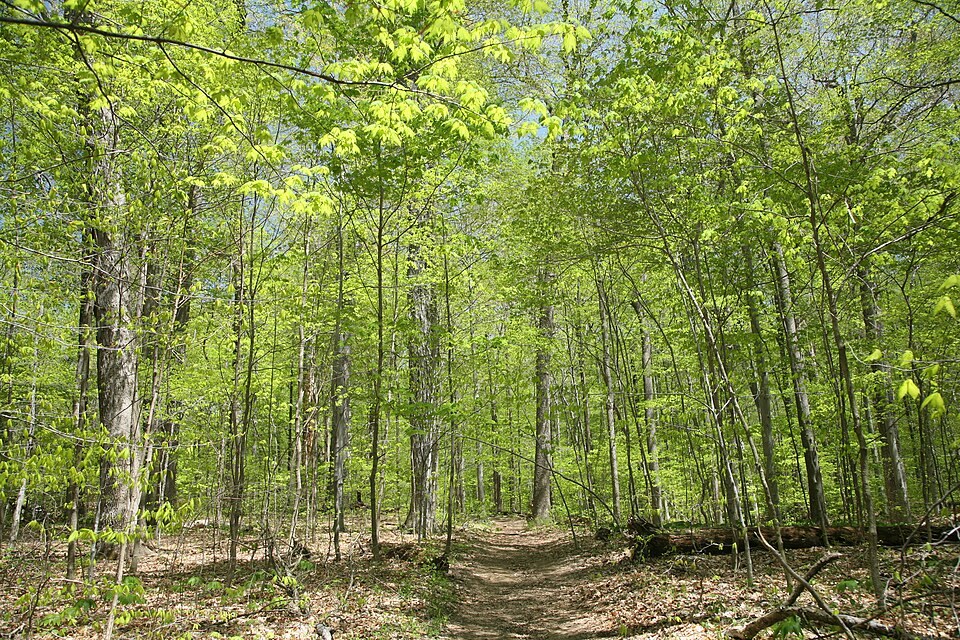
Photograph: Daniel Schwen · Original source · CC BY-SA 4.0. Resized proportionally.

Local Climate at a Glance
Measure | Lafayette example |
|---|---|
Station | Lafayette Purdue University Airport, USW00014835; 1991–2020 normals. [NOAA] |
January mean | 25.8°F (-3.4°C) |
July mean | 73.6°F (23.1°C) |
Annual precipitation | 37.00 in (940 mm), summed from monthly normals. |
Main plant response | Winter dormancy; spring and summer growth; late-season flowers. |
Native Range and Climate Variation
Kew lists the species as native across much of the eastern and central United States and parts of Canada. Northern sites have longer cold seasons; southern sites usually have longer warm seasons. Local elevation, slope and canopy add variation within each region. Use locally appropriate seed sources when available. [Kew]
Lafayette is an inland temperate setting with humid summers and freezing winters. The open airport station describes regional weather. A shaded forest floor may be cooler by day, less windy and slower to dry; soil conditions still need direct observation.
Temperature and Precipitation Through the Year
Monthly normals describe typical long-term conditions, not next month’s forecast or a plant tolerance limit. Temperatures are monthly means, not average daily highs. Precipitation includes the water equivalent of snow. [Normals, NOAA]
Month | Mean °F | Mean °C | Precip in | Precip mm |
|---|---|---|---|---|
Jan | 25.8 | -3.4 | 2.19 | 56 |
Feb | 29.7 | -1.3 | 1.78 | 45 |
Mar | 40.0 | 4.4 | 2.73 | 69 |
Apr | 51.1 | 10.6 | 3.84 | 98 |
May | 61.6 | 16.4 | 4.04 | 103 |
Jun | 70.7 | 21.5 | 4.56 | 116 |
Jul | 73.6 | 23.1 | 4.08 | 104 |
Aug | 72.2 | 22.3 | 3.12 | 79 |
Sep | 65.5 | 18.6 | 2.59 | 66 |
Oct | 53.7 | 12.1 | 2.91 | 74 |
Nov | 41.3 | 5.2 | 2.87 | 73 |
Dec | 31.0 | -0.6 | 2.29 | 58 |
Source: NOAA NCEI, station USW00014835, 1991–2020. Metric values were converted from the published Fahrenheit and inch values and rounded. [NOAA]
Seasonal Routine
Season | Plant and garden response |
|---|---|
Winter | Aboveground shoots are dormant. Leave outdoor seed pots labeled and drained; moist cold treatment prepares seed for germination. |
Spring | Watch for seedlings and crown growth. Divide established plants if needed and protect tender nursery growth from abrupt exposure. |
Summer | Maintain appropriate shade and check moisture during dry spells. An average wet month can still contain a damaging dry interval. |
Autumn | Observe flowering, then either retain some seed heads or remove them before dispersal. Sow seed outdoors before winter. [Seed] |
Microclimates and Extremes
Walls and paving can increase heat and reflected light; wooded hollows can retain cold air. Assess conditions at the plant before moving or shading it. Protect drainage during heavy rain and check soil moisture during heat and drought. [Climate]
Observed Change and Future Outlook
NOAA’s 2022 Indiana assessment, using observations through 2020, describes winter and spring warming and wetter recent decades. It projects further warming, wetter winters and springs, heavier rain events and potentially stronger drought as evaporation increases. These regional findings do not predict local white snakeroot abundance. [Climate]
Practical inference: retain suitable canopy, avoid soil compaction and record emergence and flowering dates. Higher annual rainfall does not guarantee summer soil moisture.
Germination Connection
Provide at least 60 days of moist cold below 40°F (4.4°C), then light exposure as conditions warm. Record treatment dates; regional winter averages cannot verify treatment of a particular seed lot. See the Plant sheet for the full surface-sowing procedure. [Seed]
[Kew] Kew Plants of the World Online
[NOAA] NOAA NCEI Lafayette monthly normals 1991 to 2020
[Normals] NOAA explanation of climate normals
[Climate] NOAA Indiana State Climate Summary 2022
[Seed] Wild Seed Project species and sowing protocol
Deciduous woodland at Turkey Run State Park — Daniel Schwen. CC BY-SA 4.0