The print dialog will open. Choose a printer or select Save to PDF.

Download combined Word document

🌿 Plant Information Sheet

White Snakeroot

Ageratina altissima | White snakeroot
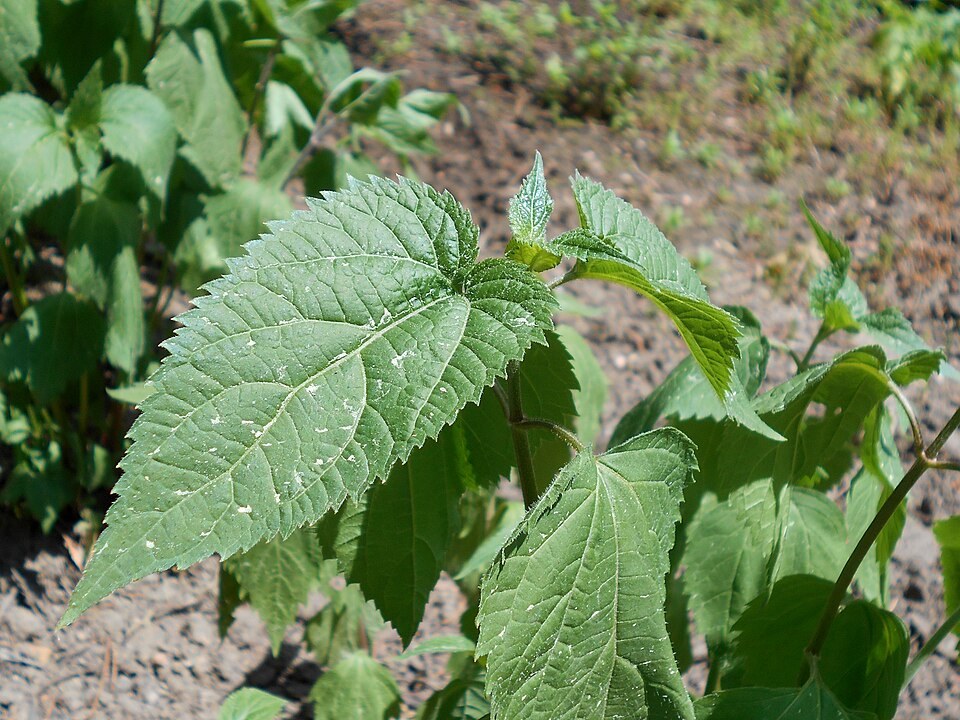
Nonflowering foliage showing broad toothed leaves. Ground-grown cultivated specimen, Berlin Botanic Garden. Salicyna, CC BY-SA 4.0.
Photograph: Salicyna · Original source · CC BY-SA 4.0. Resized proportionally.

White snakeroot is a native woodland perennial with late white flowers. Give it filtered light, an aerated root zone, and room for seedlings and spreading underground stems.

POISONOUS IF EATEN. No part is food. Keep plants and clippings away from livestock and animals that chew vegetation. Contaminated milk can poison people. [NC]

To understand the care of a plant, understand its native climate and environment.

At a Glance

Field

Information

Accepted name

Ageratina altissima (L.) R.M.King & H.Rob.; family Asteraceae. Older name: Eupatorium rugosum. [Kew]

Plant type and size

Herbaceous perennial; commonly 2–5 ft (0.6–1.5 m) tall and 2–4 ft (0.6–1.2 m) wide. [NC]

Native to the United States

Yes. Native range includes eastern and central states and parts of Canada. [Kew]

Native to Lafayette area

Yes. Indiana native status and historical Tippecanoe County woodland specimens support this designation. [Kew, IND]

Invasive status in Indiana

Non-invasive native; can spread aggressively in gardens. Not on the Indiana DNR terrestrial invasive plant list checked 2026-09-21. [DNR, PM]

Self seeding

Yes, often freely; seeds travel on the wind. Also spreads by rhizomes. [PM]

Edibility and cautions

Poisonous. Leaves, stems, roots, flowers and seed are not edible. Never use as a home remedy. [NC]

Best setting

Part shade to light shade; moist, well-drained woodland soil. [IL]

Flowering

Late summer into autumn; usually white clusters. [NC]

Identification

Leaves occur in opposite pairs. Lower leaves are broad, often heart-shaped, with long stalks, coarse teeth and three conspicuous main veins. Upper leaves are smaller. Stems are usually nearly hairless. Shallow fibrous roots arise with spreading rhizomes. [IL]

Use several features together. Common boneset has leaves joined around the stem; white snakeroot has separate leaf stalks. White-flowered asters usually have visible rays around their centers; white snakeroot has small tubular florets. Never taste a plant to identify it.

Light

Choose morning sun, open shade, or a woodland edge. Hot afternoon sun increases water stress; deeper shade may reduce flowering. Avoid abruptly moving a shade-grown plant into a hot exposed bed. [NC, IL]

Soil and Standard Potting Mix

In a garden, use the existing well-drained woodland soil and retain a modest leaf-litter cover. The container recipe below is for pots, not a requirement to replace native bed soil.

Native Forest Plants Standard Mix — measure by loose volume. [Mix]

Component

Parts

Share

Generic potting soil

2

50%

Compost-rich raised-bed or in-ground soil ingredient

1

25%

Coarse perlite

1

25%

Screen out large woody pieces. Blend dry components, lightly premoistening dusty material. Do not compress the mix. Use an open drainage hole and no gravel layer. The compost-rich ingredient must not be used alone in a pot. [Mix]

Watering and Containers

Keep new plants evenly moist while their roots establish. Check the soil before watering; water the root zone thoroughly when it begins drying, then allow excess water to drain. Established shaded plants tolerate some drying, but persistent wilting signals a problem. [IL]

For temporary nursery culture, use a stable pot only slightly larger than the root mass. Repot when roots fill it or drainage deteriorates. Plant outdoors in spring or early autumn so roots can establish before severe heat or winter. Containers dry and freeze faster than garden soil; protect the root ball outdoors during winter.

Temperature Humidity and Feeding

This is a temperate outdoor perennial, not a tropical houseplant. Shoots die back in winter and resume growth from the crown. NC State lists hardiness zones 3–9; hardiness describes winter survival, not an exact growth-temperature target. Normal outdoor humidity is sufficient. [NC]

Routine fertilizer is usually unnecessary in a suitable garden soil. For a prolonged stay in a container, use modest feeding only during active growth and follow the fertilizer label. Avoid forcing soft, lanky growth with excessive nitrogen. Diagnose poor light, drainage or roots before adding fertilizer.
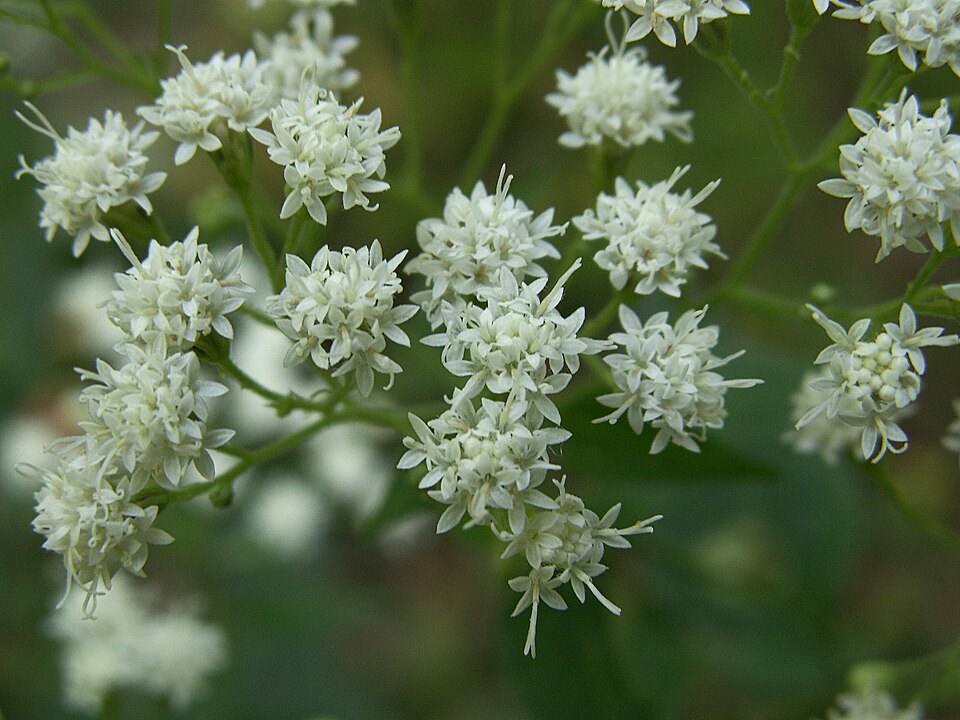
White tubular florets in flower heads at Bird Park, Mount Lebanon, Pennsylvania. Cbaile19, CC0.
Photograph: Cbaile19 · Original source · CC0. Resized proportionally.

Flowering

The frothy display is made of many small flower heads gathered into broad clusters. Individual heads contain disk florets without a ring of ray petals. Bloom follows summer growth and extends into autumn; timing changes with latitude, weather and shade. [IL, Garden]

Propagation and Germination

Light for germination — yes. Surface sow and leave seed uncovered. Provide at least 60 days of moist cold treatment below 40°F (4.4°C). An outdoor autumn or early-winter sowing suits Lafayette. [Seed, Garden]

Step

What to do

1 Prepare

Use a clean draining pot. Standard Seed Starting Mix: 2 parts coco coir, 1 part coarse perlite and 1 part vermiculite by volume. Premoisten. [Mix]

2 Sow

Scatter seed thinly and press gently onto the surface. Do not bury beneath soil, grit or mulch. Label the botanical name and sowing date. [Seed]

3 Chill moist

Leave outdoors through winter in a protected position with access to rain or snow, or refrigerate moist seed for at least 60 days below 40°F (4.4°C). Moist chilling differs from dry cold storage. [Seed]

4 Grow

Keep the exposed seed surface moist as conditions warm. Prevent washing, drying and overheating. Do not promise a fixed emergence date; seed lots vary.

5 Establish

After seedlings develop several true leaves and roots, pot on into the Native Forest Plants mix. Gradually acclimate to the intended outdoor light.

Division is another option in spring: lift an established clump, separate rooted portions with healthy buds, and replant promptly at the original depth. Keep roots moist; do not apply succulent-style callusing. [NC]

Grooming and Troubleshooting

Remove spent flower heads before fluffy seed forms if volunteers are unwanted. Pull excess seedlings early. Retain some flowering stems where space and animal access allow; manage the colony boundary each year. [PM]

Observation

Check and response

Wilting or yellowing

Check root-zone moisture and hot sun first. Water if dry; improve drainage if persistently wet.

Leaf trails or small holes

Leaf miners and flea beetles occur. Small amounts of damage are usually an observation issue, not a reason for routine spraying. [NC, BBG]

Rapid increase in plants

Seedling recruitment and rhizome spread are different processes. Remove seed heads and thin rooted shoots as needed. [PM]

Little germination

Check seed age, moist chilling, surface exposure and drying. Keep records; avoid repeated burial or disturbance.

Autumn dieback

Seasonal dormancy is expected. Retain the crown and avoid keeping dormant roots waterlogged.

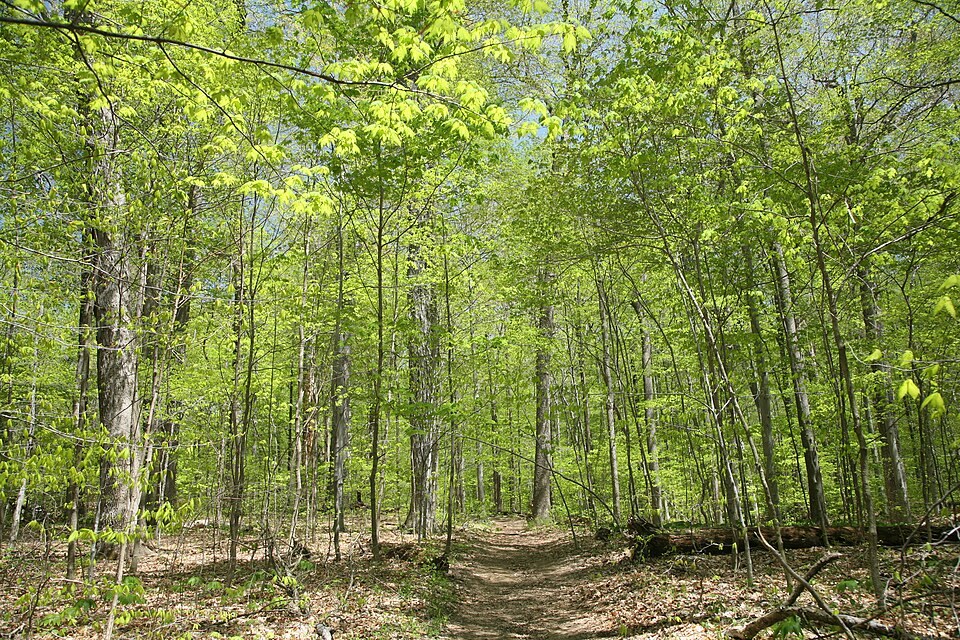
Deciduous woodland at Turkey Run State Park — Daniel Schwen. CC BY-SA 4.0
Photograph: Daniel Schwen · Original source · CC BY-SA 4.0. Resized proportionally.
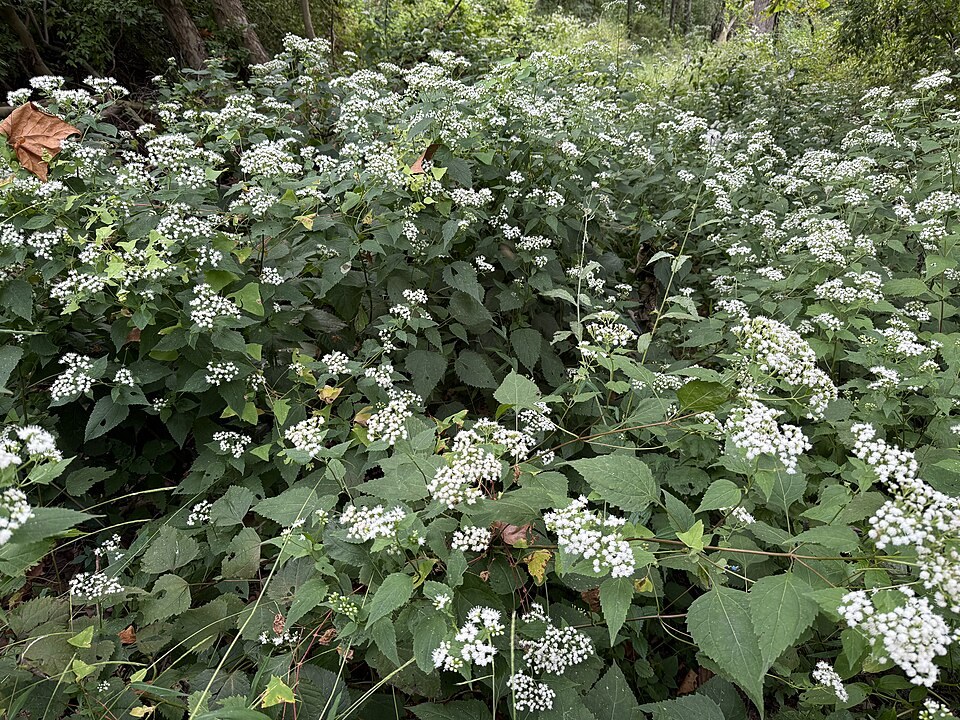
White snakeroot colony at Ann M Banchoff Park — Famartin. CC BY-SA 4.0
Photograph: Famartin · Original source · CC BY-SA 4.0. Resized proportionally.

Environment and Native Habitat

Native settings include deciduous woods, edges, thickets and sheltered slopes. Tree cover reduces exposure, while leaf litter and soil structure influence moisture and root aeration. The plant also colonizes disturbed shaded ground. It is not restricted to pristine forest. [IL, PM]

Local verification: Indiana University herbarium voucher IND-0120581, collected by Charles C. Deam on 1922-09-12, records Throckmorton woods about one mile northeast of Romney, Tippecanoe County, with the note “frequent with white oak.” A 2022 voucher, IND-0162325, documents Tecumseh Trails Park. [IND, IND2]

Toxicity and Handling

The ingestion hazard applies to people and animals. Never feed cuttings, seed heads or pulled plants to livestock; do not assume dried material is safe. Use gloves for removal, wash hands and keep debris away from food preparation. The name snakeroot is not evidence of a safe treatment for snakebite. [NC, Garden]

After suspected human ingestion, contact Poison Control promptly at 1-800-222-1222. Do not induce vomiting. For collapse, seizure, breathing difficulty or inability to awaken, call 911. For an animal exposure, contact a veterinarian promptly. [Poison]

[Kew] Kew Plants of the World Online

[NC] NC State Extension species profile

[IL] Illinois Wildflowers species account

[Seed] Wild Seed Project species and sowing protocol

[PM] Species cultivation and spread account

[IND] Indiana University specimen IND 0120581 via GBIF

[IND2] Indiana University specimen IND 0162325 via GBIF

[DNR] Indiana DNR terrestrial invasive plant list

[Poison] Poison Control emergency guidance

[Garden] Eloise Butler Wildflower Garden species account

[Mix] Project Standard Potting Mixes and Stock Inventory

Nonflowering white snakeroot foliage — Salicyna. CC BY-SA 4.0

White snakeroot flowers at Bird Park — Cbaile19. CC0

Deciduous woodland at Turkey Run State Park — Daniel Schwen. CC BY-SA 4.0

White snakeroot colony at Ann M Banchoff Park — Famartin. CC BY-SA 4.0
Related Information Sheets

Woodland environment

Native climate and Lafayette comparison

Ecological relationships

Added September 22, 2026 · All Information Sheets

🌿 Climate Information Sheet

White Snakeroot — Climate

Ageratina altissima | White snakeroot

White snakeroot spans a broad North American range, so one climate number cannot represent the entire species. Lafayette provides a useful local example: cold-season dormancy, warm-season growth and autumn flowering.

Spring leaf development at Turkey Run State Park, Indiana, illustrates the seasonal canopy cycle. The photograph is not from the Lafayette weather station.
Photograph: Daniel Schwen · Original source · CC BY-SA 4.0. Resized proportionally.

Local Climate at a Glance

Measure

Lafayette example

Station

Lafayette Purdue University Airport, USW00014835; 1991–2020 normals. [NOAA]

January mean

25.8°F (-3.4°C)

July mean

73.6°F (23.1°C)

Annual precipitation

37.00 in (940 mm), summed from monthly normals.

Main plant response

Winter dormancy; spring and summer growth; late-season flowers.

Native Range and Climate Variation

Kew lists the species as native across much of the eastern and central United States and parts of Canada. Northern sites have longer cold seasons; southern sites usually have longer warm seasons. Local elevation, slope and canopy add variation within each region. Use locally appropriate seed sources when available. [Kew]

Lafayette is an inland temperate setting with humid summers and freezing winters. The open airport station describes regional weather. A shaded forest floor may be cooler by day, less windy and slower to dry; soil conditions still need direct observation.

Temperature and Precipitation Through the Year

Monthly normals describe typical long-term conditions, not next month’s forecast or a plant tolerance limit. Temperatures are monthly means, not average daily highs. Precipitation includes the water equivalent of snow. [Normals, NOAA]

Month

Mean °F

Mean °C

Precip in

Precip mm

Jan

25.8

-3.4

2.19

56

Feb

29.7

-1.3

1.78

45

Mar

40.0

4.4

2.73

69

Apr

51.1

10.6

3.84

98

May

61.6

16.4

4.04

103

Jun

70.7

21.5

4.56

116

Jul

73.6

23.1

4.08

104

Aug

72.2

22.3

3.12

79

Sep

65.5

18.6

2.59

66

Oct

53.7

12.1

2.91

74

Nov

41.3

5.2

2.87

73

Dec

31.0

-0.6

2.29

58

Source: NOAA NCEI, station USW00014835, 1991–2020. Metric values were converted from the published Fahrenheit and inch values and rounded. [NOAA]

Seasonal Routine

Season

Plant and garden response

Winter

Aboveground shoots are dormant. Leave outdoor seed pots labeled and drained; moist cold treatment prepares seed for germination.

Spring

Watch for seedlings and crown growth. Divide established plants if needed and protect tender nursery growth from abrupt exposure.

Summer

Maintain appropriate shade and check moisture during dry spells. An average wet month can still contain a damaging dry interval.

Autumn

Observe flowering, then either retain some seed heads or remove them before dispersal. Sow seed outdoors before winter. [Seed]

Microclimates and Extremes

Walls and paving can increase heat and reflected light; wooded hollows can retain cold air. Assess conditions at the plant before moving or shading it. Protect drainage during heavy rain and check soil moisture during heat and drought. [Climate]

Observed Change and Future Outlook

NOAA’s 2022 Indiana assessment, using observations through 2020, describes winter and spring warming and wetter recent decades. It projects further warming, wetter winters and springs, heavier rain events and potentially stronger drought as evaporation increases. These regional findings do not predict local white snakeroot abundance. [Climate]

Practical inference: retain suitable canopy, avoid soil compaction and record emergence and flowering dates. Higher annual rainfall does not guarantee summer soil moisture.

Germination Connection

Provide at least 60 days of moist cold below 40°F (4.4°C), then light exposure as conditions warm. Record treatment dates; regional winter averages cannot verify treatment of a particular seed lot. See the Plant sheet for the full surface-sowing procedure. [Seed]

[Kew] Kew Plants of the World Online

[NOAA] NOAA NCEI Lafayette monthly normals 1991 to 2020

[Normals] NOAA explanation of climate normals

[Climate] NOAA Indiana State Climate Summary 2022

[Seed] Wild Seed Project species and sowing protocol

Deciduous woodland at Turkey Run State Park — Daniel Schwen. CC BY-SA 4.0

Related Information Sheets

Plant care and seed propagation

Woodland environment

Ecological relationships

Added September 22, 2026 · All Information Sheets

🌿 Ecology Information Sheet

White Snakeroot — Ecology

Ageratina altissima | White snakeroot

White snakeroot links autumn flowers, wind-dispersed seed and woodland colonization. It can support insects while posing a serious ingestion hazard to mammals. Its value depends on the site, the surrounding plant community and access by grazing animals.

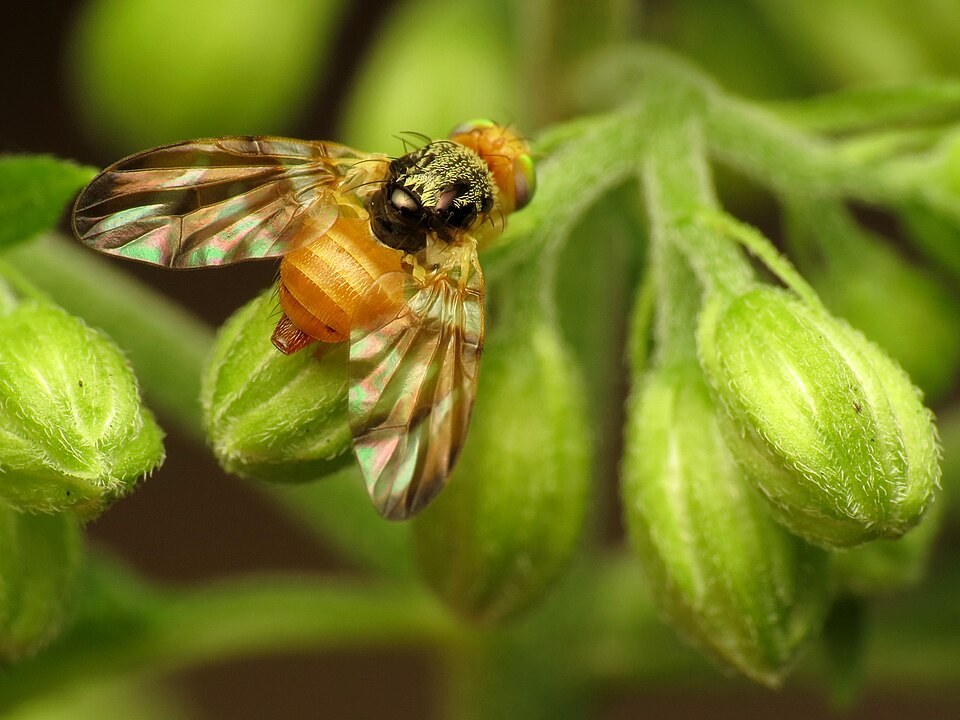
A female snakeroot fruit fly, Procecidocharoides penelope, on white snakeroot at Rock Creek Park, Washington DC. Katja Schulz, CC BY 2.0.
Photograph: Katja Schulz from Washington, D. C., USA · Original source · CC BY 2.0. Resized proportionally.

Ecological Role at a Glance

Relationship

Meaning

Flower visitors

Bees, flies, wasps, butterflies and moths use the flowers; visits alone do not measure pollination success. [IL]

Seasonal resource

Late flowers add forage when some earlier species have finished blooming. [BBG]

Leaf consumers

Leaf miners and other insects can use tissues avoided by many mammals. [BBG]

Dispersal

Hair-tufted fruits move in wind; rhizomes expand a patch locally. [PM]

Mammals

Bitter toxic vegetation is often avoided, but ingestion can still occur. [IL, NC]

Garden spread

An abundant native colony can still crowd a small planting. [PM]

Flowers and the Food Web

Clusters of many small florets provide numerous feeding positions. Watch which insects visit and how they move between flower heads. Avoid equating the number of visits with the amount of seed set: effective pollination also depends on pollen transfer, compatible plants and weather.

Brooklyn Botanic Garden documents a leaf-mining fly using white snakeroot leaves. The larvae live within leaf tissue, leaving visible trails. Limited leaf damage can represent an ecological interaction rather than a plant-health emergency. [BBG]

The fruit-fly photograph records an insect on this plant; it does not by itself establish an entire host life cycle or prove pollination. Specific host claims require species-level evidence.

Seed Rhizomes and Recruitment

Wind can move seeds beyond the parent colony. Rhizomes, which are stems rather than roots, produce shoots near an established crown. That distinction matters in management: removing seed heads reduces seed dispersal but does not stop existing rhizomes from expanding. [PM]

Small seeds need a suitable landing place, moisture and seasonal cues. The practical protocol is moist winter chilling followed by uncovered surface sowing. A bare disturbed patch may favor recruitment, but the eventual result also depends on competing plants and weather. [Seed]

White snakeroot growing as a colony in the forest of Ann M. Banchoff Park, New Jersey. Famartin, CC BY-SA 4.0.
Photograph: Famartin · Original source · CC BY-SA 4.0. Resized proportionally.

Native Status and Aggressive Spread

Indiana nativity and Tippecanoe County herbarium records support a local-native designation. Kew also records introductions in parts of Europe and Korea. A plant’s status must be tied to geography; native in Indiana does not mean native everywhere. [Kew, IND]

White snakeroot is not listed in the Indiana DNR terrestrial invasive plant rule list reviewed on 2026-09-21. It may nevertheless become too abundant for a small garden. Distinguish unwanted local growth from an introduced invasive species. [DNR, PM]

Toxicity in an Ecological Setting

Plant chemical defenses can discourage some consumers without excluding all insects. White snakeroot is highly poisonous if ingested, and toxins can pass through milk from exposed livestock to people. Native status and insect use do not make it edible. [NC]

In pasture or animal-access areas, prevent grazing and remove the opportunity for exposure. In a managed woodland garden, assess whether children or pets chew plants. Keep pulled material and clippings out of feed and away from animals. Do not rely on a bitter taste as protection.

Managing a Diverse Woodland Planting

Maintain several native species with different flowering periods. Keep enough white snakeroot for the space and the management goal; thin excess seedlings and rooted shoots before they overwhelm neighbors. Avoid unnecessary spraying on flowers or lightly damaged leaves.

After invasive-shrub removal, monitor the whole recovering plant community. A flush of white snakeroot is not proof that restoration has succeeded or failed. Track native richness, bare soil, reinvasion and the persistence of other woodland herbs.

A Simple Observation Record

Record

Reason

First flower and last flower

Tracks seasonal food availability and year-to-year change.

Visitors during a timed watch

Allows comparison among dates; record weather and observation length.

Colony outline and seedlings

Separates established spread from new recruitment.

Leaf damage and nearby species

Connects herbivory, plant vigor and community diversity.

Animal access

Keeps the ingestion risk visible in site management.

Key Terms

Phenology is the timing of seasonal events. Recruitment is the arrival and establishment of new individuals. Herbivory is feeding on plant tissues. A pollinator transfers pollen; a flower visitor may or may not do so effectively.

[IL] Illinois Wildflowers species account

[BBG] Brooklyn Botanic Garden ecology account

[PM] Species cultivation and spread account

[Seed] Wild Seed Project species and sowing protocol

[Kew] Kew Plants of the World Online

[IND] Indiana University specimen IND 0120581 via GBIF

[DNR] Indiana DNR terrestrial invasive plant list

[NC] NC State Extension species profile

Snakeroot fruit fly at Rock Creek Park — Katja Schulz from Washington, D. C., USA. CC BY 2.0

White snakeroot colony at Ann M Banchoff Park — Famartin. CC BY-SA 4.0

Related Information Sheets

Plant care and seed propagation

Woodland environment

Native climate and Lafayette comparison

Added September 22, 2026 · All Information Sheets

🌿 Environment Information Sheet

White Snakeroot — Environment

Ageratina altissima | White snakeroot

White snakeroot occupies the herb layer of temperate deciduous woods and their edges. Its useful garden lesson is to reproduce the balance of filtered light, available moisture and soil air found in those settings.

Leafing deciduous forest at Turkey Run State Park, Indiana. This is a regional environment example, not a specimen record for the photographed ground.
Photograph: Daniel Schwen · Original source · CC BY-SA 4.0. Resized proportionally.

Environment at a Glance

Feature

Typical condition

Environment

Terrestrial woodland understory, edge or thicket. [IL]

Geographic context

Eastern and central North America; Indiana lies within the species native range. [Kew]

Water

Moist to somewhat dry, depending on shade and soil; avoid prolonged root saturation. [IL]

Soils

Loam or clay loam with functioning drainage and a surface organic layer. [IL]

Vegetation structure

Tree canopy, variable shrub layer, seasonal herbs, litter and decomposers.

Local evidence

Historical and recent Tippecanoe County herbarium collections. [IND, IND2]

Physical Setting and Water

Slope, soil depth and canopy position can matter as much as the regional rainfall total. Water runs off exposed slopes but can collect in depressions. Roots need both water and oxygen. A shaded bed that remains saturated after rain should not be treated as equivalent to a drained woodland slope.

Rain reaches the ground through canopy gaps, dripping leaves and flow down stems. Tree roots compete for part of that water. Shade can therefore feel cool while the soil remains dry. Check below the litter before deciding whether to irrigate.

Climate and Seasonal Light

Lafayette has a cold winter and a warm growing season with precipitation throughout the year. Leafless trees admit more spring light; summer foliage creates shade. These seasonal changes explain why one light reading cannot fully describe a woodland planting site. See the Climate sheet for measured local normals.

Soils and Nutrient Cycling

Fallen leaves become habitat and organic matter. Fungi, microbes and small soil animals break down litter, releasing nutrients over time. Avoid treating ordinary woodland soil as an empty medium that needs frequent fertilizer. Preserve structure and reduce compaction from feet and equipment.

Site condition

Practical implication

Intact crumb structure

Water can enter while pores retain air; avoid working wet soil.

Thin organic surface

Moderates the seedling environment; keep dense mulch off intentional surface sowings.

Compacted or buried crown

Restore suitable planting depth and drainage rather than masking the problem with fertilizer.

Container culture

Use the complete Native Forest Plants Standard Mix in the Plant sheet. Potting media and woodland mineral soils are not interchangeable.

White snakeroot colony at Ann M Banchoff Park — Famartin. CC BY-SA 4.0
Photograph: Famartin · Original source · CC BY-SA 4.0. Resized proportionally.
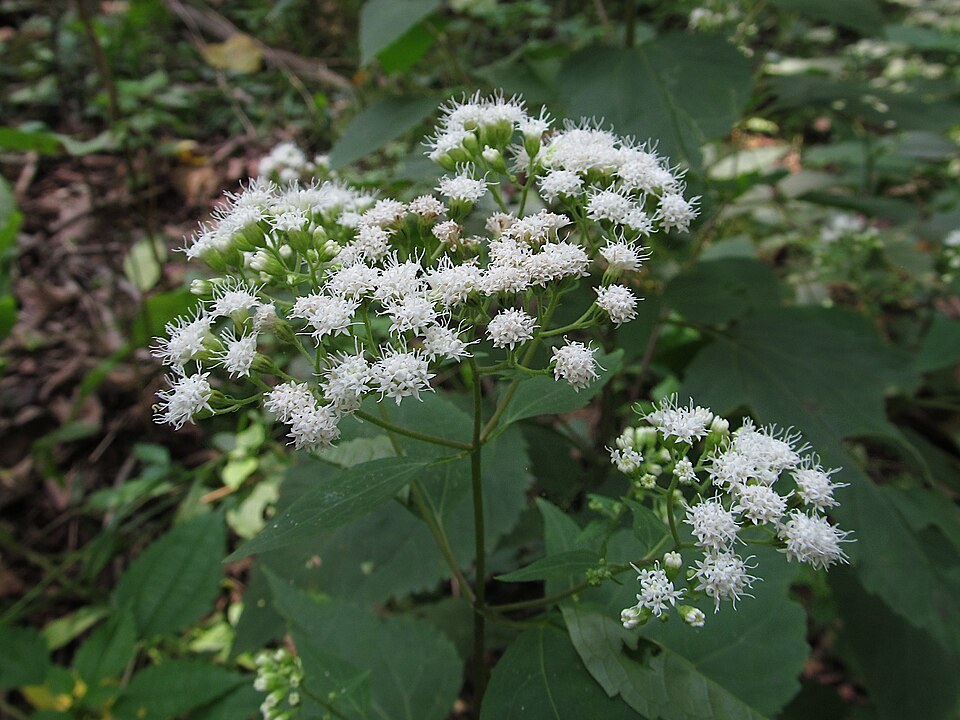
White snakeroot in Seldom Seen Greenway — Cbaile19. CC0
Photograph: Cbaile19 · Original source · CC0. Resized proportionally.

Vegetation and Ecological Processes

The forest supports layered competition. Trees intercept sunlight; shrubs and herbs share the remaining light, water and nutrients. White snakeroot can persist in shade and take advantage of openings. Seed arrival and rhizome expansion help it occupy disturbed patches. [PM]

It may occur in both disturbed woods and higher-quality habitat. Its presence alone is not a reliable score of woodland condition. Assess the full native plant community, invasive cover, soil disturbance and regeneration. [IL]

Disturbance and Management

Change

Likely concern

Useful response

Canopy opening

Greater sun and drying; more open soil

Watch leaf stress and seedling recruitment.

Soil excavation

Exposed seedbed and disrupted roots

Limit disturbance and re-establish diverse ground cover.

Heavy rain

Pooling or erosion

Protect soil cover and assess drainage paths.

Drought

Declining soil moisture

Prioritize young plants; water after checking the root zone.

Grazing access

Poisoning risk

Exclude livestock and keep plant debris out of feed. [NC]

Comparison with Lafayette

This is a local habitat type, not an exotic environment to recreate indoors. The county record near Romney describes white snakeroot as frequent with white oak in woods. Modern specimens add support for its continuing local occurrence. These records establish presence; they do not prove every shaded yard is suitable. [IND, IND2]

What to Observe

Record canopy shade, soil wetness after rain, afternoon wilting, colony boundaries and neighboring plants. Photograph the same patch through the seasons. In restoration work, favor a mixture of locally appropriate woodland plants and control known invasive species independently of white snakeroot.

Key Terms

Habitat is the place and conditions used by a species. An ecosystem includes organisms and their physical surroundings together. Microclimate means the local temperature, light, wind and moisture conditions. A rhizome is a spreading underground stem.

[Kew] Kew Plants of the World Online

[IL] Illinois Wildflowers species account

[PM] Species cultivation and spread account

[IND] Indiana University specimen IND 0120581 via GBIF

[IND2] Indiana University specimen IND 0162325 via GBIF

[NC] NC State Extension species profile

Deciduous woodland at Turkey Run State Park — Daniel Schwen. CC BY-SA 4.0

White snakeroot colony at Ann M Banchoff Park — Famartin. CC BY-SA 4.0
White snakeroot in Seldom Seen Greenway — Cbaile19. CC0

Related Information Sheets

Plant care and seed propagation

Native climate and Lafayette comparison

Ecological relationships

Added September 22, 2026 · All Information Sheets