

Ageratina altissima | White snakeroot
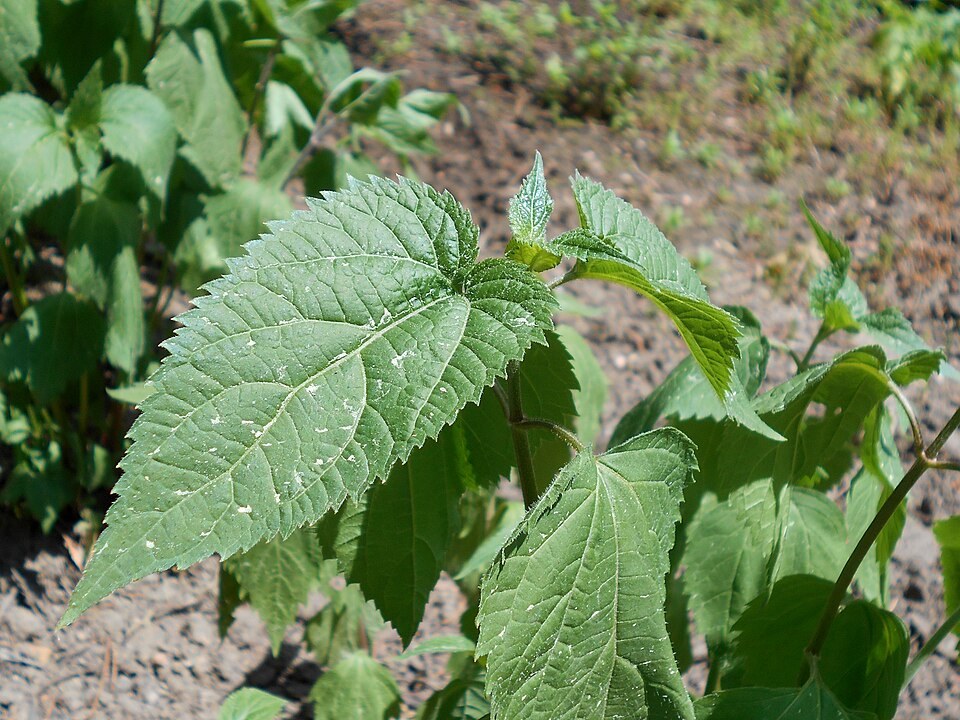
Photograph: Salicyna · Original source · CC BY-SA 4.0. Resized proportionally.

White snakeroot is a native woodland perennial with late white flowers. Give it filtered light, an aerated root zone, and room for seedlings and spreading underground stems.
POISONOUS IF EATEN. No part is food. Keep plants and clippings away from livestock and animals that chew vegetation. Contaminated milk can poison people. [NC]
To understand the care of a plant, understand its native climate and environment.
At a Glance
Field | Information |
|---|---|
Accepted name | Ageratina altissima (L.) R.M.King & H.Rob.; family Asteraceae. Older name: Eupatorium rugosum. [Kew] |
Plant type and size | Herbaceous perennial; commonly 2–5 ft (0.6–1.5 m) tall and 2–4 ft (0.6–1.2 m) wide. [NC] |
Native to the United States | Yes. Native range includes eastern and central states and parts of Canada. [Kew] |
Native to Lafayette area | Yes. Indiana native status and historical Tippecanoe County woodland specimens support this designation. [Kew, IND] |
Invasive status in Indiana | Non-invasive native; can spread aggressively in gardens. Not on the Indiana DNR terrestrial invasive plant list checked 2026-09-21. [DNR, PM] |
Self seeding | Yes, often freely; seeds travel on the wind. Also spreads by rhizomes. [PM] |
Edibility and cautions | Poisonous. Leaves, stems, roots, flowers and seed are not edible. Never use as a home remedy. [NC] |
Best setting | Part shade to light shade; moist, well-drained woodland soil. [IL] |
Flowering | Late summer into autumn; usually white clusters. [NC] |
Identification
Leaves occur in opposite pairs. Lower leaves are broad, often heart-shaped, with long stalks, coarse teeth and three conspicuous main veins. Upper leaves are smaller. Stems are usually nearly hairless. Shallow fibrous roots arise with spreading rhizomes. [IL]
Use several features together. Common boneset has leaves joined around the stem; white snakeroot has separate leaf stalks. White-flowered asters usually have visible rays around their centers; white snakeroot has small tubular florets. Never taste a plant to identify it.
Light
Choose morning sun, open shade, or a woodland edge. Hot afternoon sun increases water stress; deeper shade may reduce flowering. Avoid abruptly moving a shade-grown plant into a hot exposed bed. [NC, IL]
Soil and Standard Potting Mix
In a garden, use the existing well-drained woodland soil and retain a modest leaf-litter cover. The container recipe below is for pots, not a requirement to replace native bed soil.
Native Forest Plants Standard Mix — measure by loose volume. [Mix]
Component | Parts | Share |
|---|---|---|
Generic potting soil | 2 | 50% |
Compost-rich raised-bed or in-ground soil ingredient | 1 | 25% |
Coarse perlite | 1 | 25% |
Screen out large woody pieces. Blend dry components, lightly premoistening dusty material. Do not compress the mix. Use an open drainage hole and no gravel layer. The compost-rich ingredient must not be used alone in a pot. [Mix]
Watering and Containers
Keep new plants evenly moist while their roots establish. Check the soil before watering; water the root zone thoroughly when it begins drying, then allow excess water to drain. Established shaded plants tolerate some drying, but persistent wilting signals a problem. [IL]
For temporary nursery culture, use a stable pot only slightly larger than the root mass. Repot when roots fill it or drainage deteriorates. Plant outdoors in spring or early autumn so roots can establish before severe heat or winter. Containers dry and freeze faster than garden soil; protect the root ball outdoors during winter.
Temperature Humidity and Feeding
This is a temperate outdoor perennial, not a tropical houseplant. Shoots die back in winter and resume growth from the crown. NC State lists hardiness zones 3–9; hardiness describes winter survival, not an exact growth-temperature target. Normal outdoor humidity is sufficient. [NC]
Routine fertilizer is usually unnecessary in a suitable garden soil. For a prolonged stay in a container, use modest feeding only during active growth and follow the fertilizer label. Avoid forcing soft, lanky growth with excessive nitrogen. Diagnose poor light, drainage or roots before adding fertilizer.
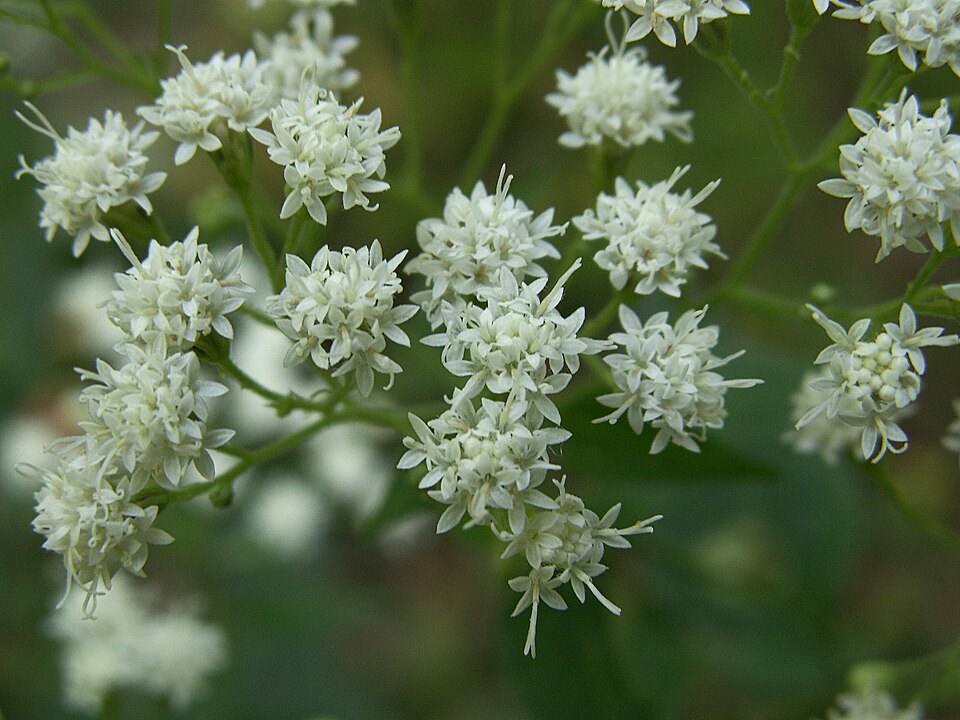
Photograph: Cbaile19 · Original source · CC0. Resized proportionally.

Flowering
The frothy display is made of many small flower heads gathered into broad clusters. Individual heads contain disk florets without a ring of ray petals. Bloom follows summer growth and extends into autumn; timing changes with latitude, weather and shade. [IL, Garden]
Propagation and Germination
Light for germination — yes. Surface sow and leave seed uncovered. Provide at least 60 days of moist cold treatment below 40°F (4.4°C). An outdoor autumn or early-winter sowing suits Lafayette. [Seed, Garden]
Step | What to do |
|---|---|
1 Prepare | Use a clean draining pot. Standard Seed Starting Mix: 2 parts coco coir, 1 part coarse perlite and 1 part vermiculite by volume. Premoisten. [Mix] |
2 Sow | Scatter seed thinly and press gently onto the surface. Do not bury beneath soil, grit or mulch. Label the botanical name and sowing date. [Seed] |
3 Chill moist | Leave outdoors through winter in a protected position with access to rain or snow, or refrigerate moist seed for at least 60 days below 40°F (4.4°C). Moist chilling differs from dry cold storage. [Seed] |
4 Grow | Keep the exposed seed surface moist as conditions warm. Prevent washing, drying and overheating. Do not promise a fixed emergence date; seed lots vary. |
5 Establish | After seedlings develop several true leaves and roots, pot on into the Native Forest Plants mix. Gradually acclimate to the intended outdoor light. |
Division is another option in spring: lift an established clump, separate rooted portions with healthy buds, and replant promptly at the original depth. Keep roots moist; do not apply succulent-style callusing. [NC]
Grooming and Troubleshooting
Remove spent flower heads before fluffy seed forms if volunteers are unwanted. Pull excess seedlings early. Retain some flowering stems where space and animal access allow; manage the colony boundary each year. [PM]
Observation | Check and response |
|---|---|
Wilting or yellowing | Check root-zone moisture and hot sun first. Water if dry; improve drainage if persistently wet. |
Leaf trails or small holes | Leaf miners and flea beetles occur. Small amounts of damage are usually an observation issue, not a reason for routine spraying. [NC, BBG] |
Rapid increase in plants | Seedling recruitment and rhizome spread are different processes. Remove seed heads and thin rooted shoots as needed. [PM] |
Little germination | Check seed age, moist chilling, surface exposure and drying. Keep records; avoid repeated burial or disturbance. |
Autumn dieback | Seasonal dormancy is expected. Retain the crown and avoid keeping dormant roots waterlogged. |
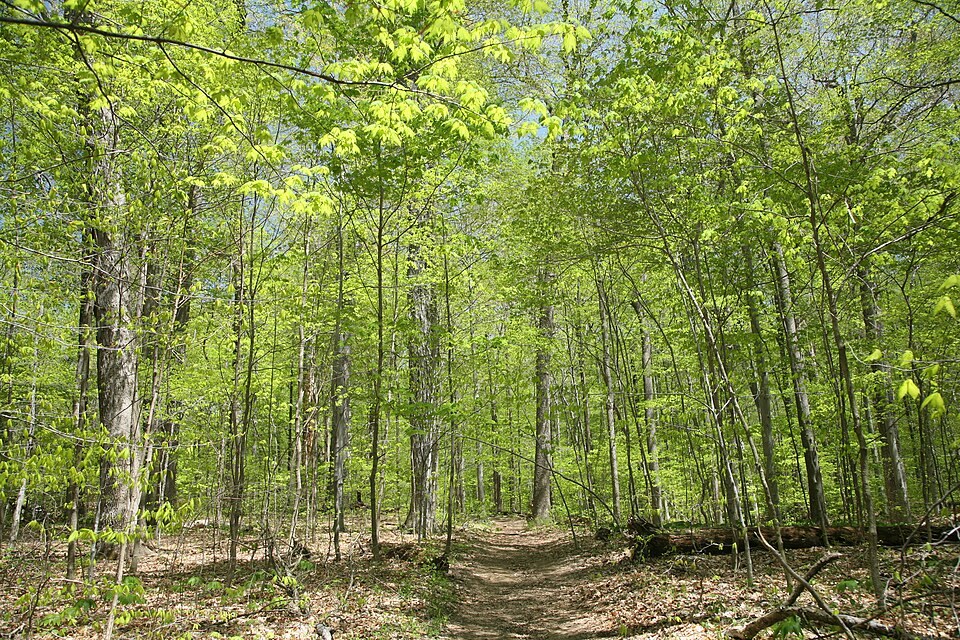
Photograph: Daniel Schwen · Original source · CC BY-SA 4.0. Resized proportionally.

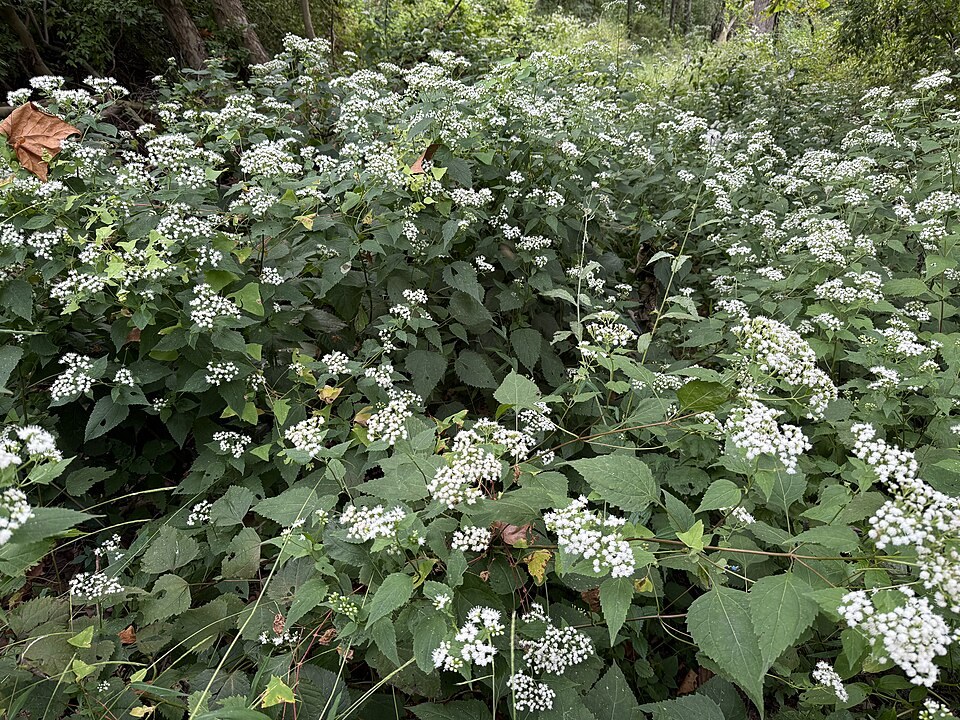
Photograph: Famartin · Original source · CC BY-SA 4.0. Resized proportionally.

Environment and Native Habitat
Native settings include deciduous woods, edges, thickets and sheltered slopes. Tree cover reduces exposure, while leaf litter and soil structure influence moisture and root aeration. The plant also colonizes disturbed shaded ground. It is not restricted to pristine forest. [IL, PM]
Local verification: Indiana University herbarium voucher IND-0120581, collected by Charles C. Deam on 1922-09-12, records Throckmorton woods about one mile northeast of Romney, Tippecanoe County, with the note “frequent with white oak.” A 2022 voucher, IND-0162325, documents Tecumseh Trails Park. [IND, IND2]
Toxicity and Handling
The ingestion hazard applies to people and animals. Never feed cuttings, seed heads or pulled plants to livestock; do not assume dried material is safe. Use gloves for removal, wash hands and keep debris away from food preparation. The name snakeroot is not evidence of a safe treatment for snakebite. [NC, Garden]
After suspected human ingestion, contact Poison Control promptly at 1-800-222-1222. Do not induce vomiting. For collapse, seizure, breathing difficulty or inability to awaken, call 911. For an animal exposure, contact a veterinarian promptly. [Poison]
[Kew] Kew Plants of the World Online
[NC] NC State Extension species profile
[IL] Illinois Wildflowers species account
[Seed] Wild Seed Project species and sowing protocol
[PM] Species cultivation and spread account
[IND] Indiana University specimen IND 0120581 via GBIF
[IND2] Indiana University specimen IND 0162325 via GBIF
[DNR] Indiana DNR terrestrial invasive plant list
[Poison] Poison Control emergency guidance
[Garden] Eloise Butler Wildflower Garden species account
[Mix] Project Standard Potting Mixes and Stock Inventory
Nonflowering white snakeroot foliage — Salicyna. CC BY-SA 4.0
White snakeroot flowers at Bird Park — Cbaile19. CC0
Deciduous woodland at Turkey Run State Park — Daniel Schwen. CC BY-SA 4.0
White snakeroot colony at Ann M Banchoff Park — Famartin. CC BY-SA 4.0