

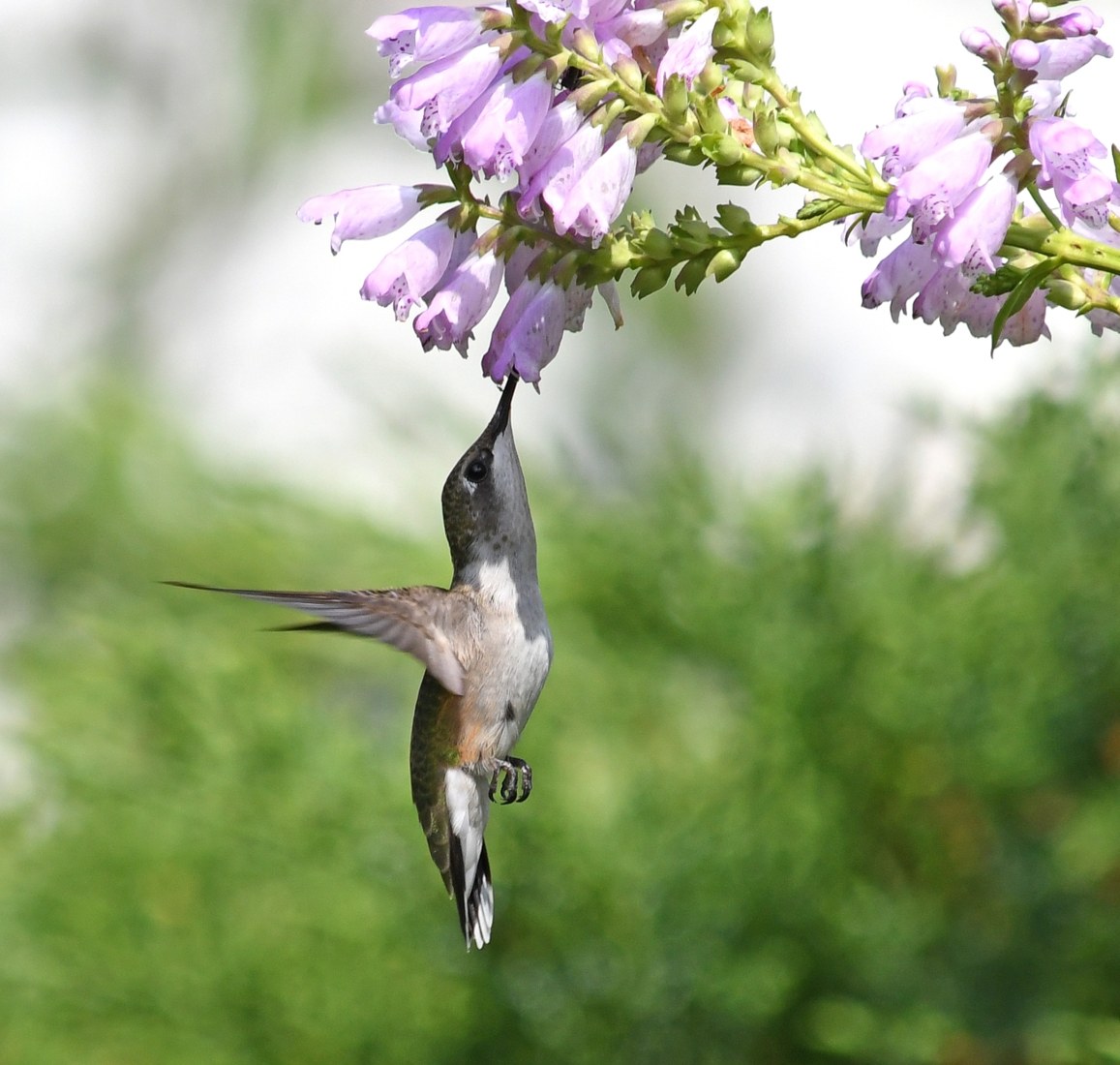
Archilochus colubris
A useful hummingbird garden supplies food through the season and keeps sheltered branches nearby. Match plants to the light and moisture already present on the site.
Photograph: Daniel Schwen · Original source · CC BY-SA 4.0. Resized proportionally.

Habitat structure
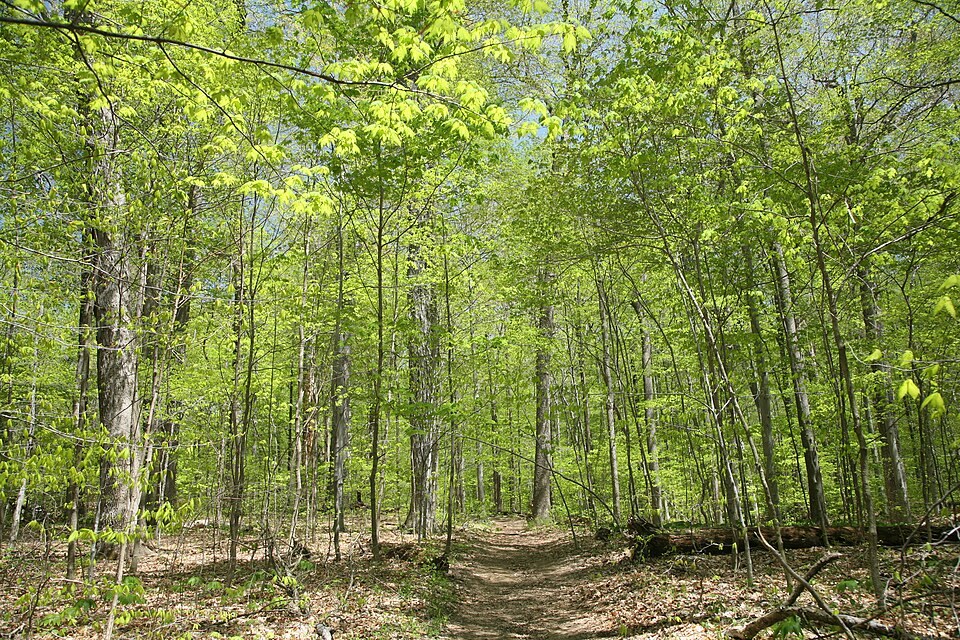
Retain trees and shrubs beside flowering areas. Hummingbirds use wooded edges and semi-open habitats rather than requiring a completely open flower bed. Keep quiet cover for nesting and resting, and leave room to approach flowers in flight. [Life, Aud]
Flowers for different garden conditions
These eastern North American plants offer complementary flowering periods. The seasonal windows below are broad planning guides; weather, cultivar and growing conditions change local bloom dates. They are garden candidates, not a county occurrence inventory.
Plant | Season | Suitable conditions |
|---|---|---|
Eastern columbine | Spring | Partial shade; moist, well-drained soil. |
Wild bergamot | Summer | Sun to partial shade; good drainage; tolerates some dryness. |
Cardinal flower | Summer to early fall | Sun to partial shade; consistently moist soil. |
Spotted jewelweed | Summer to fall | Moist, shaded ground; annual that reseeds. |
Plant several of each suitable species and track gaps in bloom. Cardinal flower is a strong choice for a damp bed; do not put it in a dry location and expect occasional watering to compensate. Jewelweed suits a naturalized patch where reseeding is acceptable. [Lob, Jew]
Photograph: Jim Hudgins/USFWS · Original source · Public domain. Resized proportionally.
Flowers are only part of the food supply
Keep vegetation that supports small arthropods. A garden stripped of insects cannot supply the bird’s complete diet. Avoid routine broad insecticide spraying around feeding and nesting areas. Feeders can supplement habitat, but they cannot supply the animal food available in a living garden. [Life]
A practical Lafayette layout
Use a sunny, well-drained patch for wild bergamot and a partly shaded edge for columbine. Reserve an existing moist pocket for cardinal flower or jewelweed. Keep perching branches nearby and arrange flowering groups so one bird has difficulty guarding every food source. This layout is a site-design recommendation based on the plant and bird requirements above.
For a small yard, begin with two flowering periods and expand after one season of observation. Buy propagated plants; leave wild plants and their habitats intact. These plantings are for wildlife observation, not an edible garden. Cardinal flower is toxic if eaten. [Lob]
Feeder placement and maintenance
Hang an optional feeder in shade with safe access for cleaning, beyond a cat’s reach and away from hazardous glass. Use the recipe and cleaning schedule in the Animal sheet. Choose a feeder only if someone can maintain it consistently. [Feed, Bird]
[Aud] Audubon species and migration account
[Col] NC State Extension eastern columbine
[Mon] NC State Extension wild bergamot
[Lob] NC State Extension cardinal flower
[Jew] NC State Extension spotted jewelweed
[Feed] Smithsonian nectar recipe and feeder care
[Bird] Cornell Lab species overview
Daniel Schwen photograph — CC BY-SA 4.0. License
Jim Hudgins/USFWS photograph — Public domain.