

Archilochus colubris
Ruby-throated Hummingbirds link flowers, small arthropods and woody vegetation. Supporting these relationships makes a garden useful for more than a brief feeder visit.
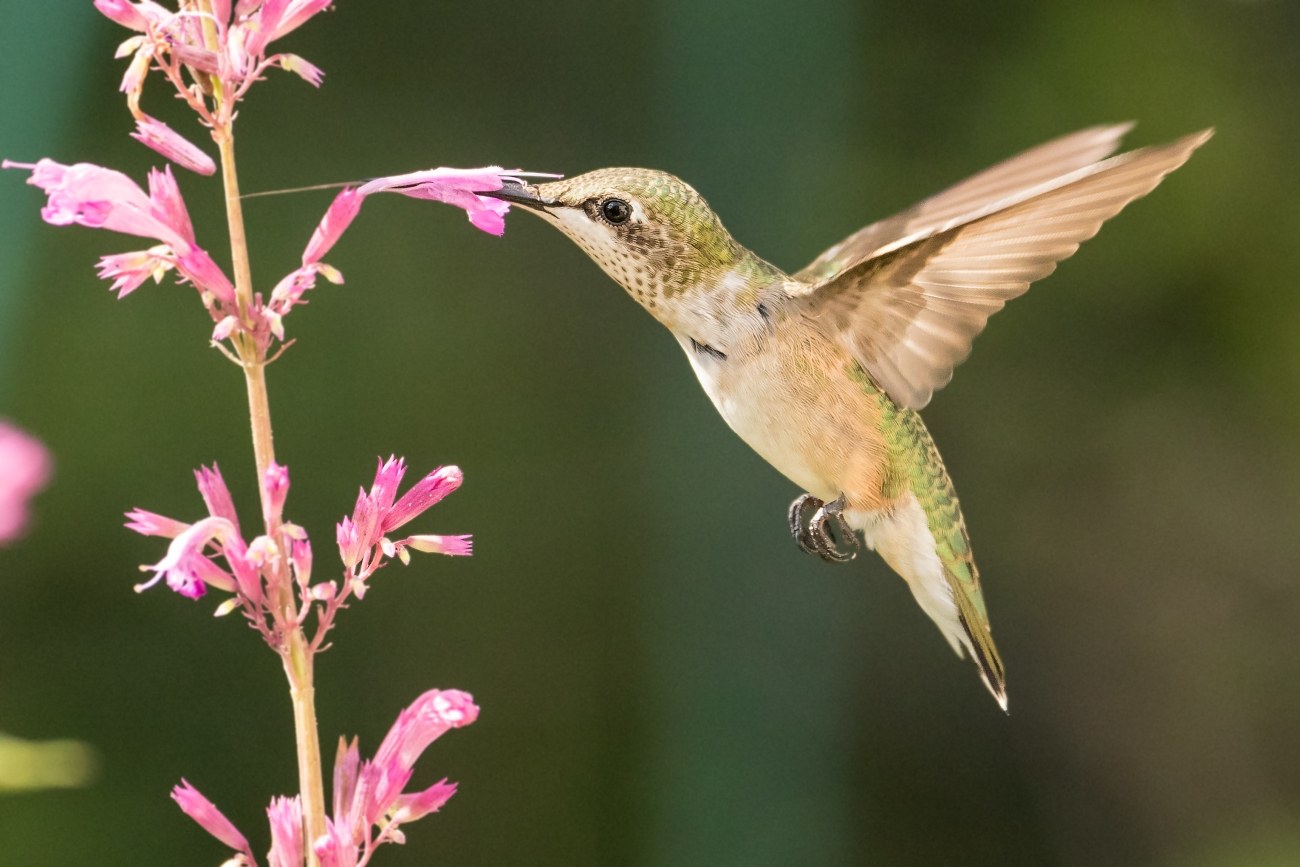
Photograph: Mike Carlo/USFWS · Original source · Public domain. Resized proportionally.
How the bird helps flowering plants
As a hummingbird reaches for nectar, its head or bill may contact pollen-bearing anthers and later a receptive stigma. This can move pollen between flowers. Pollination success depends on the fit between bird and flower and on what the bird touches; a visit alone is not proof of successful pollination. [ADW]
Cardinal flower offers a useful example of a tubular flower visited by hummingbirds. Eastern columbine supplies a spring nectar resource, while later flowers extend feeding opportunities. Red is useful for attracting attention, but hummingbirds also visit flowers of other colors. [Lob, Col, Bird]
Relationships to watch
Relationship | What it means in the garden |
|---|---|
Nectar and flight | Flowers supply sugar used as an energy source; feeders offer a supplemental sugar source. |
Arthropods and nutrition | Small insects and spiders are food. Nectar alone is not the complete diet. |
Spider silk and nesting | The female uses silk to bind a flexible nest. |
Woody plants and shelter | Branches support nests, resting sites and lookout perches. |
Competition and predation
A male often guards a rich patch of flowers or a feeder and chases competitors. Spread feeding opportunities across the garden, using vegetation to interrupt direct sight lines. Count how many birds can feed, not simply how much nectar disappears. [Life]
Cats and window collisions create preventable hazards around feeding sites. Keep cats indoors or in enclosed outdoor spaces and make nearby glass visible to birds. Hummingbirds eat some mosquitoes, but attracting hummingbirds should not be treated as an effective mosquito-control program. [Bird]
Observe without disturbing
Watch the same flower patch for ten minutes at a consistent time. Record weather, open flowers, visits, chases and visible contact with flower parts. Count visits separately from individual birds: repeated trips by one bird are not evidence of a larger population.
Compare flower patches on several dates and include sessions with no visits. Note whether a bird feeds, rests or simply passes through. Avoid following it to a nest or changing vegetation around an active nest to improve a photograph.
What garden success looks like
Look for continuity of flowers and safe use of the site through the season. A feeder crowded with birds is only one observation. Flower visitation, insect feeding and undisturbed resting provide a fuller picture of habitat use. Retain records so that next year’s planting decisions follow evidence.
[Life] Cornell Lab life history
[Lob] NC State Extension cardinal flower
[Col] NC State Extension eastern columbine
[Bird] Cornell Lab species overview
Mike Carlo/USFWS photograph — Public domain.