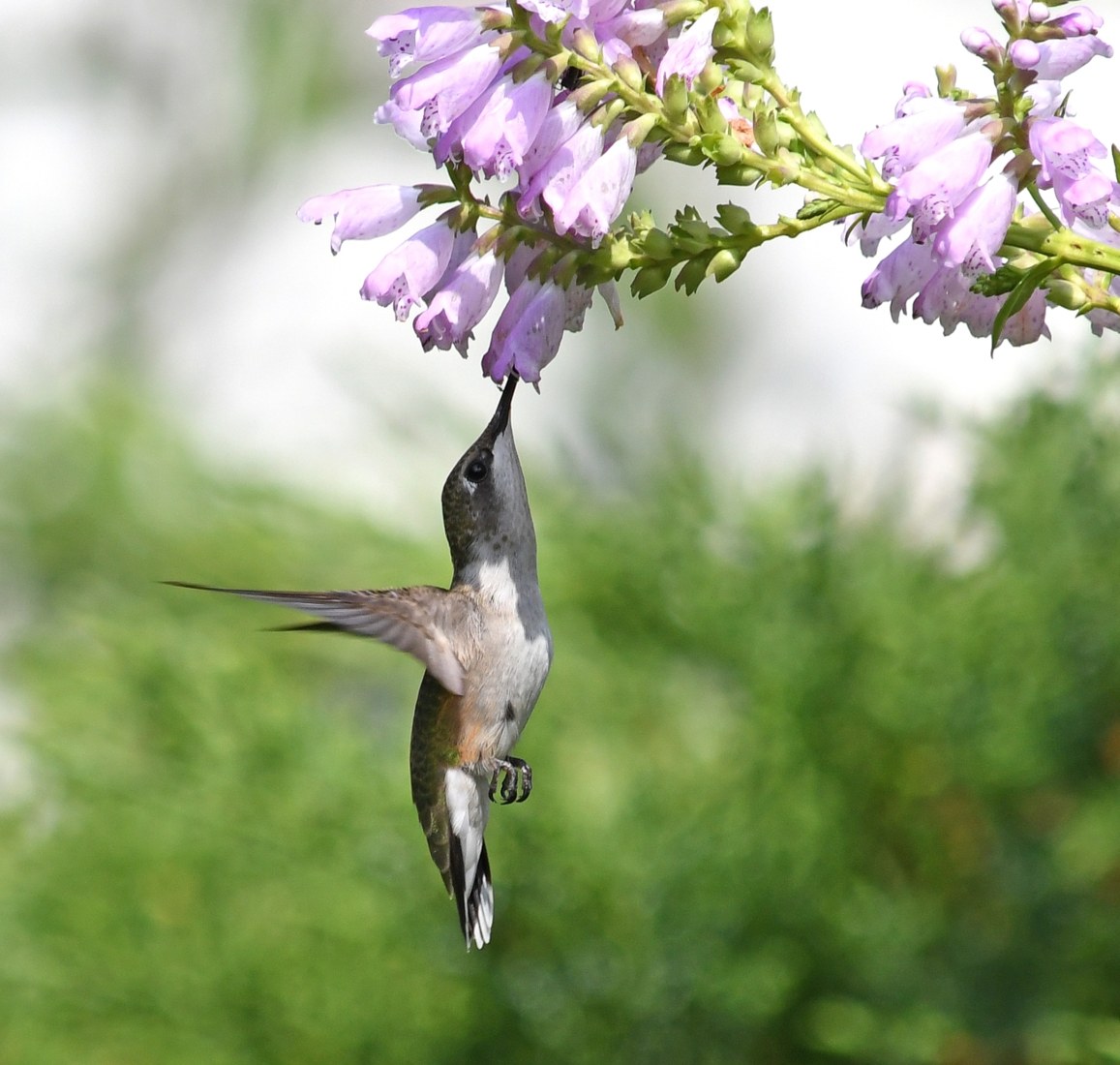
Archilochus colubris
Indiana’s regular breeding hummingbird is a native seasonal visitor to Lafayette. Identify it by plumage and shape, then support it with flowers, insects and safe feeding places. [IN, ID]
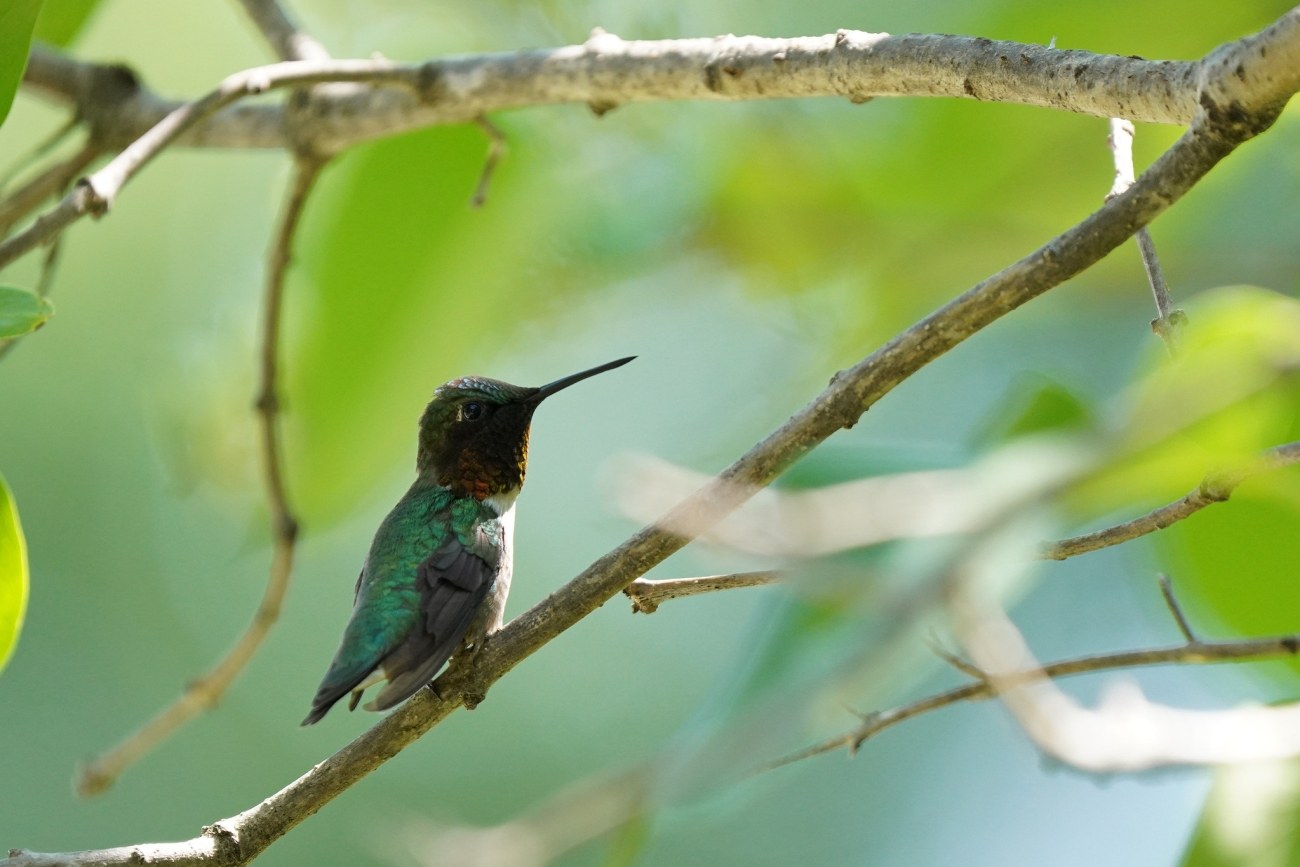
Photograph: Courtney Celley/USFWS · Original source · Public domain. Resized proportionally.
At a Glance
Feature | Details |
|---|---|
Native status | Native to the United States and Indiana; breeds statewide. [IN] |
Lafayette season | Spring through early fall; occasional late migrants. Not a regular winter resident. [IN, Aud] |
Size | Length 7–9 cm (2.8–3.5 in); mass 2–6 g; wingspan 8–11 cm. [ID] |
Food | Flower nectar plus small insects and spiders. [Life] |
Human use | Wildlife for observation; not a pet or food animal. Non-invasive in Indiana. |
Identification
Both sexes have green upperparts and a long, narrow bill. An adult male has an iridescent ruby throat, which may look black in shade. Females have a pale throat and white tips on the outer tail feathers. Young males can resemble females and may show only scattered red throat feathers. [ID]
A hummingbird moth has antennae and six legs; the bird has a feathered body, bill and two feet. An unfamiliar hummingbird late in fall deserves careful photographs and identification rather than an assumption based only on location.
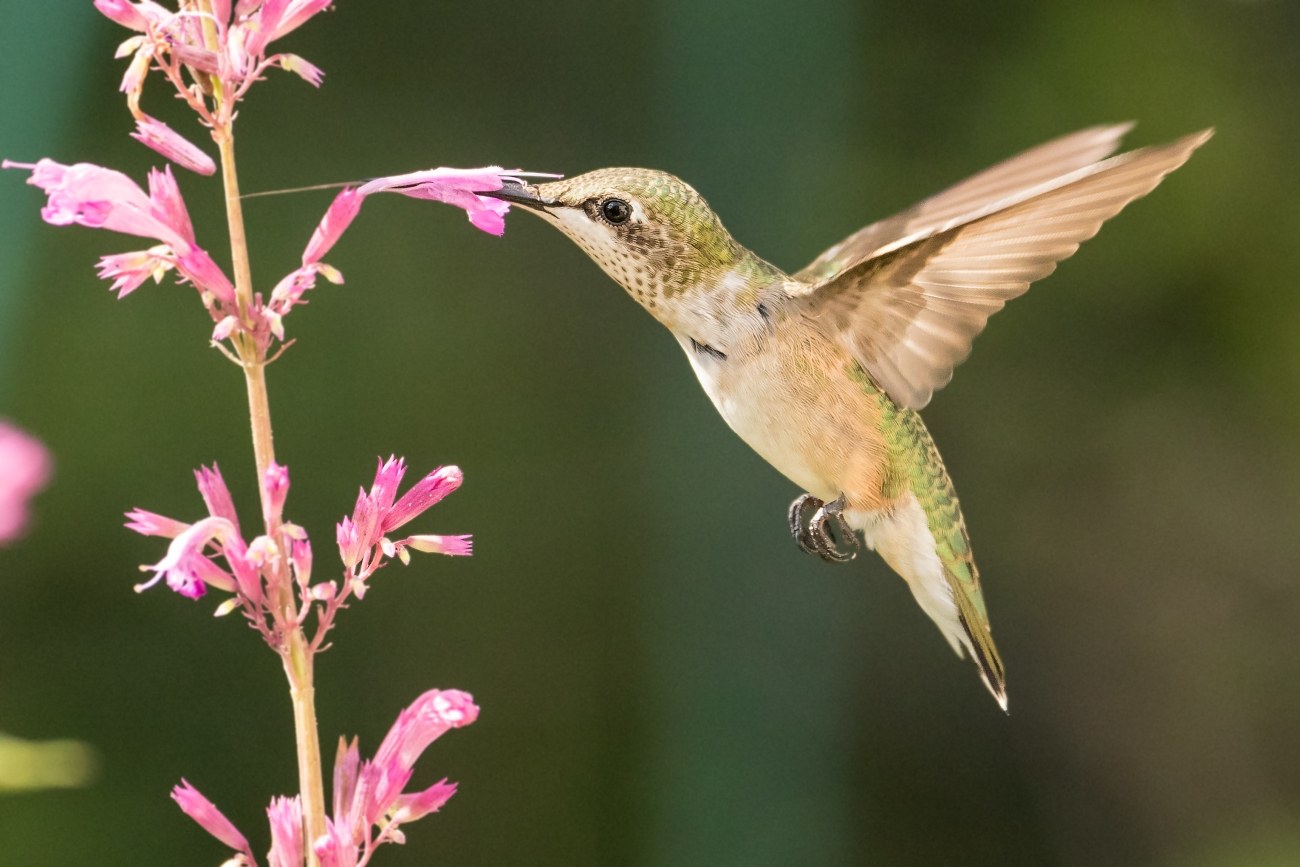
Photograph: Mike Carlo/USFWS · Original source · Public domain. Resized proportionally.
Reproduction
The female builds the nest, incubates the eggs and feeds the young. Usually two white eggs hatch after about 12–14 days; nestlings leave roughly 18–22 days after hatching. A nest is a small cup of plant down and spider silk, often decorated with lichens. [Life, Aud]
Photograph: Daniel Schwen · Original source · CC BY-SA 4.0. Resized proportionally.
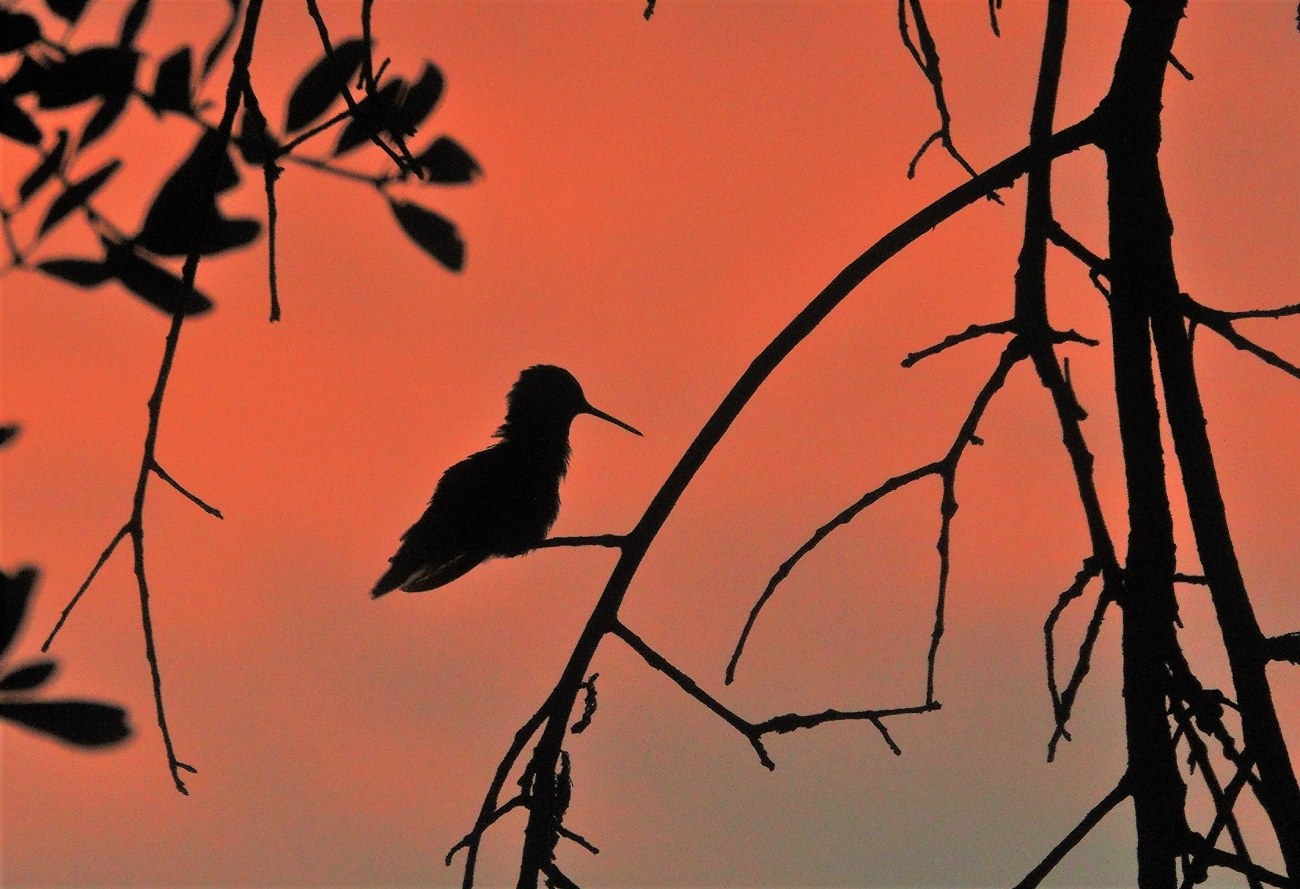
Photograph: Larry A. Woodward/USFWS · Original source · Public domain. Resized proportionally.
Environment and native habitat
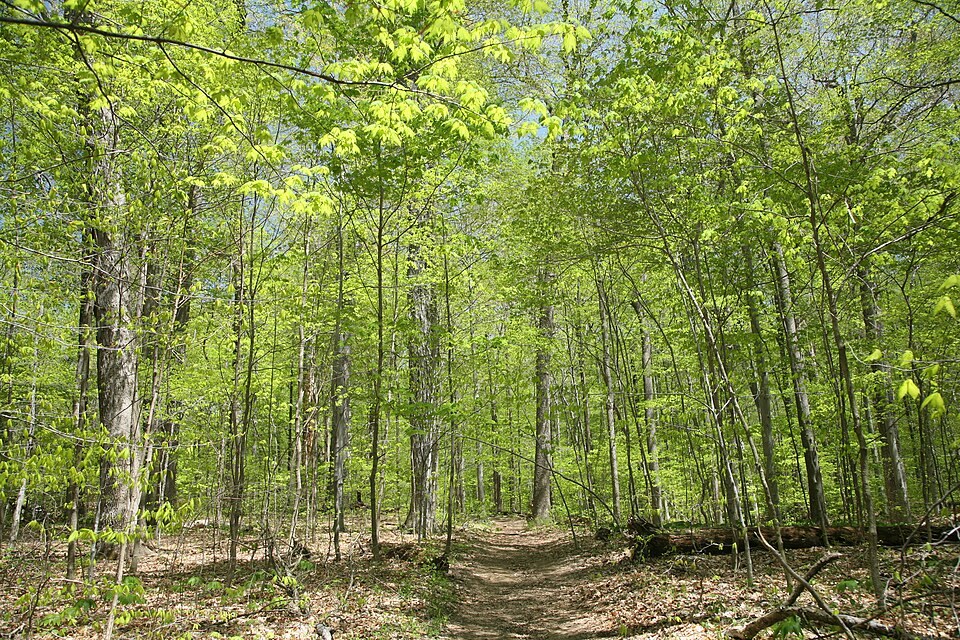
Woodland edges, stream margins and gardens combine sheltered branches with feeding openings. Most birds spend winter in Mexico and Central America. The accompanying Environment and Climate sheets explain how these seasonal needs shape a Lafayette garden. [Life, Aud]
Safe feeder care
Mix 1 part refined white sugar with 4 parts water by volume: ¼ cup sugar plus 1 cup water. Dissolve completely. Use no dye, honey or sugar substitutes. Change the solution and thoroughly clean the feeder every other day; in hot weather, inspect daily and replace sooner if needed. Refrigerate extra nectar for no more than one week. [Feed]
Place feeders where cats cannot ambush birds and where glass does not create a collision hazard. Leaving a clean feeder out in fall does not prevent migration. [Bird, Feed]
Protect the bird
Observe nests from a distance. Do not capture or keep a hummingbird; protected migratory birds require authorization for capture or possession. Seek a licensed wildlife rehabilitator for an injured bird. [Law]
[IN] Indiana Audubon species account
[Life] Cornell Lab life history
[Aud] Audubon species and migration account
[Feed] Smithsonian nectar recipe and feeder care
[Bird] Cornell Lab species overview
[Law] US Fish and Wildlife Service migratory bird protection
Courtney Celley/USFWS photograph — Public domain.
Mike Carlo/USFWS photograph — Public domain.
Daniel Schwen photograph — CC BY-SA 4.0. License
Larry A. Woodward/USFWS photograph — Public domain.