
Home / Information Sheets / Siberian Iris
🌿 Plant Information Sheet
Siberian Iris
Iris sibirica L. · Iridaceae · Herbaceous perennial

Scan to open this Information Sheet
planteducationproject.com/siberian-iris/
A long-lived, clump-forming iris for sunny gardens with dependable moisture. The species is native to Europe and temperate Asia; it is not native to Indiana or North America. Plants sold as “Siberian iris” may be hybrids, so confirm the label when species-level identity matters.
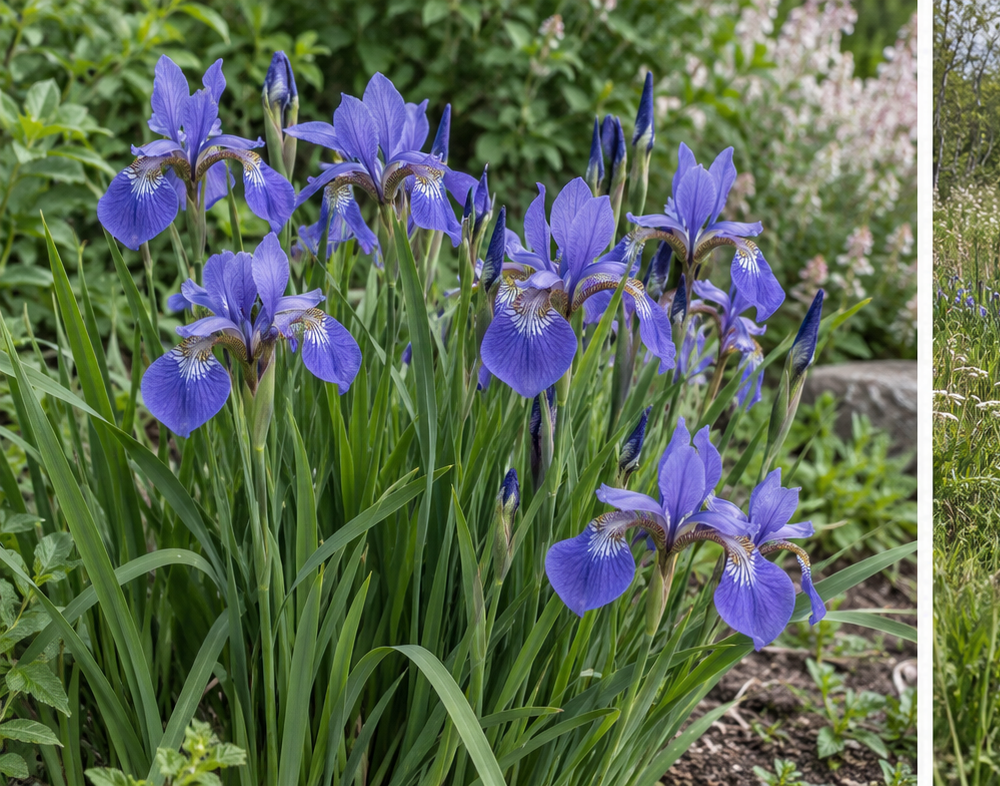
Identification
Narrow, upright, sword-shaped blue-green leaves arise in dense fans from a fibrous rhizome system. Slender flowering stems carry several beardless flowers. Unlike bearded iris, the petals lack a fuzzy “beard.” Garden plants sold as Siberian iris include named cultivars and hybrids, often involving Iris sibirica and related species; flower color alone cannot confirm the species.
Growing and care
Plant in spring or early fall. Set bare-root rhizomes shallowly, with the crown near the soil surface, and water well. Set container-grown plants at their previous depth. Space plants roughly 18–24 in (45–60 cm) apart, adjusting for cultivar size. Keep soil consistently moist while plants establish and through active spring growth. A light organic mulch helps conserve moisture; keep it off the crown.
Remove spent flower stems if seed production is not wanted. Leave healthy foliage until it yellows naturally so the plant can replenish its rhizomes. Divide crowded clumps when flowering declines, often every 3–5 years. Lift and divide after bloom or in early fall, keeping several healthy fans with each division.
Soil mix
In a garden bed, use existing soil that retains moisture but drains reasonably; incorporate finished compost through the planting area if soil is poor. No special mix is needed for an in-ground perennial. For a container, use 2 parts quality potting mix, 1 part finished compost, and 1 part perlite or fine pine bark. Choose a large pot with drainage holes and keep the mix evenly moist. This is a practical garden recipe, not a species-specific tested formula.
Native range and status
Royal Botanic Gardens, Kew describes the native range as Central Europe to Mongolia, across parts of central and eastern Europe and temperate Asia. Siberian iris is not native to Tippecanoe County, Indiana, the Midwest, the contiguous United States, Alaska, or Hawaii. Kew reports naturalization in North America. Horticultural plants may be hybrids, and taxonomic sources differ in how they describe the range.
This sheet does not characterize Siberian iris as a listed Indiana invasive. Keep garden waste and seed away from wetlands and other natural areas.
Ecology and safety
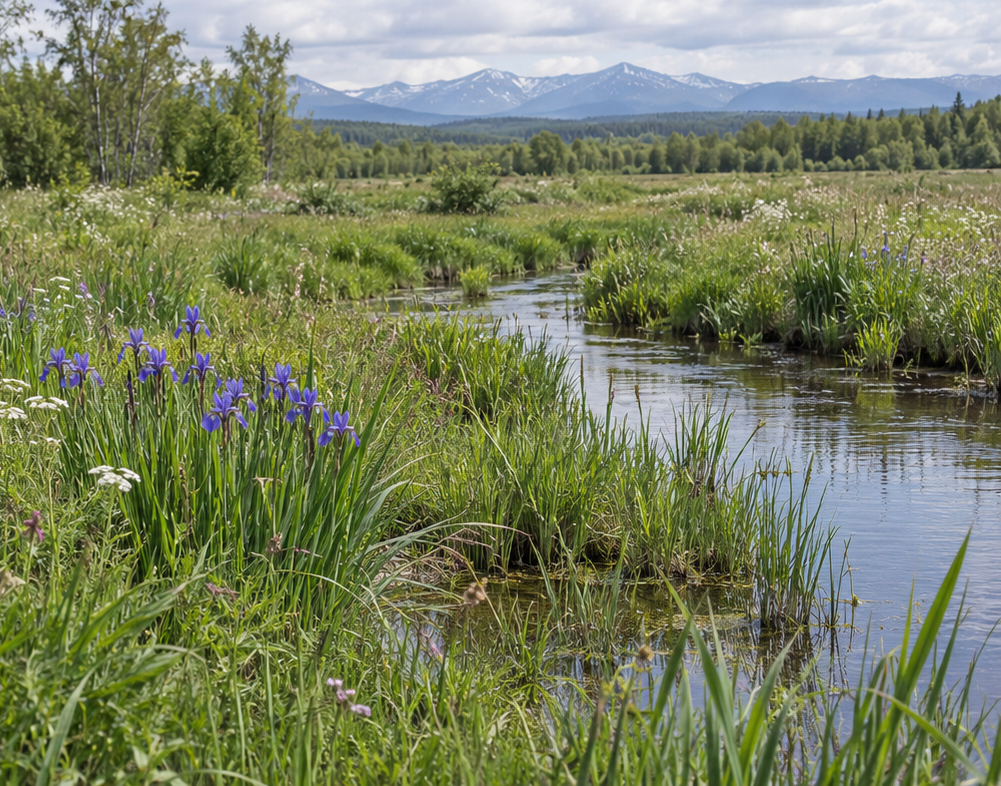
In its native range, Siberian iris favors open, moist places such as wet meadows and stream margins. Garden flowers provide a short seasonal resource for flower-visiting insects. Clumps can expand by rhizomes. Siberian iris is not yellow flag iris (Iris pseudacorus), a different species regulated as an aquatic invasive in Indiana.
Iris sap may irritate skin. Iris plants are toxic if eaten by dogs, cats, or horses; rhizomes contain the greatest concentration of toxic compounds. Wear gloves when handling sap and keep children and pets from chewing the plant.
Propagation
Division of an established clump is the most reliable garden method. Seed propagation is possible but slower, and seedlings may not resemble named cultivars. Do not collect seed or plants from wild populations.
References
- Royal Botanic Gardens, Kew — Plants of the World Online: Iris sibirica
- North Carolina Extension Gardener Plant Toolbox — Siberian Iris
- Missouri Botanical Garden Plant Finder — Siberian iris group
- Purdue University, Indiana Invasive Species Council — Official Invasive Plant List
- Indiana Department of Natural Resources — Aquatic Invasive Species: Plants
- ASPCA Animal Poison Control — Iris
Research checked 12 October 2026.
Added 12 October 2026 · Master Information Sheet Index