
Home / Plant Information Sheets / Serviceberry
Plant Information Sheet
Serviceberry
Amelanchier arborea (F.Michx.) Fernald · downy serviceberry

Scan to open this Information Sheet
planteducationproject.com/serviceberry/
Why serviceberry matters
Downy serviceberry combines early flowers, edible summer fruit, fall color, wildlife food, and a compact woodland-edge form. Its best care follows its natural setting: good drainage, moderate moisture, organic soil, edge light, and room for a multi-stemmed shrub or small tree.
Identification
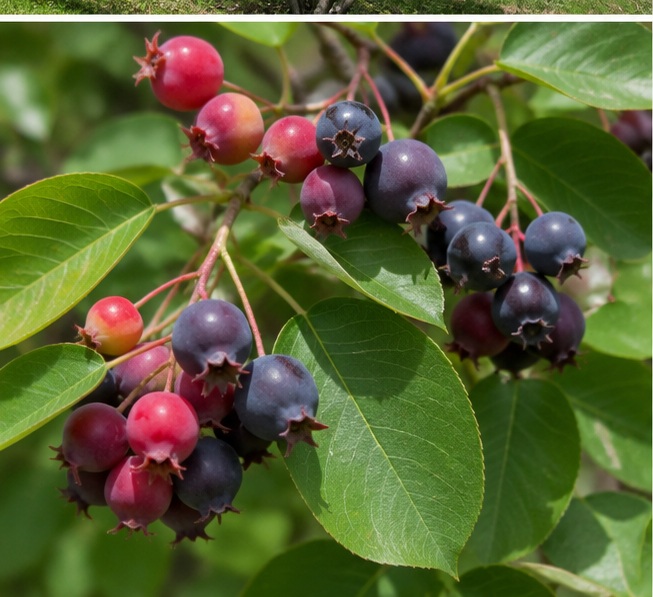
Look for alternate, finely toothed leaves; young foliage with characteristic hairs beneath; smooth gray young bark; and drooping clusters of five-petaled white flowers before full leaf-out. Small round pomes ripen from green through red to purplish black. Fall foliage commonly turns yellow-orange to red.
Planting and care
Site
Choose full sun to part shade and average to rich, moderately moist, well-drained soil. More sun generally improves flowering and fruiting when moisture is adequate. Allow about 15–25 feet for the natural crown.
Planting
Plant in fall or early spring. Dig broadly but no deeper than the root ball, keep the root flare at or slightly above grade, backfill mainly with native soil, water thoroughly, and apply 2–3 inches of mulch without touching trunks.
Water and feeding
During establishment, wet the root zone deeply, then let the upper soil begin to dry. Established plants tolerate ordinary rainfall variation, but prolonged drought can reduce vigor and fruit. Routine fertilizer is usually unnecessary; investigate drainage, compaction, light, root injury, and soil chemistry before feeding.
Pruning and form
Decide whether to keep a multi-stemmed shrub or train a small tree. Retain suckers for a natural thicket; remove them selectively for a defined trunk. Remove dead, damaged, crossing, or diseased wood, and avoid shearing away the plant’s natural branching pattern.
Flowers, fruit, and human use
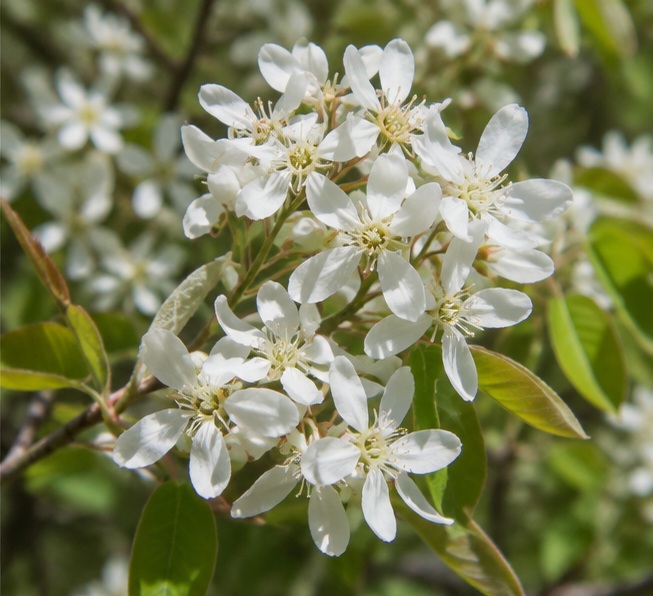
Flowers appear in early spring, followed by fruit that ripens from red to purple-black in summer. Fully ripe, correctly identified, clean fruit can be eaten fresh or used in preserves and baked foods. Avoid fruit exposed to contaminants, and expect birds to harvest quickly.
Propagation
Seed preserves genetic diversity but is slow and requires moist conditioning to overcome dormancy. Softwood cuttings may root under controlled humidity, and well-rooted suckers may sometimes be separated. A locally appropriate nursery-grown plant is the most predictable choice for home landscapes.
Pests and diseases
Possible issues include rust, leaf spot, fire blight, powdery mildew, cankers, sawflies, leafminers, borers, scales, aphids, and spider mites. Identify the cause before treatment. Minor leaf feeding can be part of the plant’s ecological value rather than a threat to health.
| Few flowers | Check shade, plant age, and pruning history. |
|---|---|
| Yellowing or weak growth | Check drainage, compaction, roots, soil pH, and nutrients before fertilizing. |
| Many basal shoots | Normal suckering; retain for shrub form or selectively remove. |
| Fruit disappears | Bird feeding; harvest promptly or accept wildlife use. |
Environment and native habitat
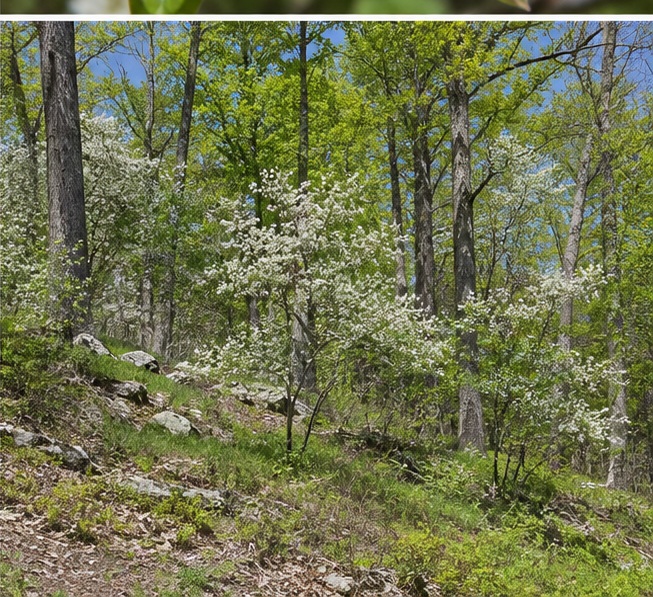
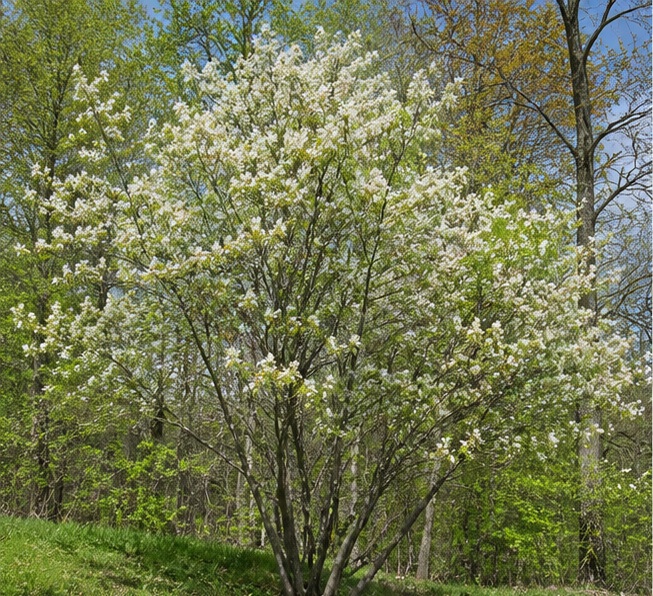
See the connected sheets for the climate pattern, woodland-edge habitat, pollinators, birds, and the role of serviceberry in a layered native planting.