
At a glance
- Scientific name
- Zelkova serrata (Thunb.) Makino [1]
- Plant type
- Deciduous shade tree; Ulmaceae [2]
- Light and water
- Full sun; moist soil with good drainage. Some drought tolerance after establishment. [2]
- Native to the United States
- No [1]
- Native to W. Lafayette
- No; native to eastern Asia [1]
- Invasive status
- Local ecological status not established. Not on Indiana’s 44-species Terrestrial Plant Rule list; escape concerns exist elsewhere. [4, 5]
- Self seeding
- Yes, possible; local frequency is unmeasured. [5]
- Edibility
- Grow as an ornamental. No edible part is recommended in this package.
- County occurrence
- No verified Tippecanoe County wild record is claimed.
- Main siting caution
- Allow for a broad crown and roots; avoid overhead utilities and cramped planting spaces.
Identification
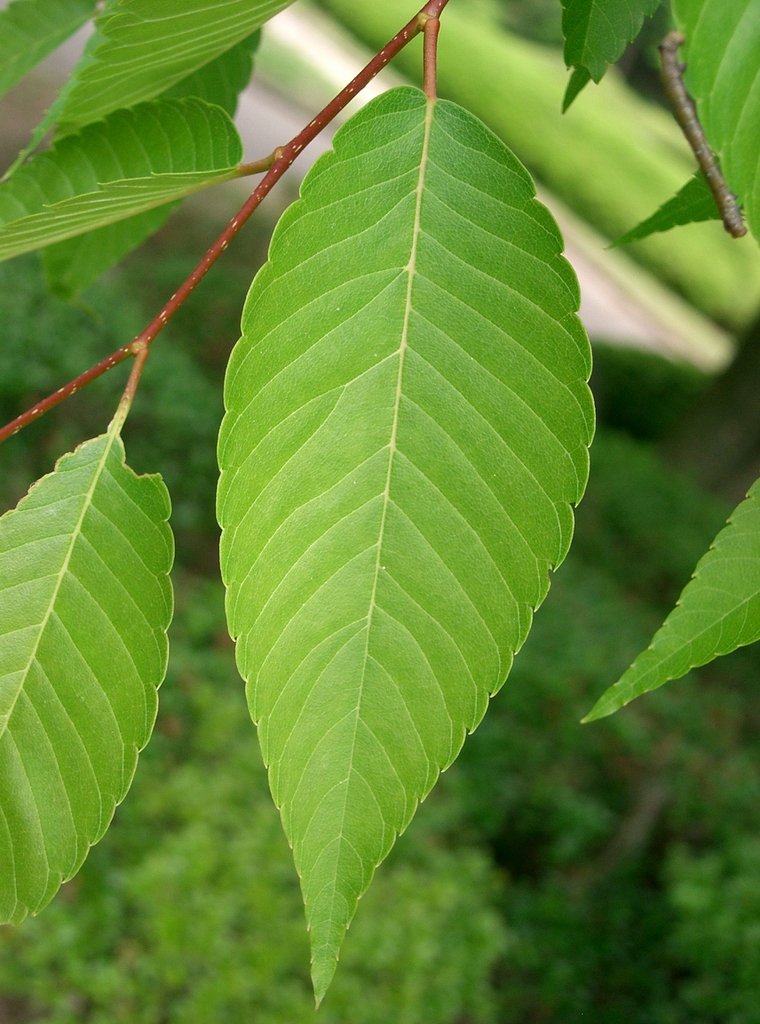
Look for alternate, simple leaves with toothed edges and veins running toward the teeth. The crown is often vase shaped. Older bark develops a mottled appearance as patches flake away; autumn leaves can turn yellow, orange, or reddish purple. [2, 3]
Use the scientific name when buying. Other zelkovas and true elms require their own profiles; a shared common name does not establish identity.

Flowering and fruit
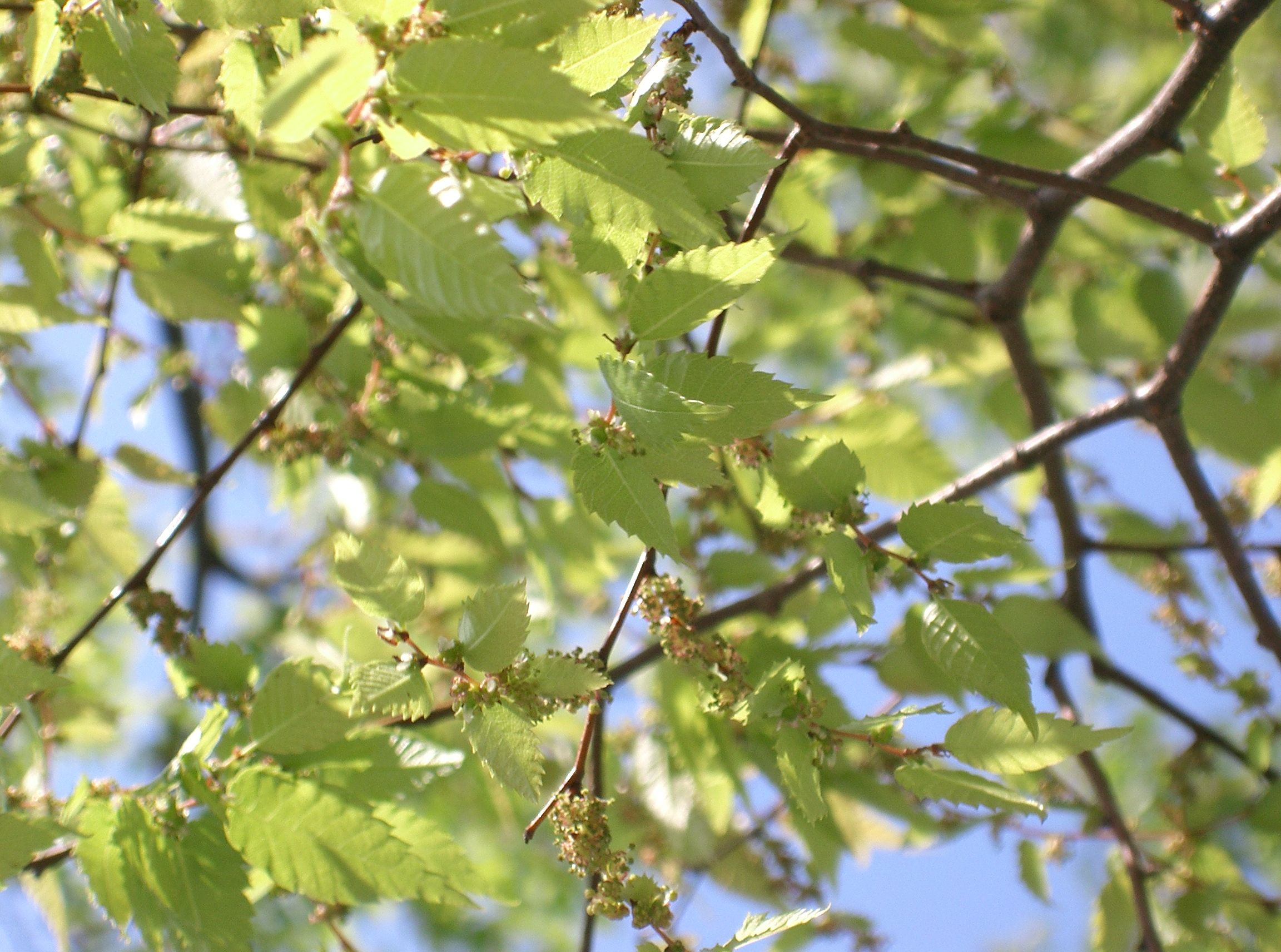
The small green flowers appear in spring and are easily overlooked. Small fruits called drupes follow. Flowering is not the tree’s main ornamental feature; foliage, branching form, and bark provide most of its visual interest. Local dates vary with the season. [2, 3]
Sources and evidence
Reviewed 2026-09-23. Source numbers match the Word package. Planting and observation steps are practical adaptations for home landscapes.
- [1] Kew Science. Plants of the World Online — accepted name and native range
- [2] NC State Extension. Zelkova serrata — identification and cultivation
- [3] The Morton Arboretum. Japanese zelkova — size, soil, hardiness, and ice damage
- [4] Indiana DNR. Terrestrial Plant Rule — published 44-species list
- [5] Alan Branhagen, Natural Land Institute. What Is the Big Deal About Invasive Plants — 2025 observations and concerns

Open this sheet online
planteducationproject.com/japanese-zelkova/