The print dialog will open. Choose a printer or select Save to PDF.

Download combined Word document

1 of 5 · Plant Information Sheet

Japanese Zelkova

Zelkova serrata (Thunb.) Makino · Keyaki · Elm family

Japanese zelkova needs room to become a large tree. Explore identification, native status, flowering, and basic care, then follow the companion sheets for climate, environment, ecology, and growing guidance.

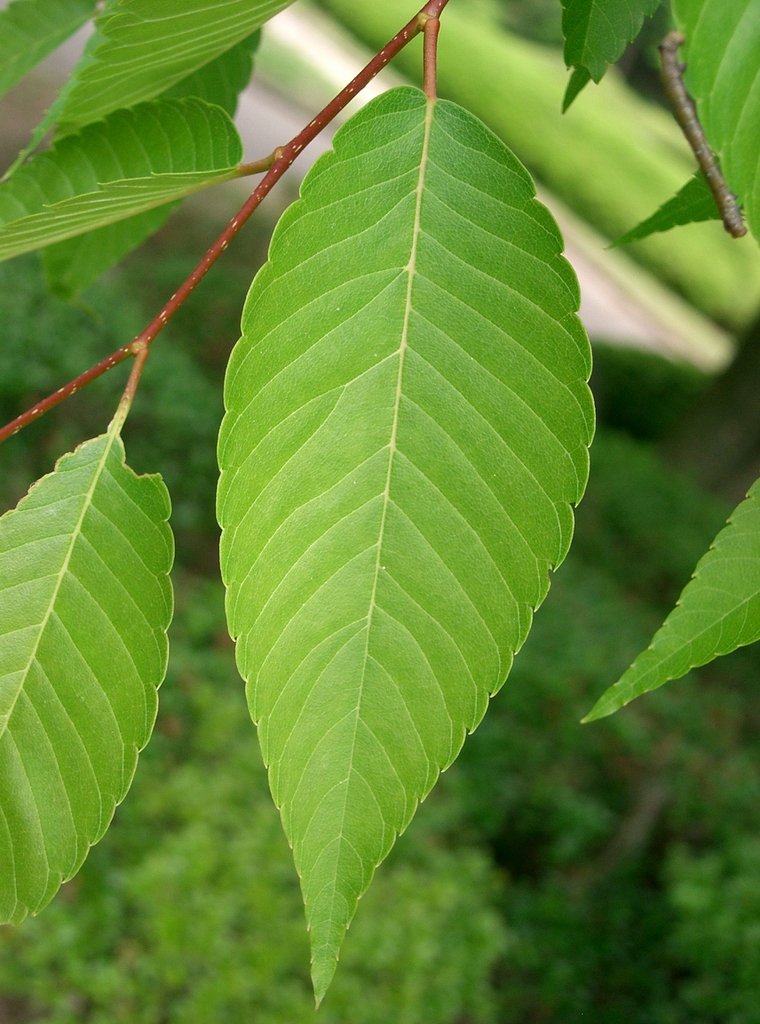
Japanese zelkova leaves with toothed margins and prominent side veins.
Japanese zelkova foliage; side veins end at the toothed leaf margin. Photograph: KENPEI, original source, CC BY-SA 3.0. Uncropped; resized proportionally for display.

At a glance

Scientific name
Zelkova serrata (Thunb.) Makino [1]
Plant type
Deciduous shade tree; Ulmaceae [2]
Mature size
Typically 50–80 ft tall; crown may become similarly broad. Check the plant label. [2, 3]
Light and water
Full sun; moist soil with good drainage. Some drought tolerance after establishment. [2]
Cold hardiness
USDA zones 5–8 [2, 3]
Native to the United States
No [1]
Native to W. Lafayette
No; native to eastern Asia [1]
Invasive status
Local ecological status not established. Not on Indiana’s 44-species Terrestrial Plant Rule list; escape concerns exist elsewhere. [4, 5]
Self seeding
Yes, possible; local frequency is unmeasured. [5]
Edibility
Grow as an ornamental. No edible part is recommended in this package.
County occurrence
No verified Tippecanoe County wild record is claimed.
Main siting caution
Allow for a broad crown and roots; avoid overhead utilities and cramped planting spaces.

Identification

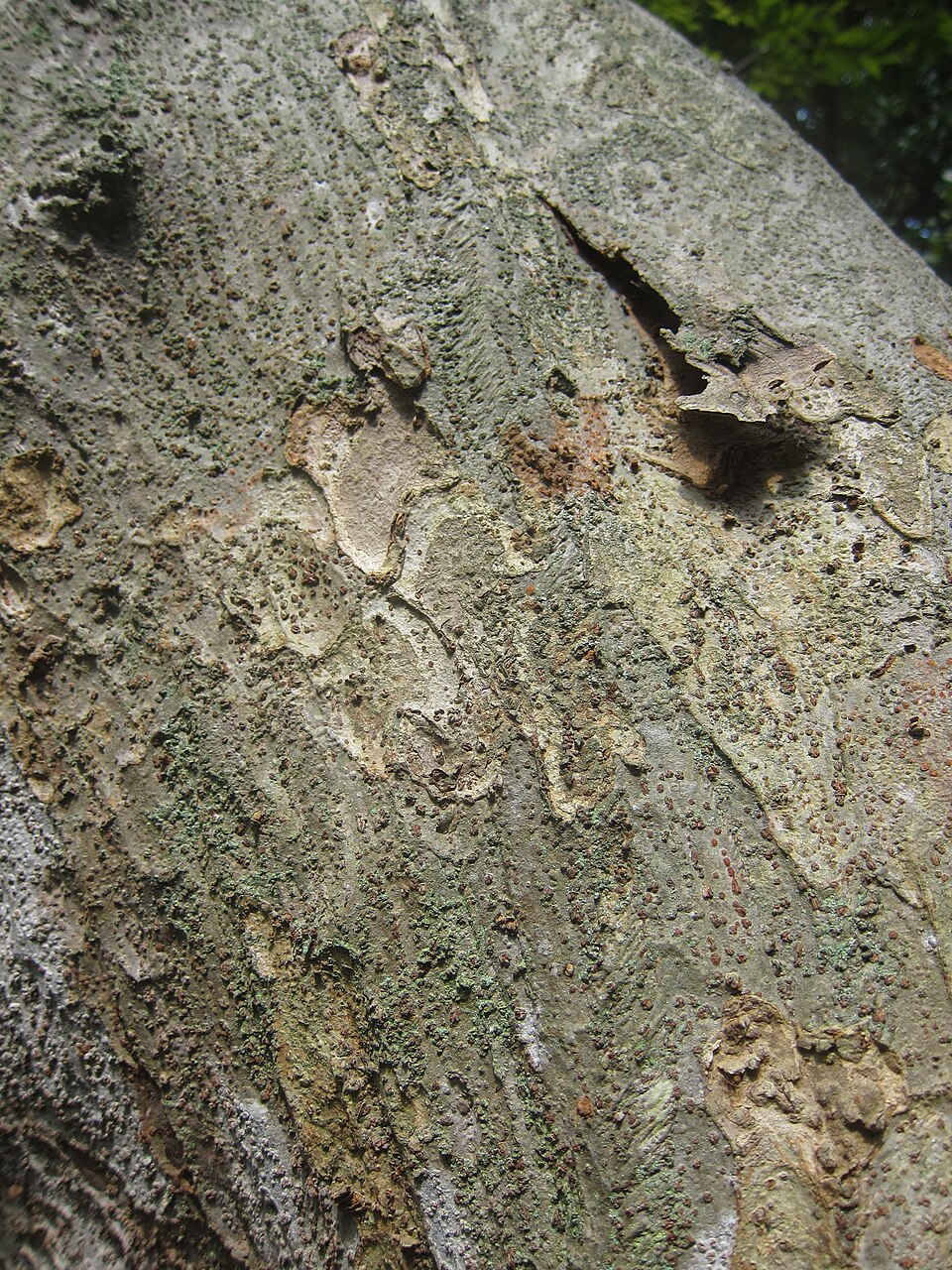
Look for alternate, simple leaves with toothed edges and veins running toward the teeth. The crown is often vase shaped. Older bark develops a mottled appearance as patches flake away; autumn leaves can turn yellow, orange, or reddish purple. [2, 3]

Use the scientific name when buying. Other zelkovas and true elms require their own profiles; a shared common name does not establish identity.
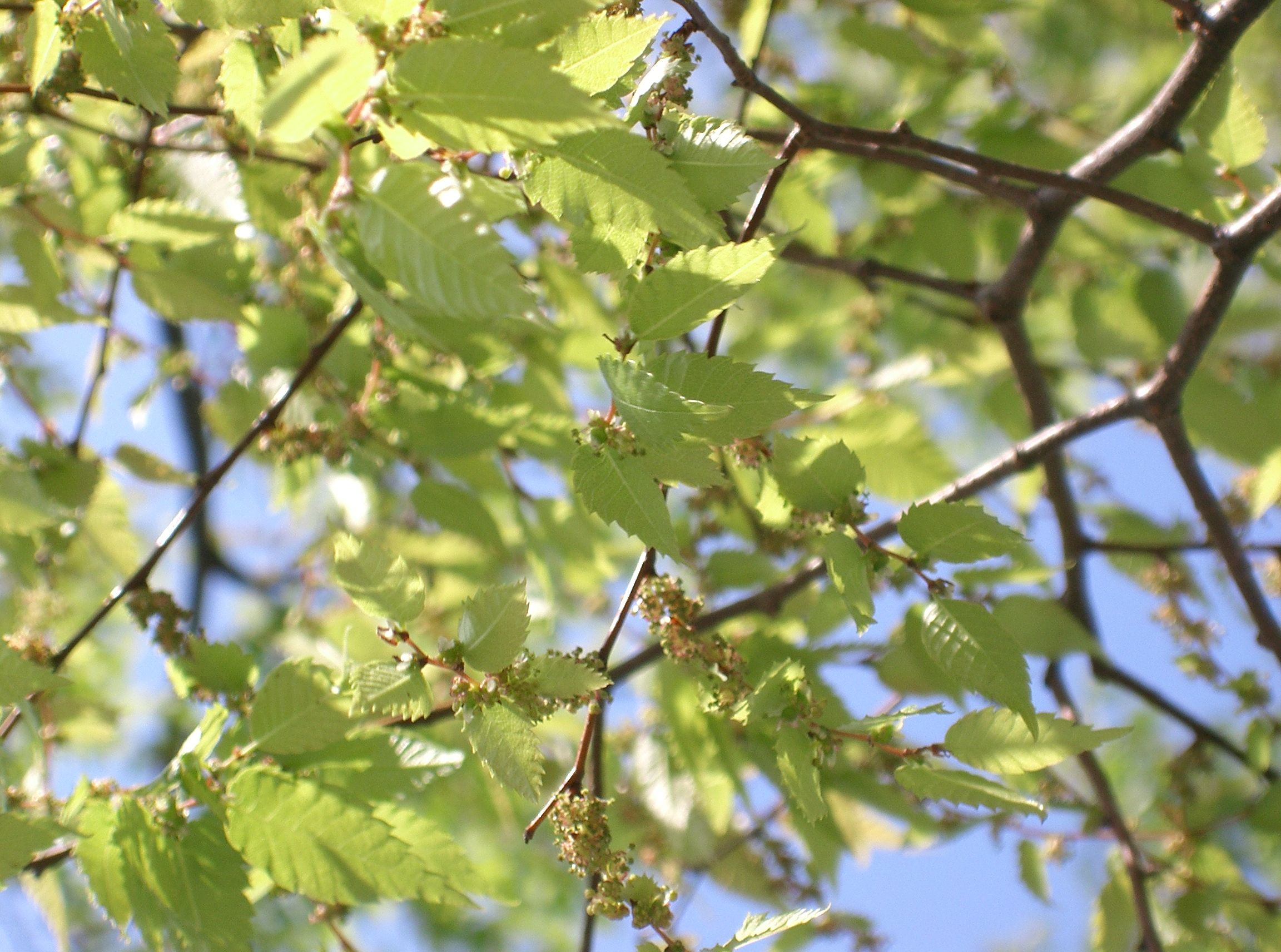
Small green Japanese zelkova flowers among expanding spring leaves.
Small spring flowers and expanding leaves, Osaka, Japan. Photograph: KENPEI, original source, CC BY-SA 3.0. Uncropped; resized proportionally for display.

Flowering and fruit

The small green flowers appear in spring and are easily overlooked. Small fruits called drupes follow. Flowering is not the tree’s main ornamental feature; foliage, branching form, and bark provide most of its visual interest. Local dates vary with the season. [2, 3]

Sources and evidence

Reviewed 2026-09-23. Source numbers match the Word package. Planting and observation steps are practical adaptations for home landscapes.

2 of 5 · Climate Information Sheet

Japanese Zelkova Climate

Zelkova serrata (Thunb.) Makino · Keyaki · Elm family

Use the tree’s seasonal rhythm and published cold-hardiness range alongside the actual moisture, wind, and exposure at your planting site.

Winter tolerance is only one part of suitability. A tree within its listed hardiness range can still struggle with saturated roots, drought, or a poorly chosen site.

Native range and seasons

Kew accepts this species and places its native range in eastern Asia, including Japan, Korea, parts of China, Taiwan, and the Kuril Islands. The range spans different elevations and climates, so one rainfall figure cannot describe every native population. [1, 6]

As a deciduous tree, zelkova grows leaves during its active season and loses them for winter. Apply this seasonal rhythm to outdoor landscape care. A small bonsai container needs a separate winter protection plan; the hardiness of a tree rooted in the ground does not describe an exposed pot.

Applying the hardiness rating locally

Zones 5–8 are the published cultivation range. Check the precise planting address on the USDA map. USDA zones describe average annual extreme minimum winter temperatures, not record lows or an assurance of survival. Heat, soil moisture, wind, and exposure also matter. [2, 3, 7]

Applying the hardiness rating locally
FeatureGuidance
SpringCheck drainage after rain; watch new leaves after late cold spells.
SummerCheck moisture in the root ball as well as the surrounding soil before watering.
AutumnRecord leaf color and seedling appearance; continue moisture checks during dry weather.
WinterObserve branch structure from the ground and inspect for storm damage when safe.

This seasonal checklist is a practical monitoring plan for W. Lafayette, not a prediction of exact flowering or watering dates. Morton Arboretum flags ice damage as a concern, reinforcing the value of sound branch structure. [3]

Sources and evidence

Reviewed 2026-09-23. Source numbers match the Word package. Planting and observation steps are practical adaptations for home landscapes.

4 of 5 · Ecology Information Sheet

Japanese Zelkova Ecology

Zelkova serrata (Thunb.) Makino · Keyaki · Elm family

Consider shade, native food-web relationships, self-seeding, and the difference between conserving a native forest and planting an introduced ornamental.

A shade tree and a habitat choice

A zelkova can supply shade and physical structure in a developed landscape. Those functions do not establish how well it supports Indiana’s specialist insects. Local food webs depend on particular plant relationships; being in the elm family is not proof that zelkova replaces every ecological role of a native elm. [11]

For a wildlife-focused planting, compare it with trees native to the planting location and suited to the soil. Confirm county records before labeling an alternative native to Tippecanoe County. Evaluate documented food-web relationships alongside shade and appearance.

Self seeding and responsible planting

Natural Land Institute reports self sowing and emerging invasion concerns, including increased seed production when different planted selections cross-pollinate. Indiana’s published 44-species rule does not list zelkova. These are different kinds of evidence: absence from that list does not establish ecological harmlessness. [4, 5]

Practical response: inspect beds and nearby woodland edges for seedlings, confirm their identity, and remove unwanted recruits while small. Avoid introducing this species into restoration sites intended to support native vegetation.

Conservation at home and abroad

A species may deserve protection in its native forests while requiring caution where introduced. The Japanese protected forest illustrates why preserving old trees, regeneration, and local genetic diversity matters. A planted ornamental elsewhere does not replace that forest community. [9]

A simple observation project

Mark a tree and record leaf emergence, flowering, fall color, and seedling recruitment through a year. Photograph any insects using it and distinguish feeding from resting. These observations can inform future sheets without turning an isolated sighting into a general claim.

Sources and evidence

Reviewed 2026-09-23. Source numbers match the Word package. Planting and observation steps are practical adaptations for home landscapes.

3 of 5 · Environment Information Sheet

Japanese Zelkova Environment

Zelkova serrata (Thunb.) Makino · Keyaki · Elm family

Native woods and stream margins help explain the need for useful moisture, drainage, and generous growing space.

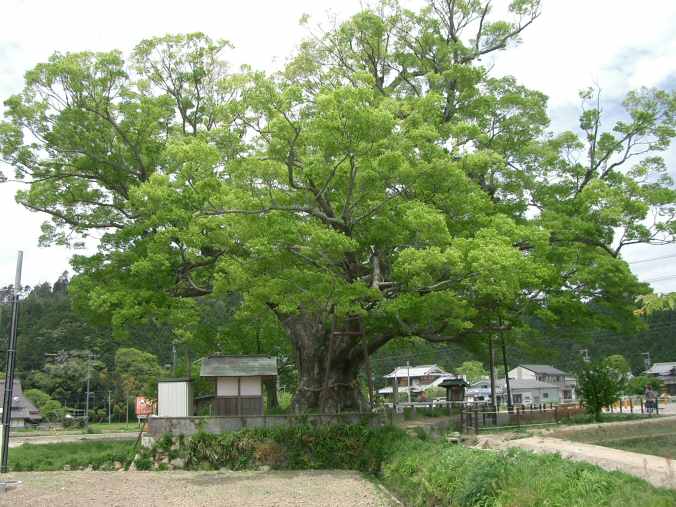
Broad crown and massive trunk of the Noma Keyaki tree in Japan.
Noma Keyaki, an old Japanese zelkova in Nose, Osaka, Japan. This native-range tree is not presented as a verified wild forest stand. Photograph: Miya, original source, CC BY-SA 4.0. Uncropped; resized proportionally for display.
Close view of mottled mature Japanese zelkova bark in Enoshima.
Mature Japanese zelkova bark in Enoshima, Japan. A native-range tree, not a documented wild stand. Photograph: Geographer, original source, CC BY-SA 3.0. Uncropped; resized proportionally for display.

Environment and native habitat

Native settings include moist woods, hillsides, and stream margins. The National Arboretum in Canberra describes populations on alluvial soils beside streams in lowland and mountain settings. Alluvial soil is material deposited by flowing water. This setting combines water supply with variation in drainage and elevation. [6, 8]

A specific example is the Kuimaru Pass protected zelkova forest in Fukushima, Japan. The Forestry Agency describes old zelkovas concentrated on the lower slopes, with oak forest higher up. The protected stand conserves genetic resources and relies on natural regeneration. [9]

See the Kuimaru Pass forest photographs for documented natural habitat.

Translate habitat into a planting site

Choose a generous soil area that holds useful moisture but drains. Morton Arboretum advises against wet sites. Streamside origin does not mean that a compacted, permanently waterlogged planting hole is suitable. [3, 6]

Before planting, measure the available canopy space, identify utilities, and examine drainage after a soaking rain. Do not rely on pruning to keep a naturally large tree permanently small. For a landscape tree, use the site’s soil as backfill; a special potting recipe belongs to container culture. [10]

Sources and evidence

Reviewed 2026-09-23. Source numbers match the Word package. Planting and observation steps are practical adaptations for home landscapes.

5 of 5 · Growing and Propagation Information Sheet

Japanese Zelkova Growing and Propagation

Zelkova serrata (Thunb.) Makino · Keyaki · Elm family

Plant at the correct depth, build sound branches, and use evidence about chilling and light when raising seedlings.

Establish the tree correctly

Locate the root flare before setting planting depth. Keep it at or slightly above the surrounding finished grade, correct circling roots, and backfill with the soil removed from the hole. Water thoroughly after planting. [10]

Spread 2–3 in of mulch over the planting area while leaving a clear gap around the trunk. Check moisture rather than watering on an unchanging calendar. Newly planted roots need attention even when an established tree of the same species tolerates drought. Avoid fertilizer during the first growing season. [10]

Build sound branches while young

Have crowded or competing major stems assessed early. University of Utah notes that branches can cluster at one point and recommends structural pruning while trees are young. Use a qualified arborist for large limbs or work near utilities. Dutch elm disease resistance does not mean immunity to every pest or disease. [2, 12]

Seed germination and light

Light is not an absolute germination requirement. Ishii’s 1979 study tested 0, 7, 15, 30, and 60 days of prechilling. Longer treatment improved germination and shortened the time to emergence. Diffuse light and alternating temperatures helped less-chilled seeds, but that advantage disappeared after 60 days of prechilling. [13]

Practical starting point: obtain fresh, correctly identified seed with a supplier’s storage and moist-chilling instructions. Treat roughly 60 days of moist chilling as a research-supported starting point, not a universal guarantee. Sow in a draining seed medium and keep it evenly moist. Avoid using a “must have light” label for this species. [13]

Keep a seed-lot record with source, collection date, chilling dates, sowing date, and number germinated. Seedlings vary; seed propagation does not guarantee the named parent’s form or autumn color.

When growth looks wrong

When growth looks wrong
FeatureGuidance
Wilting or brown marginsCheck moisture both inside and outside the original root ball before changing irrigation.
Persistent wet soilReassess drainage and planting depth; extra fertilizer does not correct lack of root aeration.
Crown dieback or bark cracksSeek an assessment. NC State reports these symptoms in stressed urban plantings. [2]
Crowded branch junctionsAsk an arborist to plan structural pruning while corrective cuts remain small. [12]

Sources and evidence

Reviewed 2026-09-23. Source numbers match the Word package. Planting and observation steps are practical adaptations for home landscapes.