

Tetramorium immigrans
The nest environment explains where this ant can live and how it reaches food. Compare soil, shelter, moisture, and nearby vegetation before treating an entire landscape as one habitat.
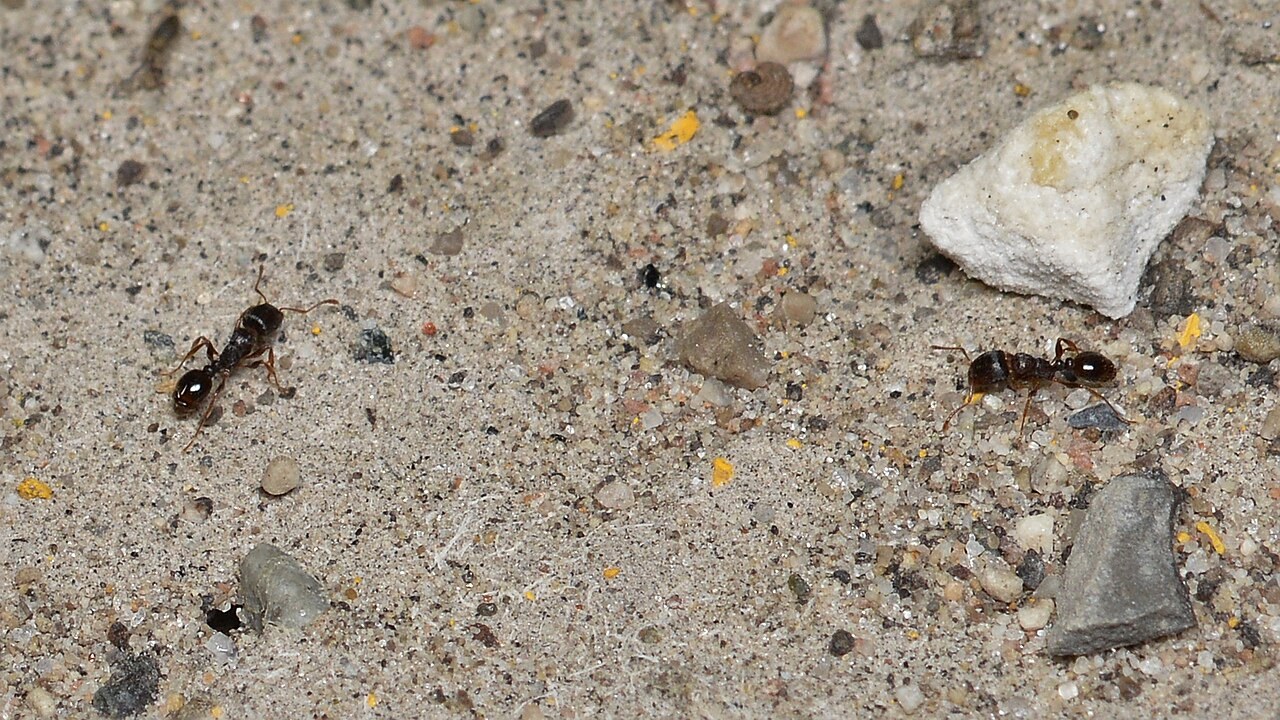
Photograph: Ryan Hodnett · Original source · CC BY-SA 4.0. Resized proportionally.

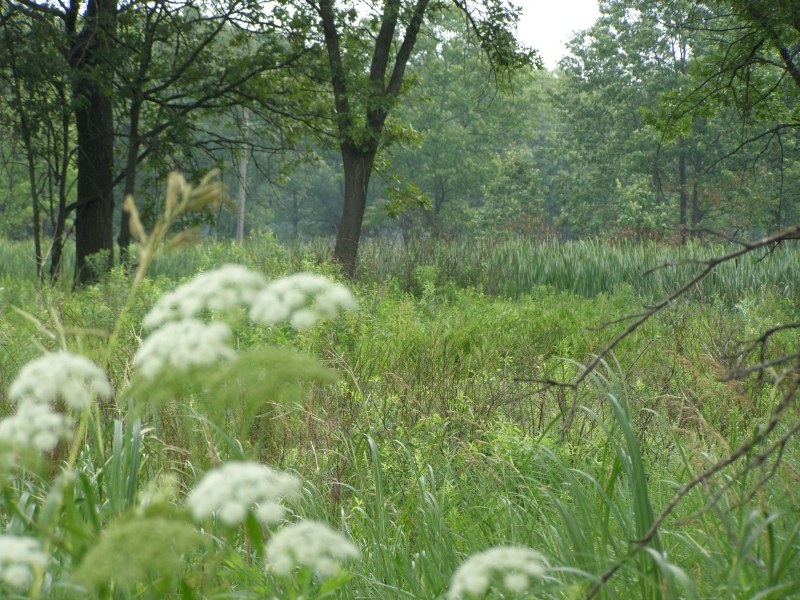
Photograph: Chris Light, National Park Service · Original source · Public domain. Resized proportionally.

Habitat and shelter
Soil beneath or beside sidewalks, driveways, stones, and other cover, especially in open disturbed places. Excavated soil at cracks can reveal entrances, although the nest extends beyond what is visible. [ID]
Water and the nesting substrate
Paving changes the delivery of rain and the rate of surface heating. Cracks concentrate runoff, while nearby soil may remain dry. A single dry-looking surface does not describe the deeper nest.
Food routes and vegetation
An omnivorous scavenger that collects sugary foods, insect material, and other small food particles. Workers can recruit nestmates quickly to a concentrated food source.
The main garden issue is usually location, not direct feeding damage to living plants. An ant carrying a seed may be moving, consuming, or discarding it; watch the outcome before calling the event seed dispersal. [ID, UC]
Comparison with Lafayette
Concrete can be much warmer than shaded soil. Compare shaded and sunny entrances at matched times, and record surface temperature separately from the weather-station air temperature.
Morris records the older pavement-ant name Tetramorium caespitum in Wayne County. That historical record alone is not a verified modern Tippecanoe record of T. immigrans. [IN]
Manage the setting
Observe pavement edges, soil joints, and nearby vegetation without lifting heavy slabs. Record entrances separately; several entrances may belong to one colony.
Keep a record of the actual conflict: indoor food contamination, structural nesting, a blocked path, or no practical problem. An outdoor ant population does not by itself call for control. [PU]
A simple habitat observation
Choose two nearby places with contrasting cover. Observe each for five minutes at a similar time of day. Record shade, substrate, wetness, visible entrances, and the number of workers crossing a fixed line. Repeat on several days; a trail count measures visible traffic, not colony size.