

Tetramorium immigrans
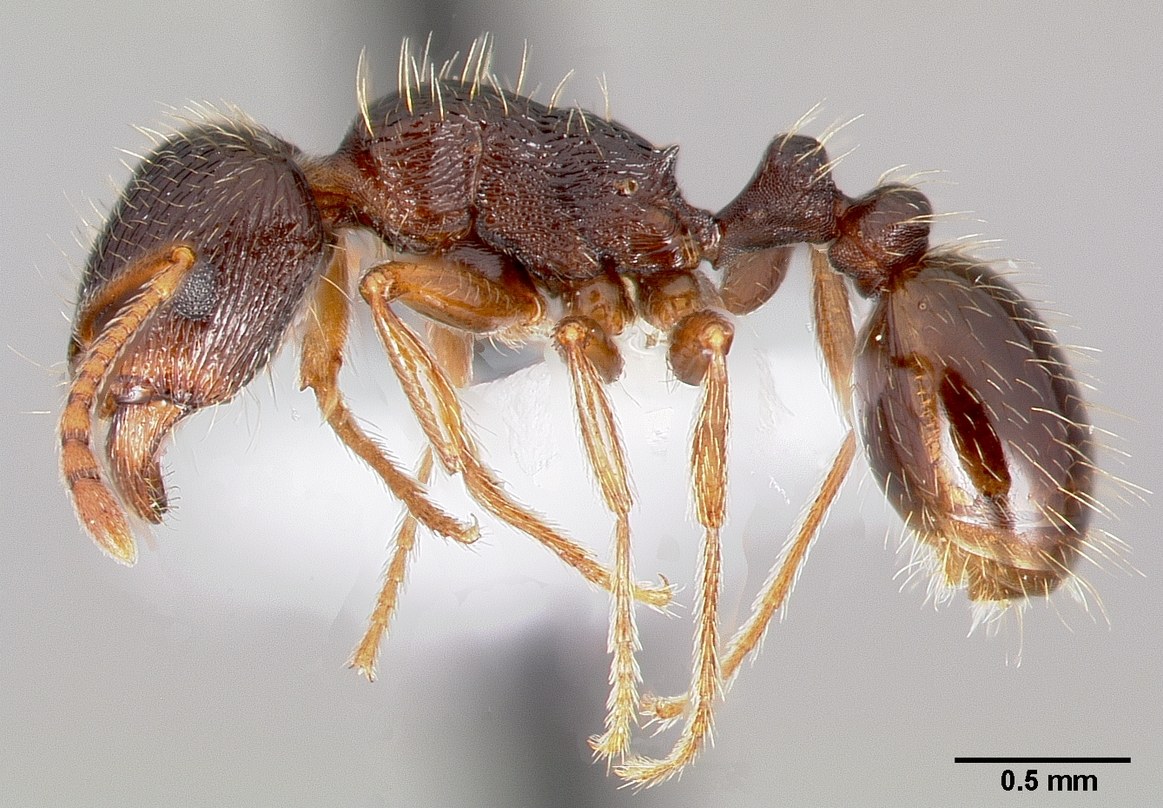
Photograph: April Nobile · Original source · CC BY 4.0. Resized proportionally.

The familiar small ant beneath sidewalks and paving stones. Its success in disturbed ground makes it easy to observe, but the older name Tetramorium caespitum can conceal important differences among species.
At a Glance
Field | Information |
|---|---|
Scientific name | Tetramorium immigrans |
Worker length | About 2.5 to 4 mm |
Native status | Introduced to North America from Eurasia |
Practical significance | Widespread introduced urban ant; local ecological effects vary |
Identification
Workers have two waist nodes, a pair of small rear spines on the middle body, and grooves on the head and thorax. Color is usually dark brown to black. A hand lens helps; these features are difficult to confirm in a distant phone photograph. [ID]
Odorous house ants lack the two conspicuous waist nodes. Do not label an ant as a fire ant because it forms a mound or gathers in a dense group. Closely related Tetramorium species may require expert examination.
Food and foraging
An omnivorous scavenger that collects sugary foods, insect material, and other small food particles. Workers can recruit nestmates quickly to a concentrated food source. [ID]
Life cycle and seasonal timing
A mated queen usually founds a colony independently. Mature colonies normally have one reproductive queen. Workers rear eggs, larvae, and pupae in underground chambers. Rival neighboring colonies may engage in conspicuous contests.
In the Northern Hemisphere, mating flights are commonly reported from late May through July, often near sunrise on still days. Local weather changes the timing. [ID, Pavement]
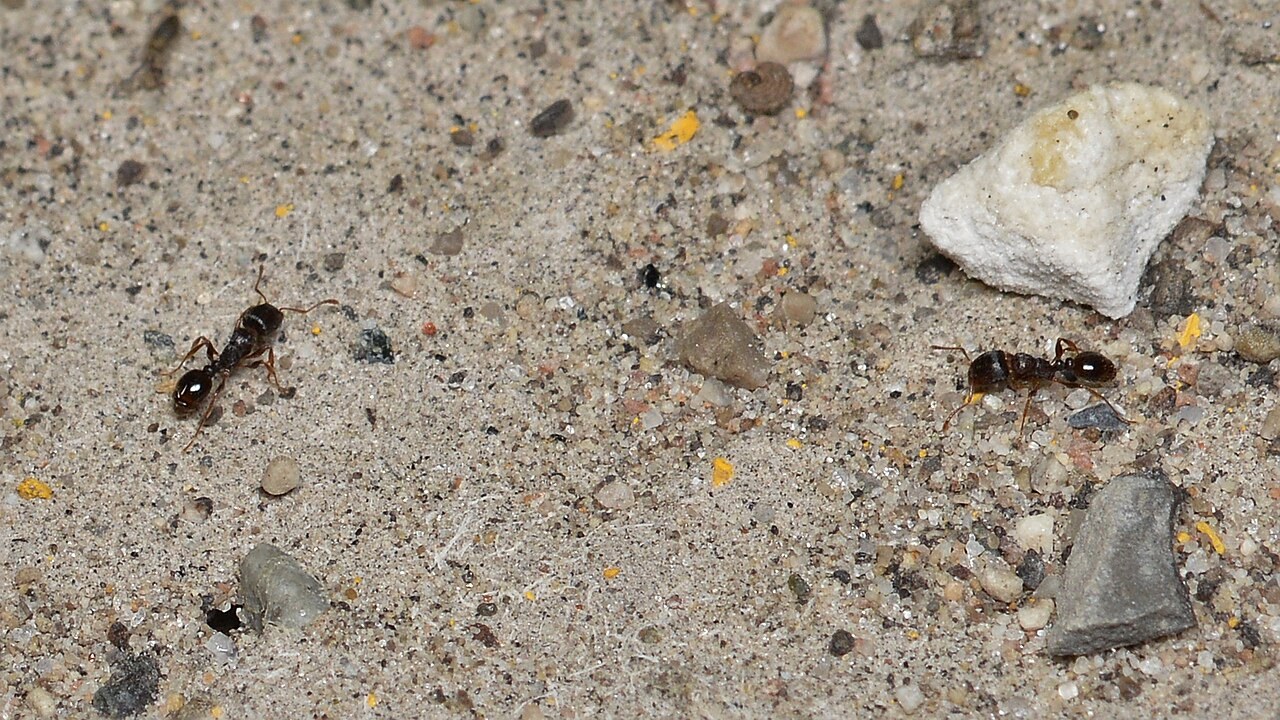
Photograph: Jacy Lucier · Original source · CC BY-SA 4.0. Resized proportionally.

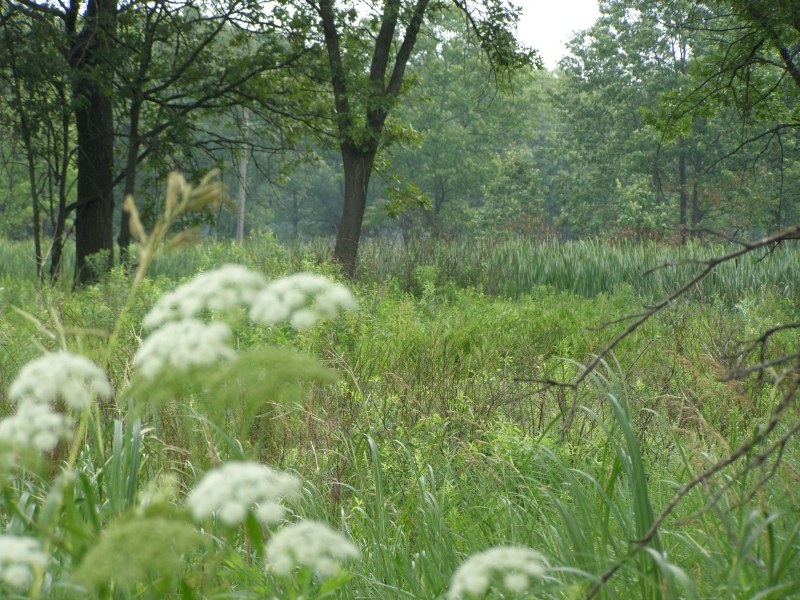
Photograph: Ryan Hodnett · Original source · CC BY-SA 4.0. Resized proportionally.

Environment and local occurrence
Soil beneath or beside sidewalks, driveways, stones, and other cover, especially in open disturbed places. Excavated soil at cracks can reveal entrances, although the nest extends beyond what is visible.
Morris records the older pavement-ant name Tetramorium caespitum in Wayne County. That historical record alone is not a verified modern Tippecanoe record of T. immigrans. [IN]
Living with this ant
Tolerate outdoor colonies when they are not causing a practical problem. Indoors, remove food residues and seal entry routes. If needed, choose a labeled bait and follow progress over time rather than judging success by dead workers alone. [UC]
Observe without handling or deliberately disturbing the nest. Before using a pesticide, confirm the ant and follow the current label for the site and application. Protect food, children, pets, and nearby water.