

Lasius interjectus
The nest environment explains where this ant can live and how it reaches food. Compare soil, shelter, moisture, and nearby vegetation before treating an entire landscape as one habitat.
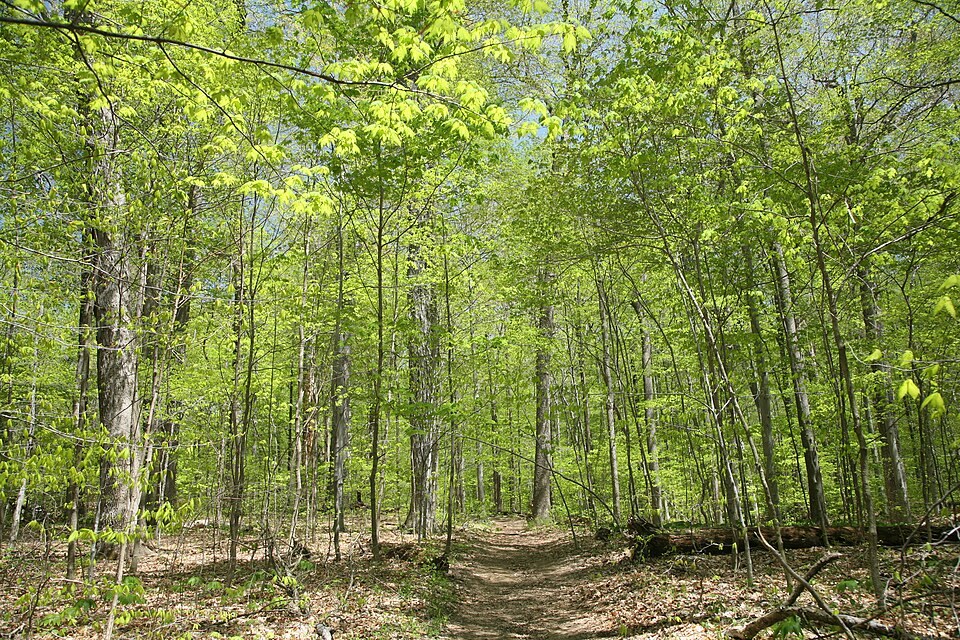
Photograph: Daniel Schwen · Original source · CC BY-SA 4.0. Resized proportionally.

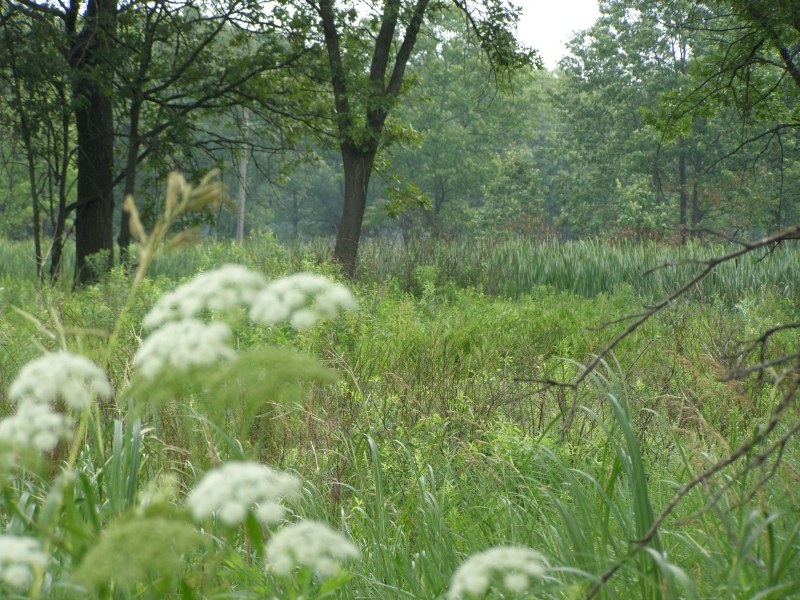
Photograph: Chris Light, National Park Service · Original source · Public domain. Resized proportionally.

Habitat and shelter
Soil beneath stones, logs, slabs, and other cover; open woods, lawns, gardens, and sites beside foundations. Nest entrances may be associated with small piles of excavated soil. [ID]
Water and the nesting substrate
Belowground shelter and access to living roots are central features. An intact soil profile can contain a colony even when no workers are visible at the surface.
Food routes and vegetation
Associated mainly with honeydew from root-feeding aphids and mealybugs. The food relationship is largely hidden belowground rather than on exposed foliage.
Root-feeding insects supply honeydew, connecting the ants with the belowground plant community. Finding citronella ants alone does not diagnose damaging root-aphid or root-mealybug populations. [ID, Citronella]
Comparison with Lafayette
A heated slab can keep adjacent soil warmer than nearby open ground. Record whether a swarm is inside, beside a foundation, or in unheated outdoor soil.
Morris lists Tippecanoe County for Lasius interjectus and describes it as common in damp situations. The county record is historical. [IN]
Manage the setting
Examine where swarmers emerge and whether an opening connects to soil beneath a slab. Avoid dismantling healthy garden soil merely to look for root-associated insects.
Keep a record of the actual conflict: indoor food contamination, structural nesting, a blocked path, or no practical problem. An outdoor ant population does not by itself call for control. [PU]
A simple habitat observation
Choose two nearby places with contrasting cover. Observe each for five minutes at a similar time of day. Record shade, substrate, wetness, visible entrances, and the number of workers crossing a fixed line. Repeat on several days; a trail count measures visible traffic, not colony size.