

Lasius interjectus
Follow this ant’s feeding, nesting, and relationships with plants and other animals to understand its role in the local community.
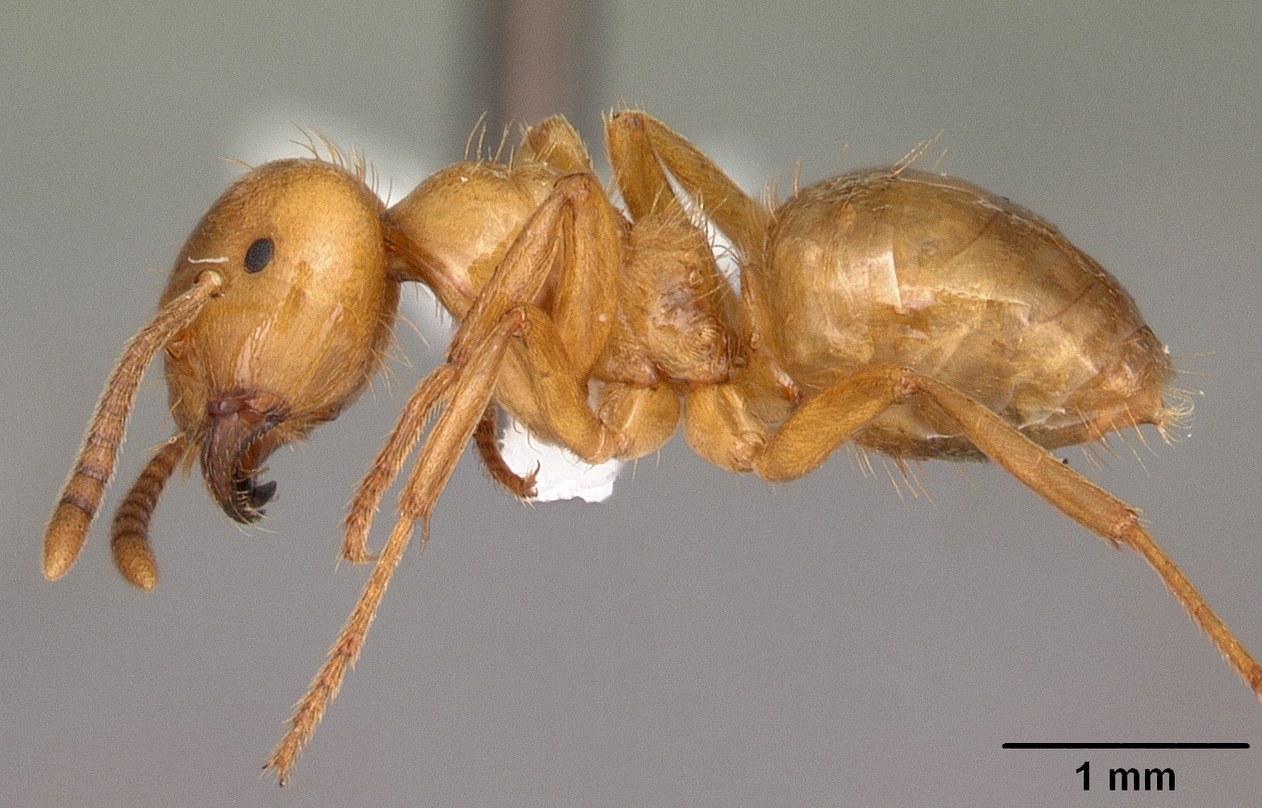
Photograph: April Nobile · Original source · CC BY 4.0. Resized proportionally.

Food web role
These ants provide a useful example of belowground mutualism: sugar from plant-feeding insects supports the ant colony. The ecological consequences depend on the partner insects and their abundance, not simply the presence of a swarm. [Citronella]
Relationships with plants
Root-feeding insects supply honeydew, connecting the ants with the belowground plant community. Finding citronella ants alone does not diagnose damaging root-aphid or root-mealybug populations.
When ants visit a plant, distinguish feeding on plant tissue, gathering nectar or honeydew, hunting, and simple passage. Seeing ants on a flower does not establish effective pollination. [UC]
Colony and community
Brood develops underground, and seasonal winged reproductives disperse from established nests. The concealed biology of colonies is less well documented than the dramatic swarming events that bring them to attention.
Usually an inconspicuous soil ant; swarms can be a nuisance. Morris lists Tippecanoe County for Lasius interjectus and describes it as common in damp situations. The county record is historical. [IN]
A question to investigate
Do repeated swarms emerge from the same soil-connected opening, and are they associated with a warm structure?
Observe for five minutes on at least three occasions. Record what workers carry or contact, note the weather, and include a nearby comparison area. Visible traffic is not a measure of total colony size.
Management implication
Vacuum nuisance swarmers and identify them. Seal accessible entry cracks after assessing the source. Recurrent indoor swarms may justify professional investigation; routine food baits may attract little interest.
Retain the observation record after any action. Compare the original problem, plant condition, and ant traffic rather than using the disappearance of every ant as the goal. [UC]
Useful terms
Honeydew is sugary excretion from sap-feeding insects. Brood means eggs, larvae, and pupae. A mutualism benefits both partners.