

Lasius interjectus
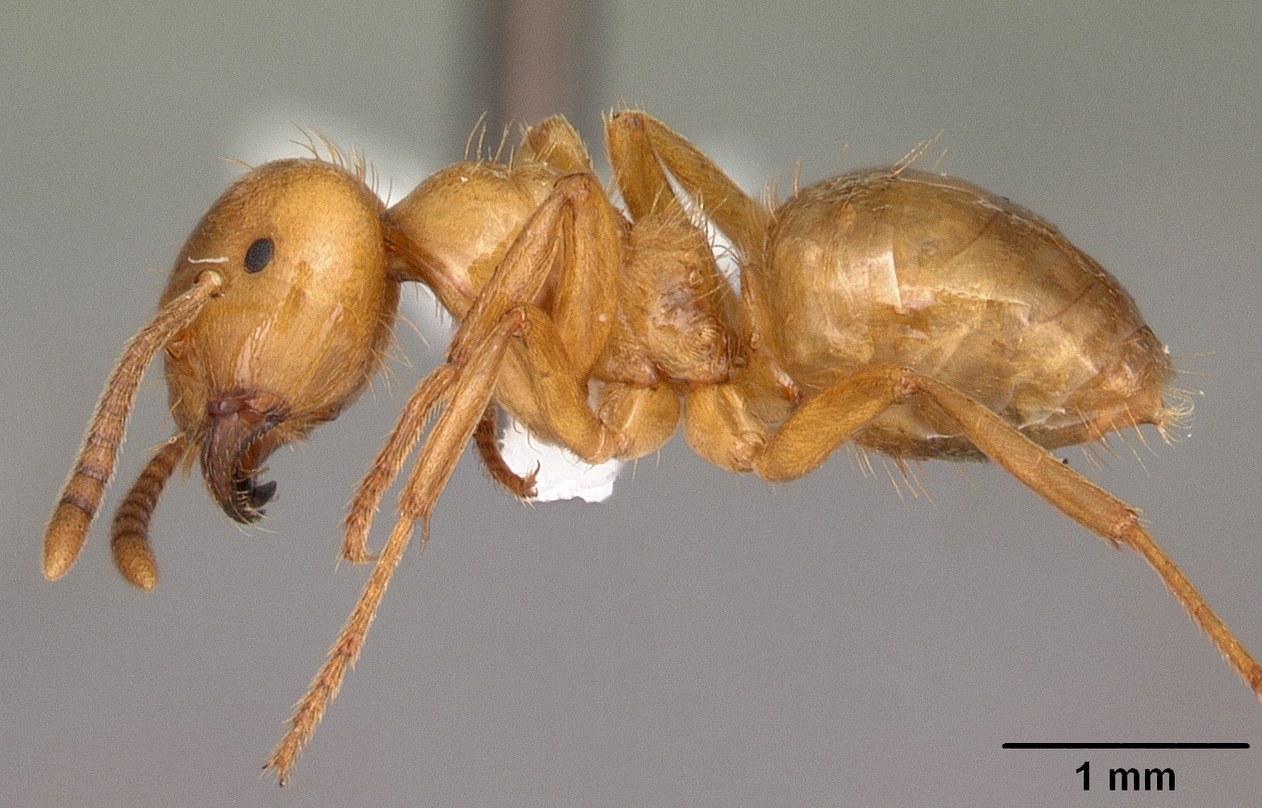
Photograph: April Nobile · Original source · CC BY 4.0. Resized proportionally.

A yellow ant that spends much of its life belowground. A sudden indoor swarm can look alarming, but these ants are not wood-eating termites and ordinarily do not attack stored food.
At a Glance
Field | Information |
|---|---|
Scientific name | Lasius interjectus |
Worker length | Workers about 4 to 4.5 mm |
Native status | Native to North America |
Practical significance | Usually an inconspicuous soil ant; swarms can be a nuisance |
Identification
Workers are yellow to yellowish brown, with small eyes, a single waist node, and 12-segmented antennae. Disturbed ants can release a lemonlike odor. Winged reproductives are darker and larger than workers. [ID]
Lasius claviger, the smaller citronella ant, looks similar. Color and smell alone do not securely distinguish the two. Termites lack the narrow ant waist and elbowed worker or queen antennae.
Food and foraging
Associated mainly with honeydew from root-feeding aphids and mealybugs. The food relationship is largely hidden belowground rather than on exposed foliage. [ID]
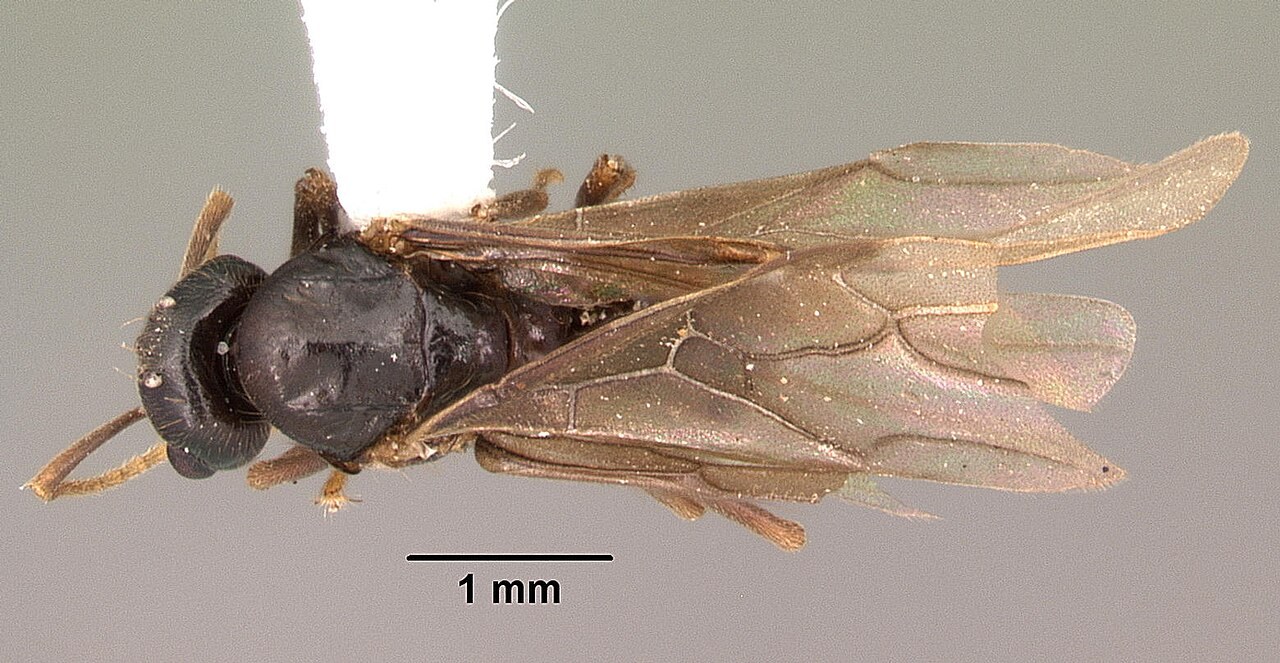
Photograph: April Nobile · Original source · CC BY 4.0. Resized proportionally.

Life cycle and seasonal timing
Brood develops underground, and seasonal winged reproductives disperse from established nests. The concealed biology of colonies is less well documented than the dramatic swarming events that bring them to attention.
Swarms are especially noticeable in mid to late summer. Colonies beneath heated structures can produce unusual early, late, or indoor swarms. [ID, Citronella]
Photograph: Daniel Schwen · Original source · CC BY-SA 4.0. Resized proportionally.

Photograph: Chris Light, National Park Service · Original source · Public domain. Resized proportionally.

Environment and local occurrence
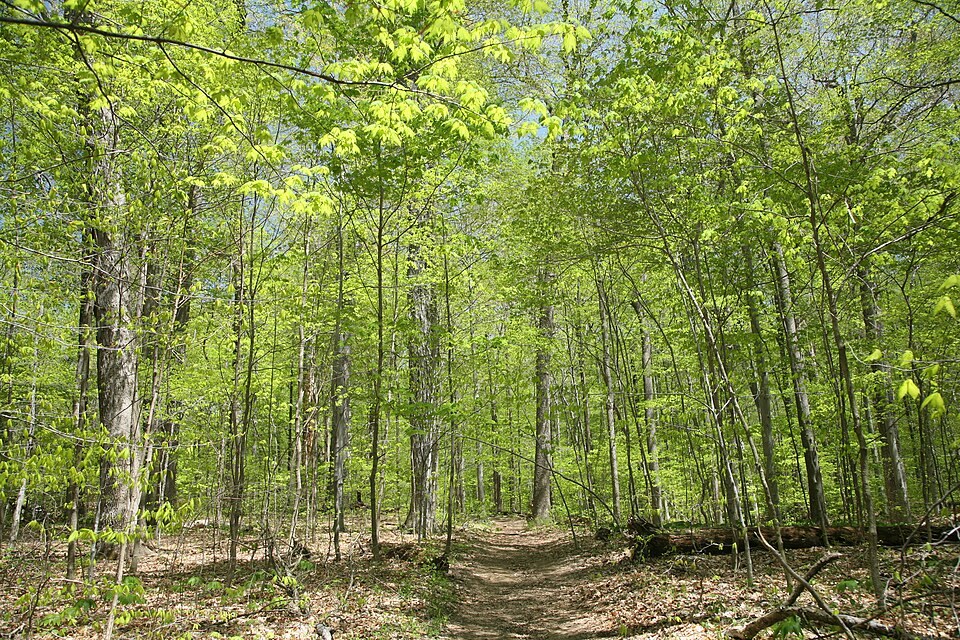
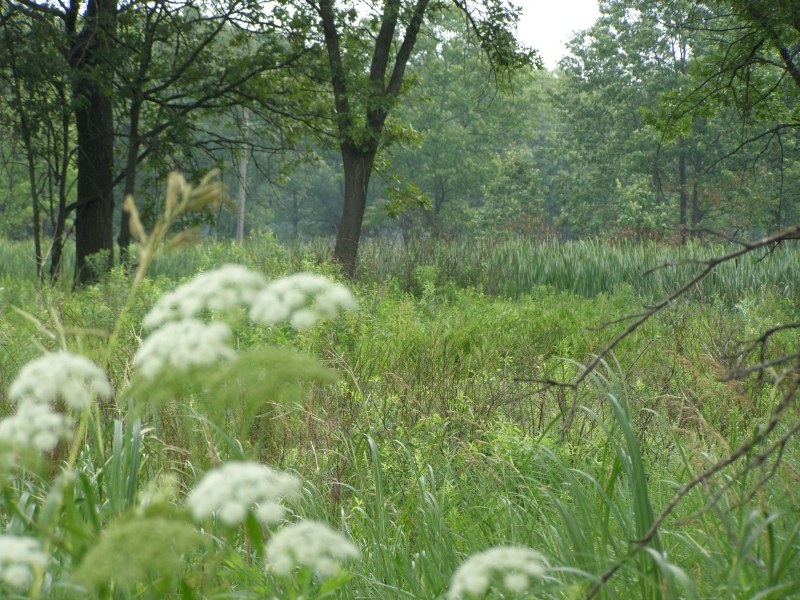
Soil beneath stones, logs, slabs, and other cover; open woods, lawns, gardens, and sites beside foundations. Nest entrances may be associated with small piles of excavated soil.
Morris lists Tippecanoe County for Lasius interjectus and describes it as common in damp situations. The county record is historical. [IN]
Living with this ant
Vacuum nuisance swarmers and identify them. Seal accessible entry cracks after assessing the source. Recurrent indoor swarms may justify professional investigation; routine food baits may attract little interest. [UC]
Observe without handling or deliberately disturbing the nest. Before using a pesticide, confirm the ant and follow the current label for the site and application. Protect food, children, pets, and nearby water.