

Formica species
Follow this ant’s feeding, nesting, and relationships with plants and other animals to understand its role in the local community.
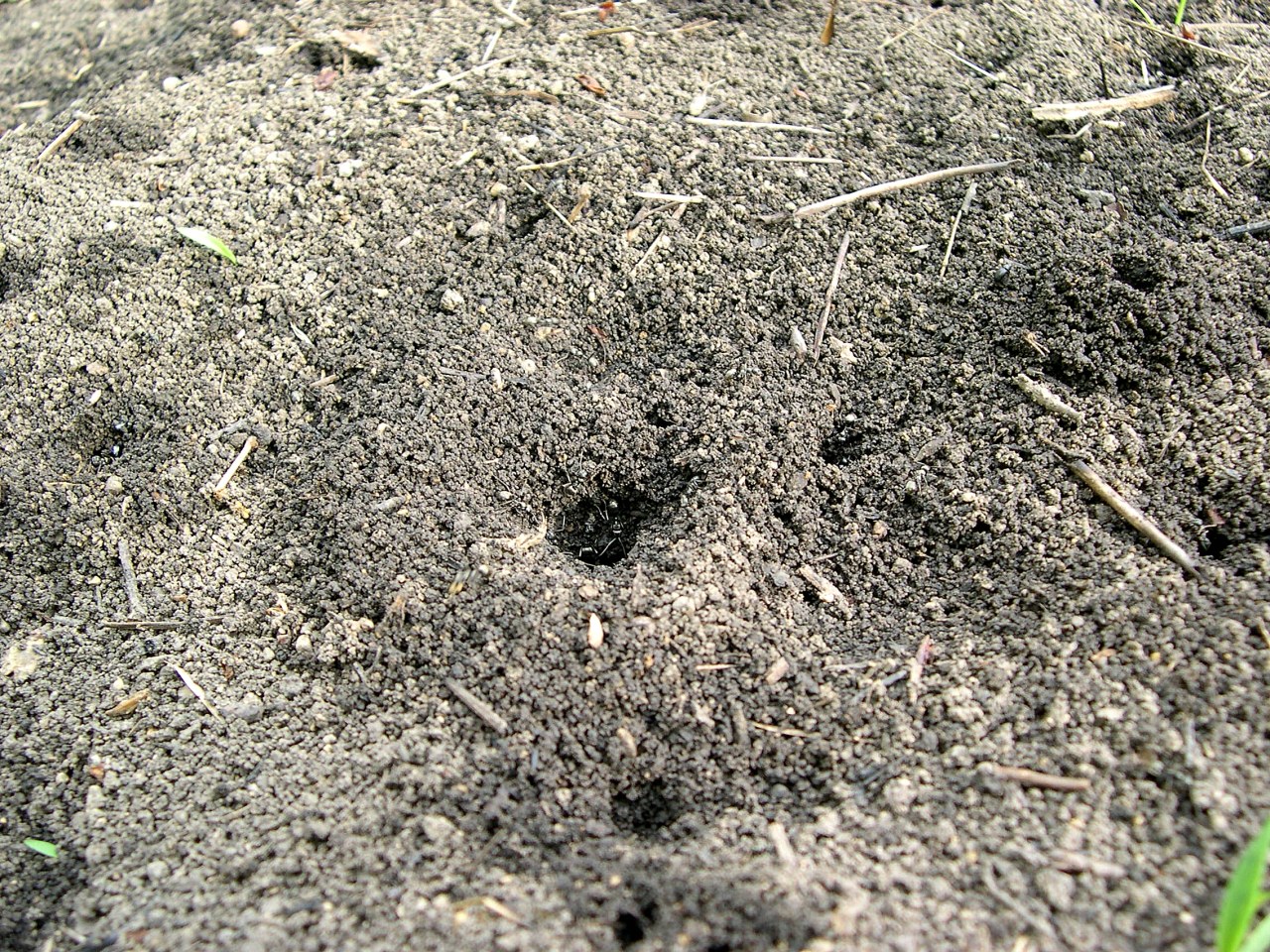
Photograph: Jay Sturner from USA · Original source · CC BY 2.0. Resized proportionally.

Food web role
Formica ants can be influential predators and scavengers. They also interact with sap-feeding insects and compete with other ants. Their diversity makes species-level identification especially valuable for ecological interpretation. [ID]
Relationships with plants
Some species attend honeydew-producing insects. Certain mound-building species can suppress nearby vegetation; this should not be generalized to every field ant or blamed for every bare patch.
When ants visit a plant, distinguish feeding on plant tissue, gathering nectar or honeydew, hunting, and simple passage. Seeing ants on a flower does not establish effective pollination. [UC]
Colony and community
Workers rear brood in soil nests. Winged reproductives occur seasonally, but nesting systems and colony-founding strategies vary markedly among species. Some Formica have specialized social relationships with other ants.
A diverse genus group; assess each species separately. Morris lists Tippecanoe County for the historical Formica fusca subsericea combination. Other Formica species need their own records. [IN]
A question to investigate
Does the vegetation pattern around a mound remain consistent through the season, and is there direct evidence of ant activity affecting it?
Observe for five minutes on at least three occasions. Record what workers carry or contact, note the weather, and include a nearby comparison area. Visible traffic is not a measure of total colony size.
Management implication
Usually tolerate outdoor nests. If a mound interferes with a path or mowing, first consider adjusting the route or managed area. Confirm the ant before selecting a targeted response.
Retain the observation record after any action. Compare the original problem, plant condition, and ant traffic rather than using the disappearance of every ant as the goal. [UC]
Useful terms
Honeydew is sugary excretion from sap-feeding insects. Brood means eggs, larvae, and pupae. A mutualism benefits both partners.