

Formica species
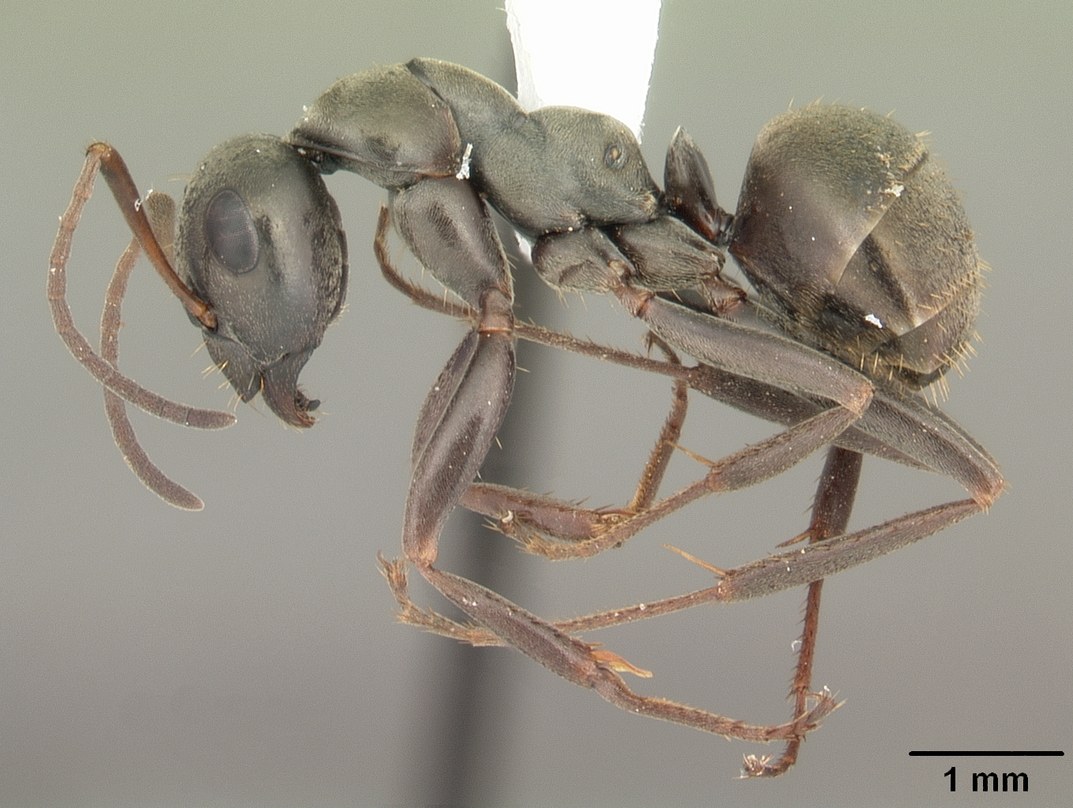
Photograph: April Nobile · Original source · CC BY 4.0. Resized proportionally.

Fast-moving ants of soil, grassland, woodland edges, and other habitats. Some build obvious mounds, while others have modest entrances. Formica subsericea is the photographic example in this set.
At a Glance
Field | Information |
|---|---|
Scientific name | Formica species |
Worker length | Many local workers are about 3 to 7 mm; species vary |
Native status | Numerous Indiana species are native |
Practical significance | A diverse genus group; assess each species separately |
Identification
Workers have one waist node and typically an uneven middle-body profile. Many have visible simple eyes on the top of the head. Black, reddish, and mixed colors all occur. A mound and body color do not establish the species. [ID]
Carpenter ants usually have a smoother, evenly rounded upper profile. A red-and-black field ant is not automatically a fire ant. Some Formica species require a specialist and a series of worker specimens for identification.
Food and foraging
Common resources include insect prey, dead insects, and honeydew. Feeding observations are more informative than assuming that every large mound represents plant damage. [ID]
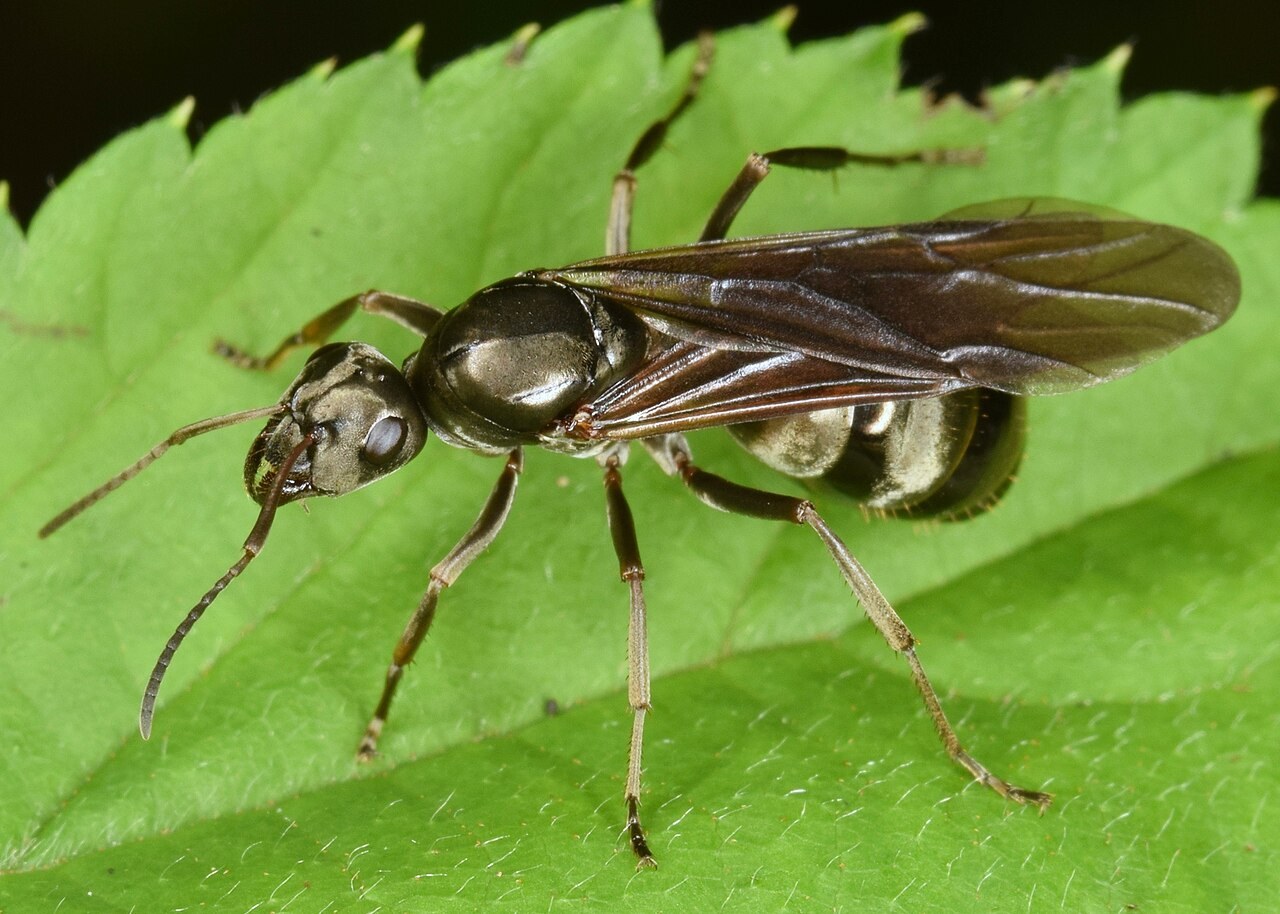
Photograph: Christina Butler from Georgia, United States · Original source · CC BY 2.0. Resized proportionally.

Life cycle and seasonal timing
Workers rear brood in soil nests. Winged reproductives occur seasonally, but nesting systems and colony-founding strategies vary markedly among species. Some Formica have specialized social relationships with other ants.
Many Midwestern field-ant swarms occur during summer and early autumn. This broad group has no single dependable flight month. [ID]
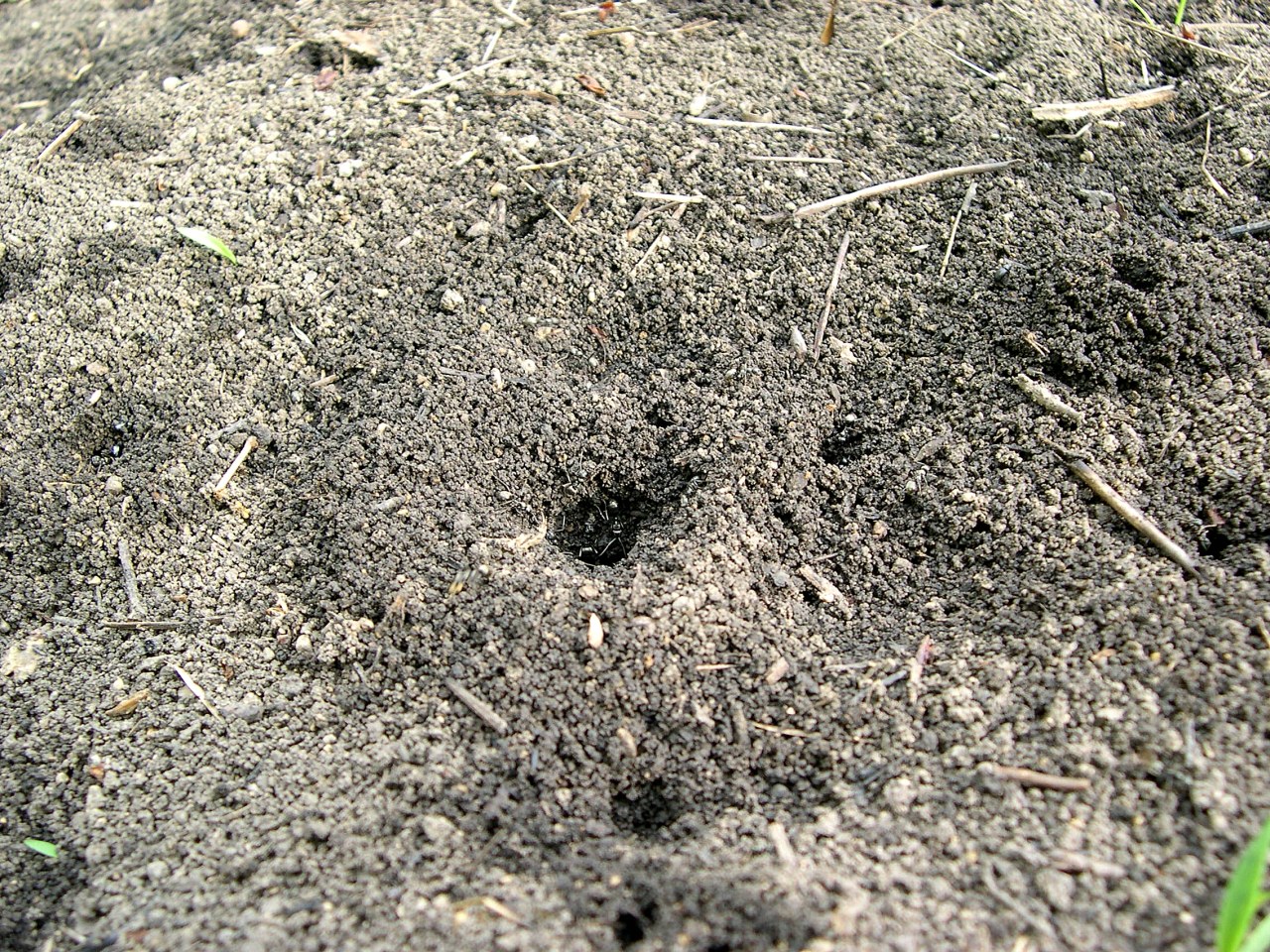
Photograph: Jay Sturner from USA · Original source · CC BY 2.0. Resized proportionally.

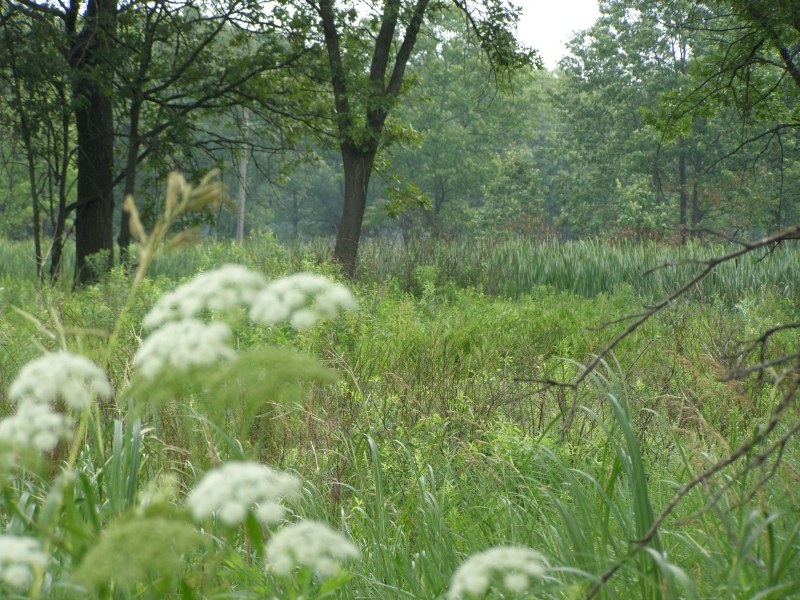
Photograph: Chris Light, National Park Service · Original source · Public domain. Resized proportionally.

Environment and local occurrence
Open soil, lawns, prairies, woodland margins, and other settings depending on species. Some build soil or thatch mounds; others nest beneath objects with less visible surface structure.
Morris lists Tippecanoe County for the historical Formica fusca subsericea combination. Other Formica species need their own records. [IN]
Living with this ant
Usually tolerate outdoor nests. If a mound interferes with a path or mowing, first consider adjusting the route or managed area. Confirm the ant before selecting a targeted response. [UC]
Observe without handling or deliberately disturbing the nest. Before using a pesticide, confirm the ant and follow the current label for the site and application. Protect food, children, pets, and nearby water.