

Lasius americanus
The nest environment explains where this ant can live and how it reaches food. Compare soil, shelter, moisture, and nearby vegetation before treating an entire landscape as one habitat.
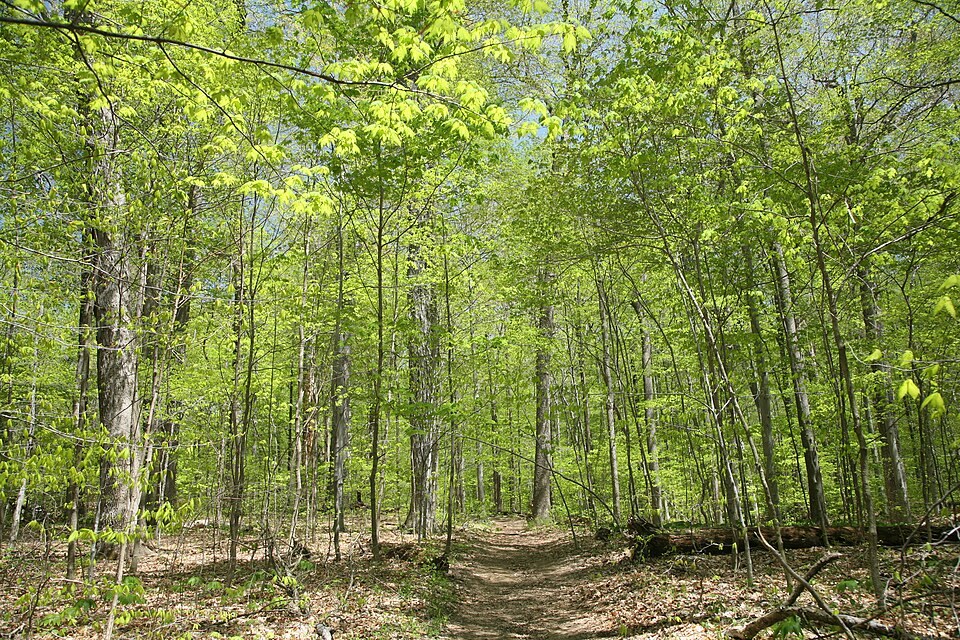
Photograph: Daniel Schwen · Original source · CC BY-SA 4.0. Resized proportionally.

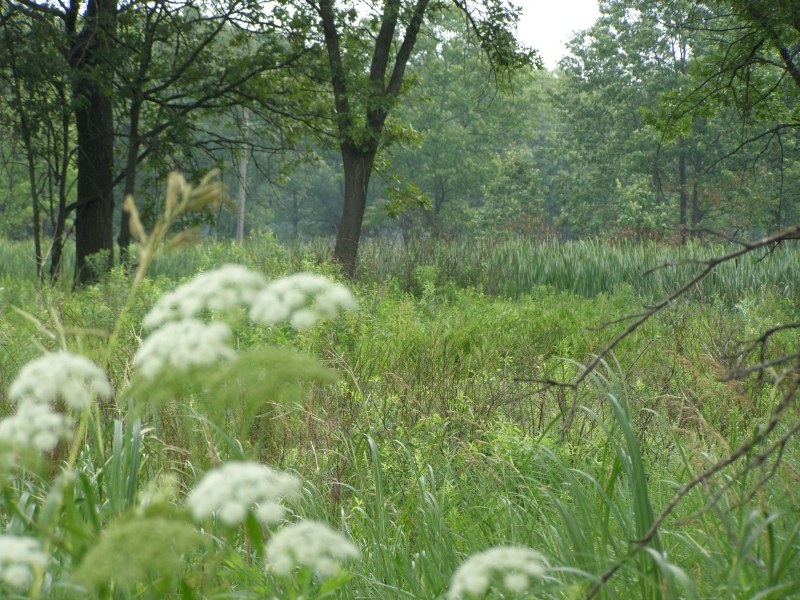
Photograph: Chris Light, National Park Service · Original source · Public domain. Resized proportionally.

Habitat and shelter
Soil and sheltered spaces beneath stones or decaying wood in woodlands, edges, and some modified landscapes. A small crater in a lawn can suggest a soil-nesting ant but is not species diagnostic. [ID]
Water and the nesting substrate
Cover objects and litter create small moist refuges. Their underside conditions can differ greatly from the top of the surrounding lawn, particularly after several rain-free days.
Food routes and vegetation
Collects honeydew and small insect food. Trails to plants can reveal sap-feeding insects, while much colony activity remains beneath cover or in soil.
Honeydew connects the ants with sap-feeding insects. Watch whether workers contact aphids, carry insect prey, or merely pass over a leaf; those observations imply different ecological roles. [ID, UC]
Comparison with Lafayette
Compare litter depth, overhead shade, and the cover object at each site. Do not assign the outdoor climate of a forest floor from measurements taken on a nearby sunlit sidewalk.
Historical Indiana Lasius records use older names with changing species boundaries. A current specimen identification is needed before assigning a historical locality confidently to L. americanus. [IN]
Manage the setting
Record whether an observation came from closed woodland, a wooded edge, or open turf. This habitat distinction helps interpret records that otherwise share the common name cornfield ant.
Keep a record of the actual conflict: indoor food contamination, structural nesting, a blocked path, or no practical problem. An outdoor ant population does not by itself call for control. [PU]
A simple habitat observation
Choose two nearby places with contrasting cover. Observe each for five minutes at a similar time of day. Record shade, substrate, wetness, visible entrances, and the number of workers crossing a fixed line. Repeat on several days; a trail count measures visible traffic, not colony size.