

Lasius americanus
Photograph: Emmett Collins-Sussman · Original source · CC BY 4.0. Resized proportionally.

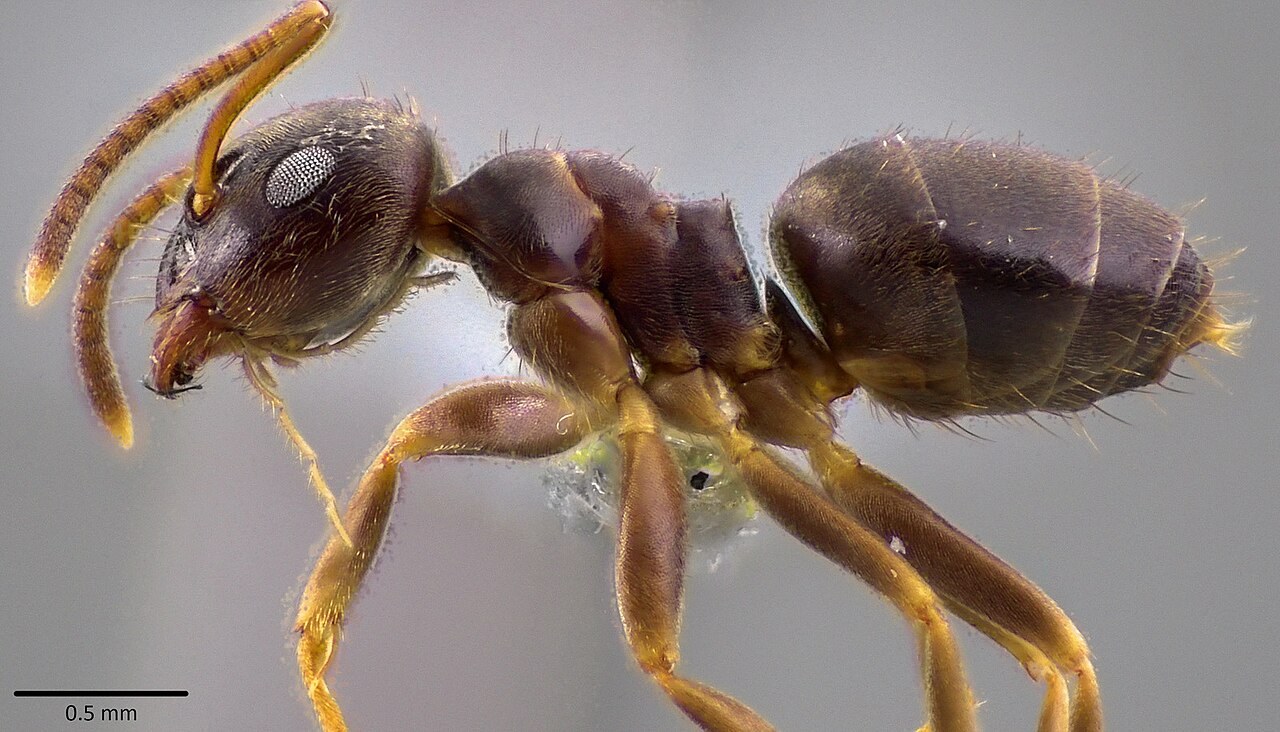
A small brown native ant also called the woodland fuzzy ant. “Cornfield ant” is used for several Lasius ants, so keep the scientific name with photographs and records.
At a Glance
Field | Information |
|---|---|
Scientific name | Lasius americanus |
Worker length | About 2.5 to 4 mm |
Native status | Native to North America |
Practical significance | Native soil and woodland ant; usually a minor nuisance |
Identification
Workers are brown, often with paler legs, with one waist node and an uneven middle-body profile. Species identification among small Lasius ants depends on details such as hair distribution and body proportions that usually require magnification. [ID]
Lasius neoniger is also called the cornfield or turfgrass ant. Older North American records labeled Lasius alienus may concern L. americanus; do not transfer every old locality or behavior record automatically.
Food and foraging
Collects honeydew and small insect food. Trails to plants can reveal sap-feeding insects, while much colony activity remains beneath cover or in soil. [ID]
Photograph: Emmett Collins-Sussman · Original source · CC BY 4.0. Resized proportionally.

Life cycle and seasonal timing
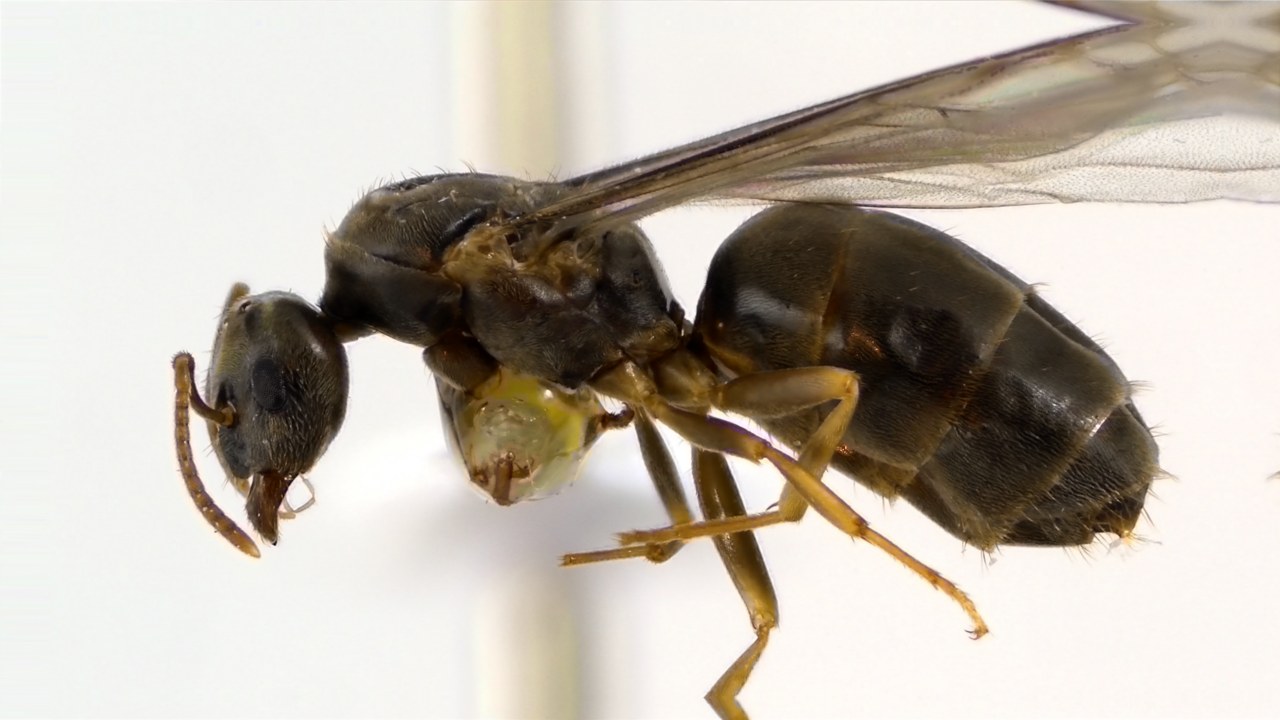
Colonies develop through egg, larval, pupal, and adult stages. Winged males and young queens disperse seasonally. The size and behavior of a queen should not be compared directly with the worker identification characters.
Regional guides place Lasius americanus mating swarms mainly in summer into early autumn. Confirm the species before attributing a September swarm to this ant rather than L. neoniger. [ID]
Photograph: Daniel Schwen · Original source · CC BY-SA 4.0. Resized proportionally.

Photograph: Chris Light, National Park Service · Original source · Public domain. Resized proportionally.

Environment and local occurrence
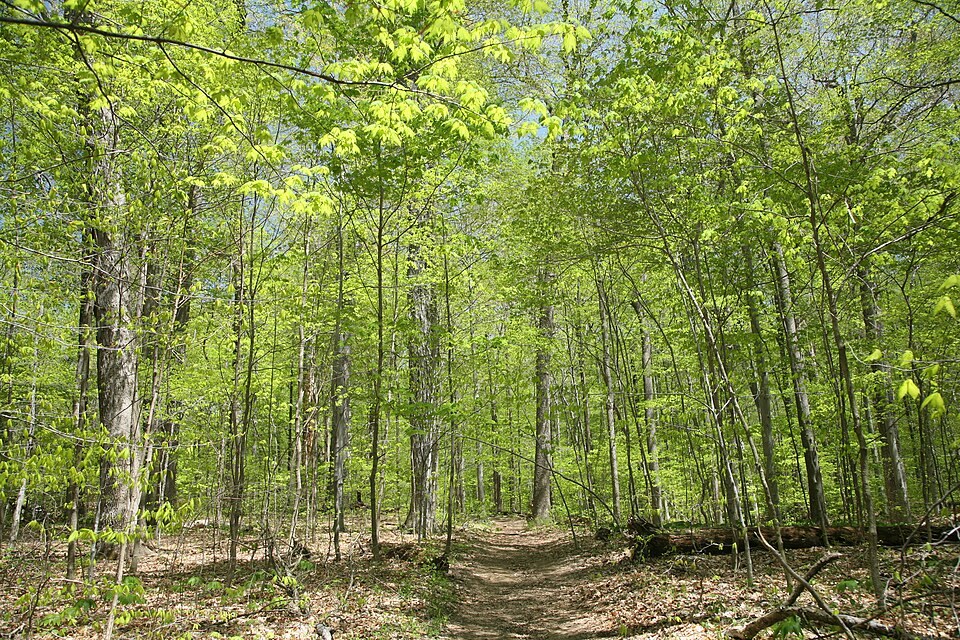
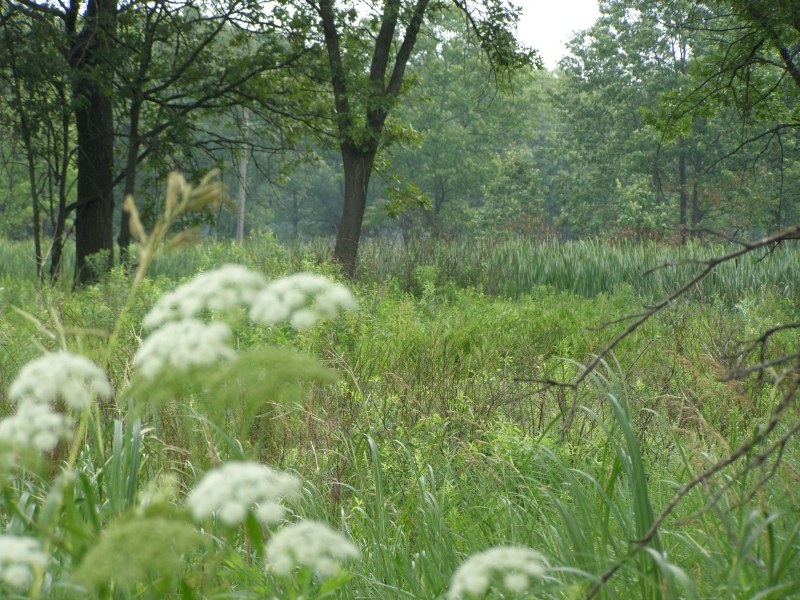
Soil and sheltered spaces beneath stones or decaying wood in woodlands, edges, and some modified landscapes. A small crater in a lawn can suggest a soil-nesting ant but is not species diagnostic.
Historical Indiana Lasius records use older names with changing species boundaries. A current specimen identification is needed before assigning a historical locality confidently to L. americanus. [IN]
Living with this ant
Usually tolerate outdoor nests. For occasional indoor foragers, correct food and water attractions and seal access. Obtain a close identification before deciding that a recurring problem is this species. [UC]
Observe without handling or deliberately disturbing the nest. Before using a pesticide, confirm the ant and follow the current label for the site and application. Protect food, children, pets, and nearby water.