

Camponotus pennsylvanicus
The nest environment explains where this ant can live and how it reaches food. Compare soil, shelter, moisture, and nearby vegetation before treating an entire landscape as one habitat.
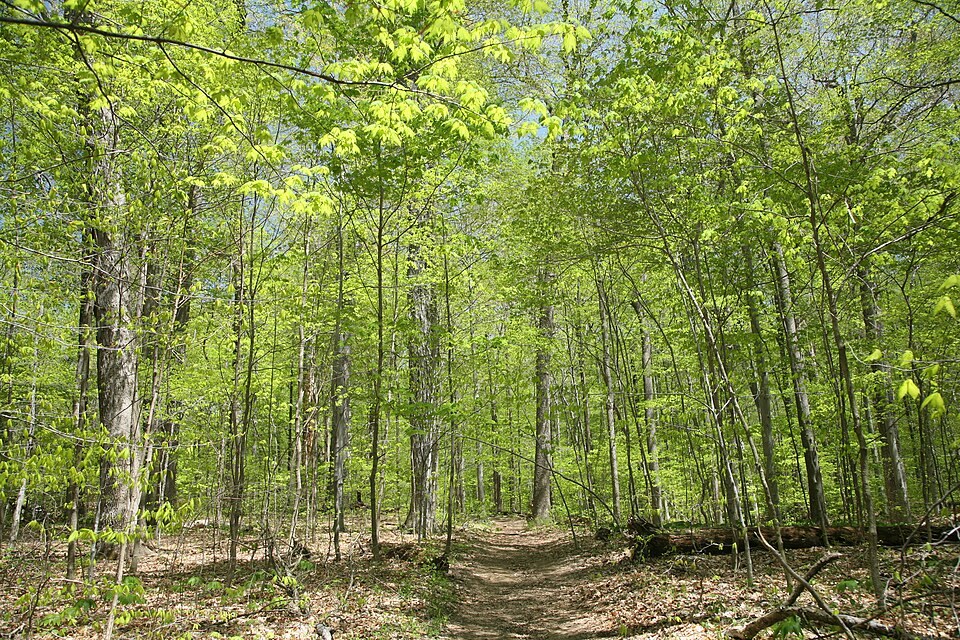
Photograph: Daniel Schwen · Original source · CC BY-SA 4.0. Resized proportionally.

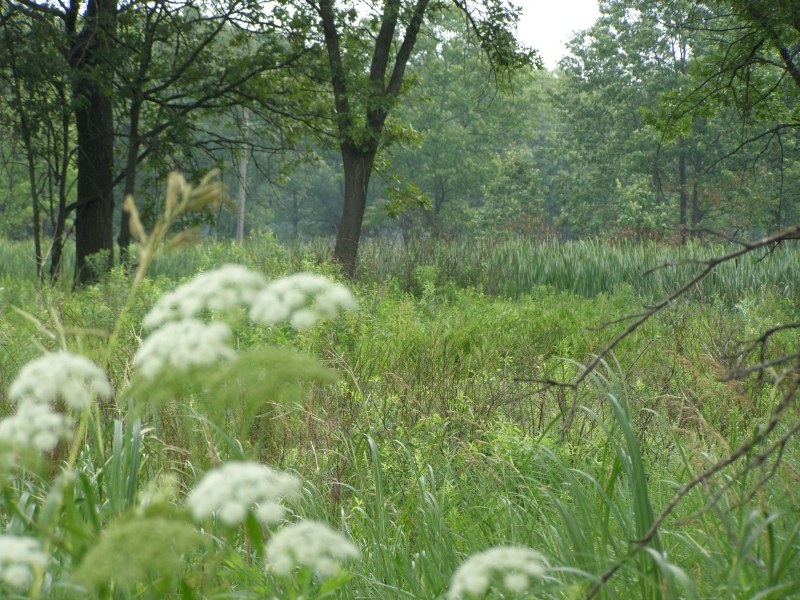
Photograph: Chris Light, National Park Service · Original source · Public domain. Resized proportionally.

Habitat and shelter
Hollow or decaying trees, stumps, logs, and sometimes structural timbers. Damp wood often supports the main nest; satellite nests may occupy drier spaces. [ID]
Water and the nesting substrate
Water leakage and wood decay make building material easier to excavate. Examine the water source as well as the insect evidence; new sawdust does not identify the original cause of deterioration.
Food routes and vegetation
Collects honeydew and other sugary liquids and eats live or dead insects. Foraging workers may travel from a tree nest into a house without nesting inside.
Workers on trunks may be hunting insects or collecting honeydew. Their presence on a living tree is not proof that the tree is dying; nesting in damaged wood and foraging on foliage are different observations. [ID, UC]
Comparison with Lafayette
A hollow tree, damp sill, and insulated wall can have very different temperature and moisture regimes. An airport minimum temperature does not equal the temperature in any of those nests.
Morris lists Tippecanoe County under an older Camponotus pennsylvanicus combination. The record supports historical local occurrence, not a current nest location. [IN]
Manage the setting
Retain safe dead wood in suitable natural areas, but keep stored firewood and damp debris away from the building. Inspect window frames, roof leaks, plumbing areas, and wood in contact with soil.
Keep a record of the actual conflict: indoor food contamination, structural nesting, a blocked path, or no practical problem. An outdoor ant population does not by itself call for control. [PU]
A simple habitat observation
Choose two nearby places with contrasting cover. Observe each for five minutes at a similar time of day. Record shade, substrate, wetness, visible entrances, and the number of workers crossing a fixed line. Repeat on several days; a trail count measures visible traffic, not colony size.