

Camponotus pennsylvanicus
A large native ant that excavates wood for shelter. It eats other foods, not wood. Around a house, finding the nest and correcting moisture matter more than killing a few roaming workers.
At a Glance
Field | Information |
|---|---|
Scientific name | Camponotus pennsylvanicus |
Worker length | Workers commonly about 6 to 13 mm |
Native status | Native to eastern and central North America |
Practical significance | Native woodland ant; established nests can damage building wood |
Identification
Workers are black and vary considerably in size within one colony. The upper outline of the middle body is smoothly rounded when seen from the side, and the waist has one node. Coarse wood fragments near an opening can indicate excavation but do not establish the species by themselves. [ID]
Field ants can be similar in size and color but usually have a less evenly arched middle body. Termites have a broad waist and straight, beaded antennae; winged termites have two similarly sized wing pairs.
Food and foraging
Collects honeydew and other sugary liquids and eats live or dead insects. Foraging workers may travel from a tree nest into a house without nesting inside. [ID]
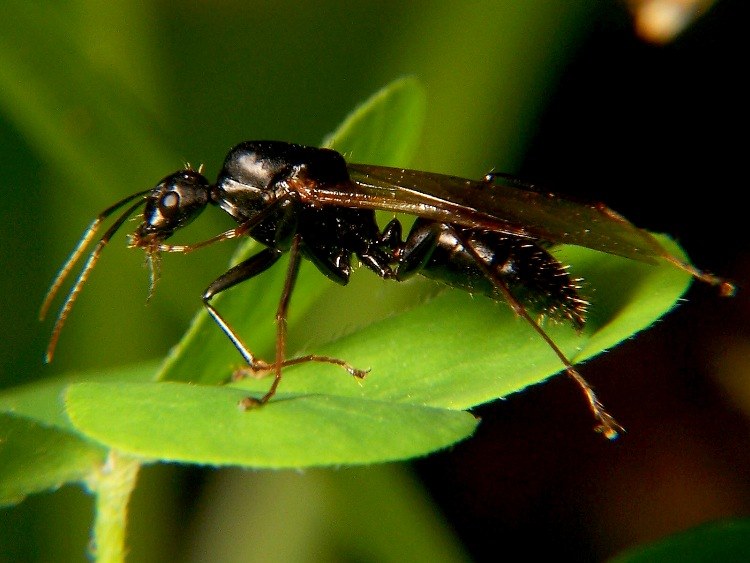
Photograph: xpda · Original source · CC BY-SA 4.0. Resized proportionally.

Life cycle and seasonal timing
Colonies include differently sized female workers, a queen, brood, and seasonal winged reproductives. A colony may use a main nest and additional satellite nests. Their moisture conditions and occupants can differ.
Winged reproductives are often noticed in spring and early summer. Repeated winter or very early indoor activity warrants a search for a sheltered nest. [ID, Carpenter]
Photograph: Bruce Marlin · Original source · CC BY-SA 2.5. Resized proportionally.

Photograph: Daniel Schwen · Original source · CC BY-SA 4.0. Resized proportionally.

Environment and local occurrence
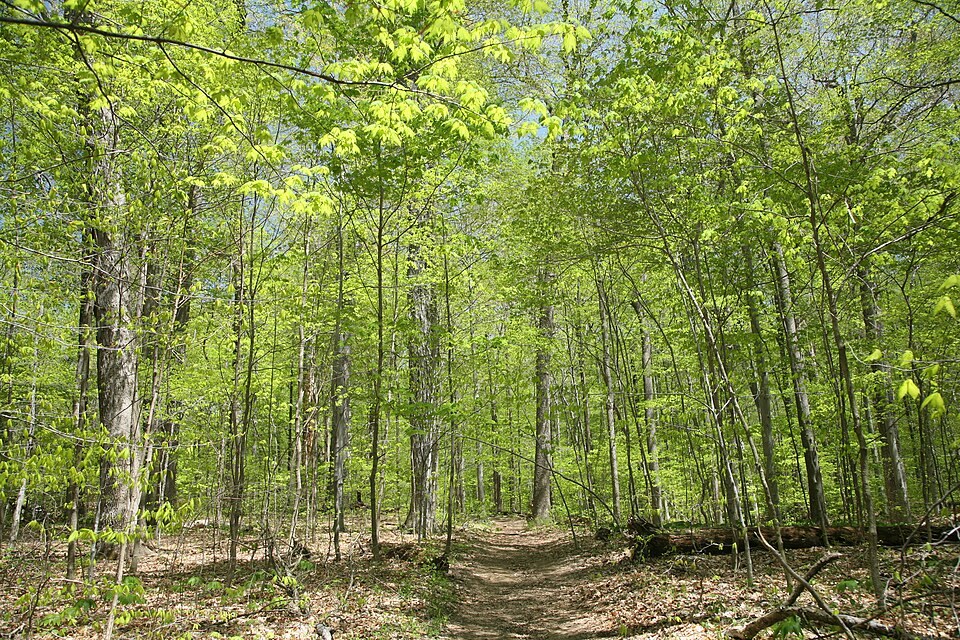
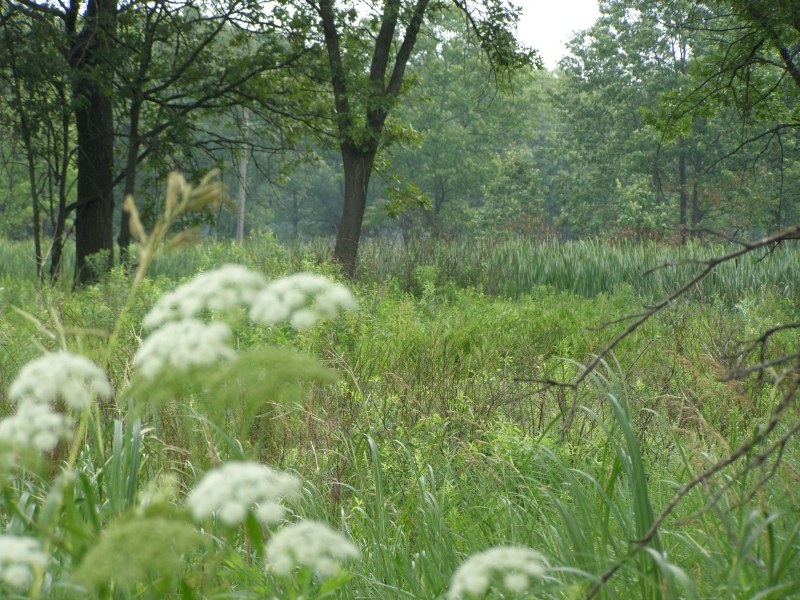
Hollow or decaying trees, stumps, logs, and sometimes structural timbers. Damp wood often supports the main nest; satellite nests may occupy drier spaces.
Morris lists Tippecanoe County under an older Camponotus pennsylvanicus combination. The record supports historical local occurrence, not a current nest location. [IN]
Living with this ant
Document activity and wood debris, repair water problems, and seek professional assessment when a building nest is suspected. Treating visible foragers alone can leave the main nest and satellites intact. [UC]
Observe without handling or deliberately disturbing the nest. Before using a pesticide, confirm the ant and follow the current label for the site and application. Protect food, children, pets, and nearby water.