

Crematogaster species
The nest environment explains where this ant can live and how it reaches food. Compare soil, shelter, moisture, and nearby vegetation before treating an entire landscape as one habitat.
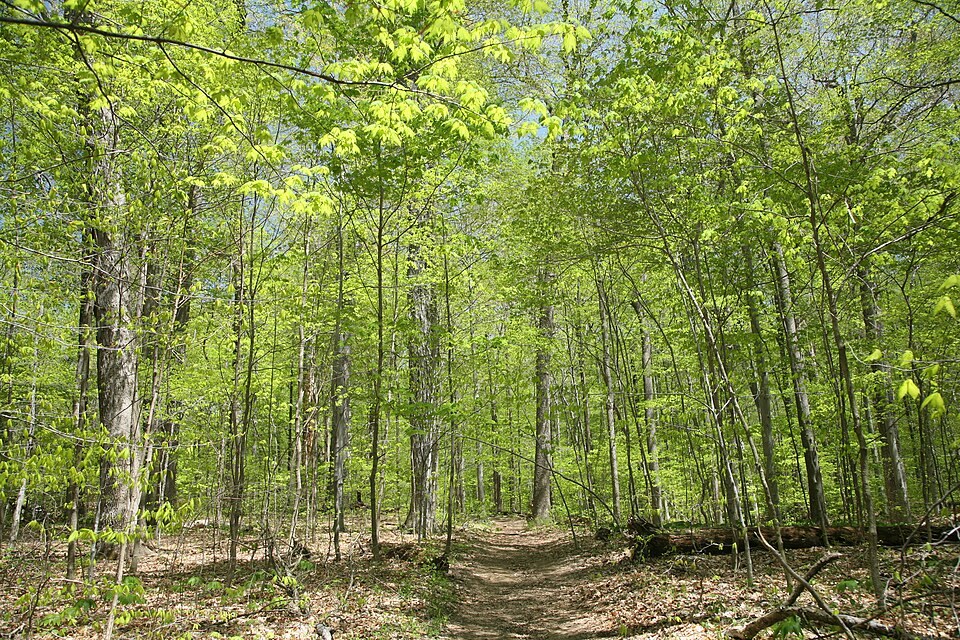
Photograph: Daniel Schwen · Original source · CC BY-SA 4.0. Resized proportionally.

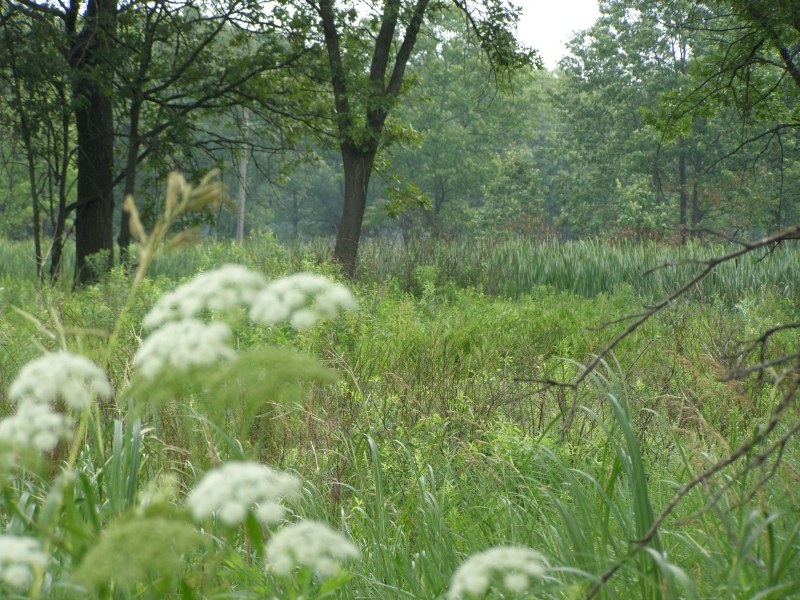
Photograph: Chris Light, National Park Service · Original source · Public domain. Resized proportionally.

Habitat and shelter
Many local species occupy dead branches, stumps, logs, and other sheltered woody spaces. Some nest under stones or use previously damaged building wood and wall voids. [ID]
Water and the nesting substrate
The combination of shelter, wood condition, and access to food matters. Indoor activity near damp framing is a reason to inspect the moisture problem as well as identify the insects.
Food routes and vegetation
Foragers take insect food and sugary liquids, including honeydew. Trails can run along bark and branches as well as along building edges.
Workers often visit honeydew-producing insects. Directly observe the interaction before saying that the ants protect a pest. Nesting in a dead branch does not establish that the ants killed the branch. [ID, UC]
Comparison with Lafayette
A sunlit dead branch warms and dries differently from a shaded log. Record the actual nesting substrate instead of treating all woody sites as one environment.
Morris lists Tippecanoe County for Crematogaster lineolata and the historical cerasi form. These support historical group occurrence; the photos are not local voucher specimens. [IN]
Manage the setting
Inspect trails on trunks and branches without removing bark or breaking occupied wood. Keep branches from providing direct access to rooflines where indoor activity is a problem.
Keep a record of the actual conflict: indoor food contamination, structural nesting, a blocked path, or no practical problem. An outdoor ant population does not by itself call for control. [PU]
A simple habitat observation
Choose two nearby places with contrasting cover. Observe each for five minutes at a similar time of day. Record shade, substrate, wetness, visible entrances, and the number of workers crossing a fixed line. Repeat on several days; a trail count measures visible traffic, not colony size.