

Crematogaster species
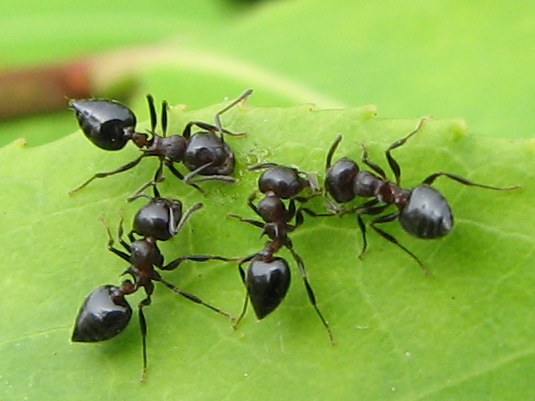
Photograph: Jacy Lucier · Original source · CC BY-SA 4.0. Resized proportionally.

Small ants named for their habit of raising the abdomen when disturbed. Indiana has several species; the photographs show Crematogaster cerasi as an example, not every member of the genus.
At a Glance
Field | Information |
|---|---|
Scientific name | Crematogaster species |
Worker length | Many local workers are about 2.5 to 4 mm |
Native status | Several Indiana members are native; status is species dependent |
Practical significance | A genus group, not one species |
Identification
Look for a distinctly heart-shaped abdomen from above, two waist nodes, and attachment of the waist toward the upper surface of the abdomen. The raised-abdomen posture is useful when observed naturally. Color alone is unreliable. [ID]
Small carpenter ants lack the heart-shaped abdomen and have one waist node. A genus-level identification does not determine which Crematogaster species is present or establish its full range.
Food and foraging
Foragers take insect food and sugary liquids, including honeydew. Trails can run along bark and branches as well as along building edges. [ID]
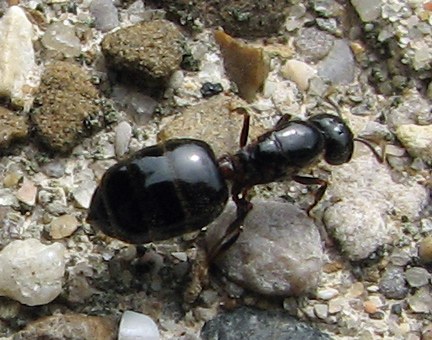
Photograph: Jacy Lucier · Original source · CC BY-SA 4.0. Resized proportionally.

Life cycle and seasonal timing
Colonies contain workers, brood, and reproductive ants. Winged males and queens appear seasonally. Colony-founding biology differs among species, so a single nest size or reproductive schedule should not be applied to the entire group.
Midwestern guides often report mating swarms in summer through early autumn. Species identification and local observations are needed for a more precise calendar. [ID]
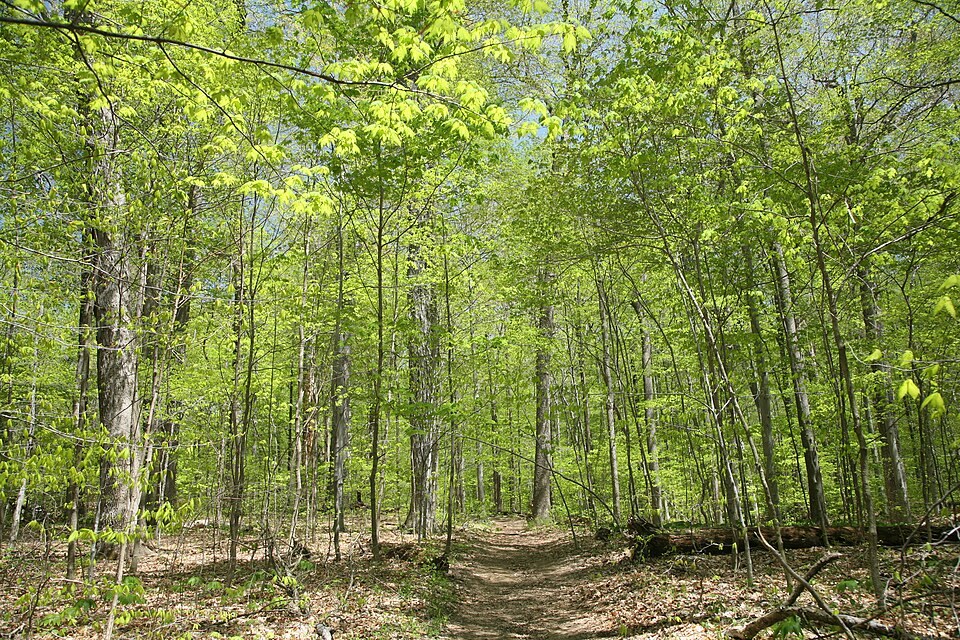
Photograph: Daniel Schwen · Original source · CC BY-SA 4.0. Resized proportionally.

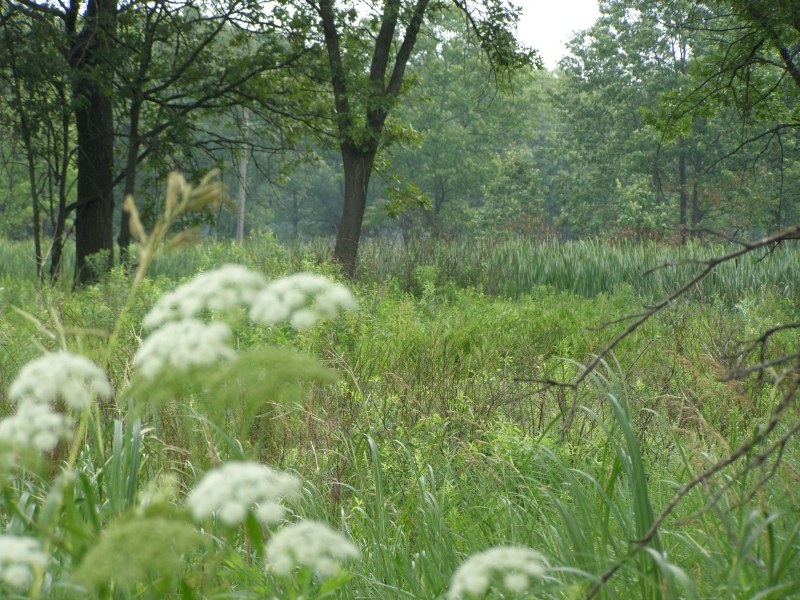
Photograph: Chris Light, National Park Service · Original source · Public domain. Resized proportionally.

Environment and local occurrence
Many local species occupy dead branches, stumps, logs, and other sheltered woody spaces. Some nest under stones or use previously damaged building wood and wall voids.
Morris lists Tippecanoe County for Crematogaster lineolata and the historical cerasi form. These support historical group occurrence; the photos are not local voucher specimens. [IN]
Living with this ant
Preserve harmless outdoor colonies. Indoors, identify the nest location and correct damaged or damp wood. Persistent activity in inaccessible framing may require a pest professional. [UC]
Observe without handling or deliberately disturbing the nest. Before using a pesticide, confirm the ant and follow the current label for the site and application. Protect food, children, pets, and nearby water.