

Photograph: Andrew Skotnicki · Original source · Creative Commons license. Resized proportionally.
Rapeseed is an oilseed crop. This sheet focuses on oilseed forms of Brassica napus, including canola-quality cultivars. Rutabaga belongs to a different cultivated group of the same species and is grown for its swollen root; its care sheet does not replace this one. [1, 2]
To understand the care of a plant, understand its native climate and environment.
At a glance
Field | Information |
|---|---|
Native to the United States | No for the domesticated oilseed crop covered here; U.S. cultivation does not establish native origin. |
Native to Tippecanoe County | No; this is an introduced crop, not a locally native wildflower. |
Invasive status | Volunteer plants can grow outside the crop. No Indiana regulatory designation is established here; prevent unwanted seed escape. |
Self-seeding | Yes, when viable seed spills or mature pods shatter. |
Edibility | Conditional. Food-grade canola oil comes from tested low-erucic-acid seed. Do not assume an unknown rapeseed plant or home-pressed oil is a food-grade product. |
Cautions | Keep chemically treated planting seed out of food and feed. Use crop-specific pesticide directions; account for mustard-family food allergy. |
Identification
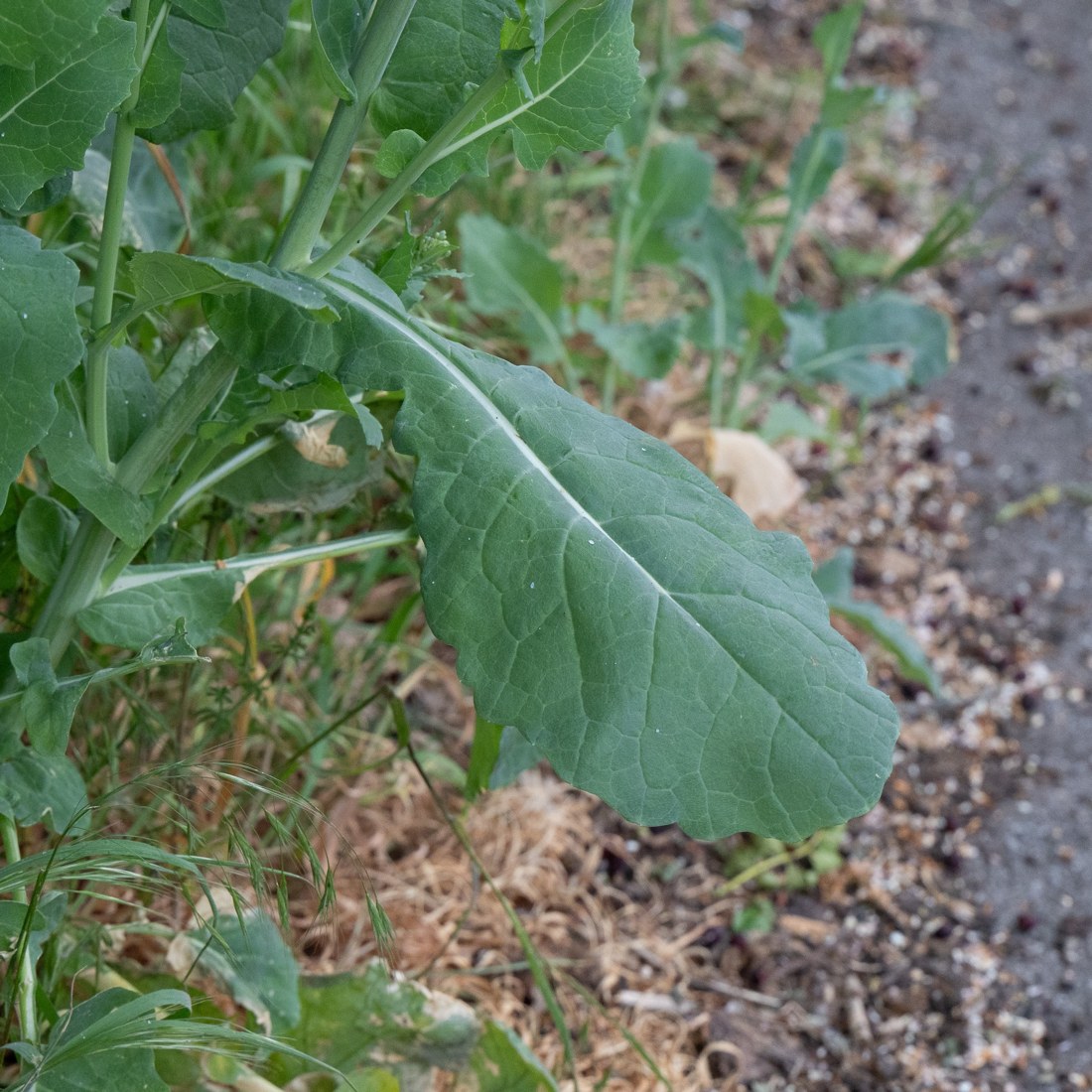
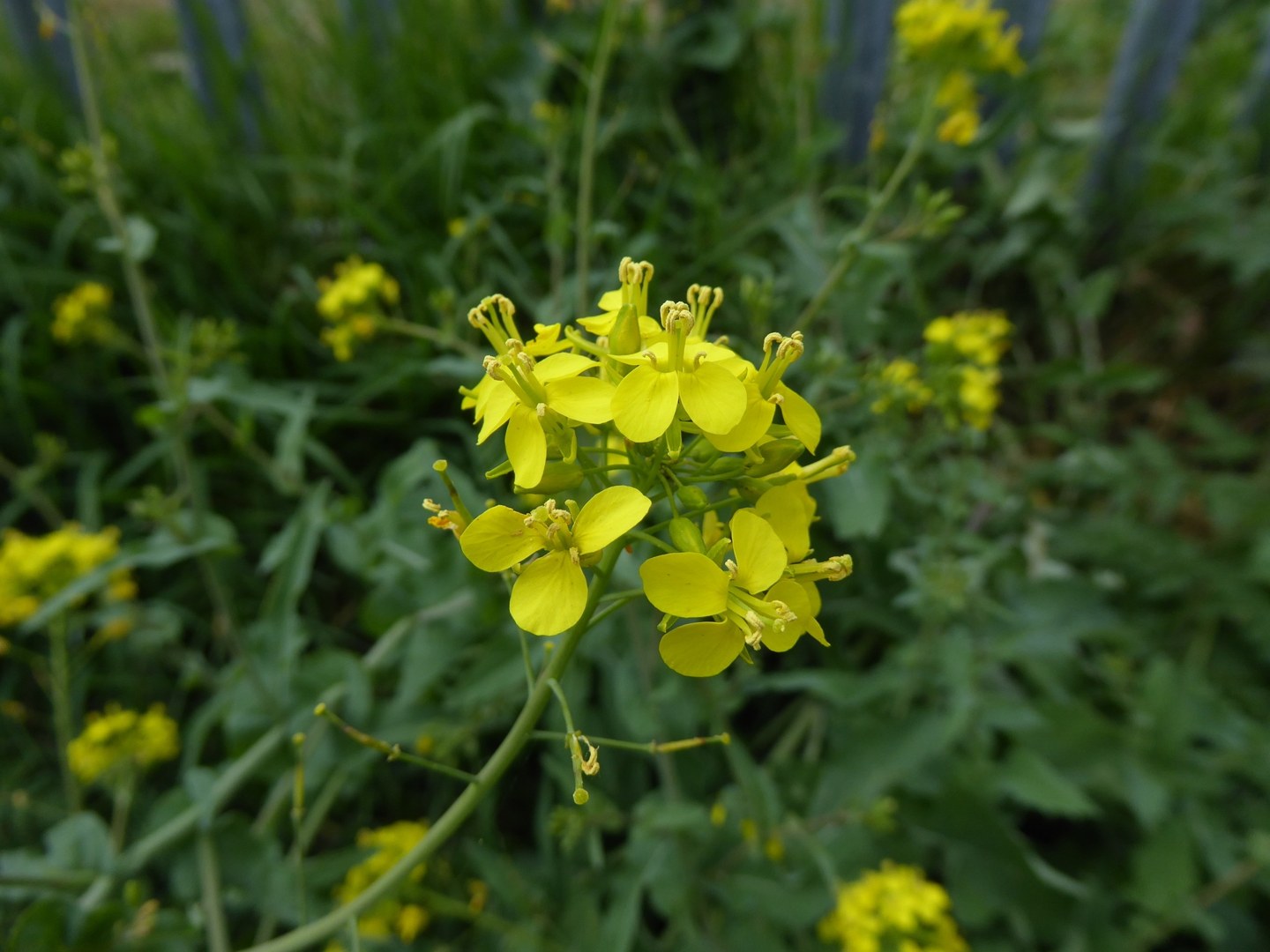
Plants develop a leafy rosette and then branched flowering stems. The flowers have four yellow petals; narrow pods contain small rounded seeds. Height depends on cultivar and conditions; field-grown winter types may reach roughly 4–5 feet. Brassica rapa and B. juncea also include canola-quality crops, so a yellow flower alone does not establish species or oil quality. [1, 2]
Light
Choose an open, sunny growing site. Avoid crowding and deep shade. A field crop needs adequate leaf area to support later pod and seed development. [3]
Temperature and humidity
Choose a spring or winter cultivar suited to the local season. Winter forms need adequate autumn establishment; spring forms follow a different schedule. Cool soil slows emergence, while severe frost can kill seedlings. Canadian planting dates should not be copied directly into an Indiana schedule. Use local cultivar guidance and actual soil and weather conditions. [2, 4]
Watering
Keep the seed zone moist enough for even emergence, then water according to the root zone and rainfall. Avoid crusting, standing water and persistent saturation. Well-drained loam is generally preferable to a poorly aerated site. Dryness during establishment and reproductive growth can impair the crop. [2, 3, 5]
Standard potting mix
For a small educational container trial, use the project’s Herb and Container Vegetable Standard Mix: 2 parts generic potting soil, 1 part compost-rich raised-bed or in-ground soil ingredient, and 1 part coarse perlite, measured by volume. Screen large woody pieces; combine loosely, lightly premoisten dusty ingredients and never compress the mix. Keep drainage holes open and omit a gravel layer. This is an application of the project’s stock mix, not a validated commercial oilseed-yield formula. [7]
Pot and repotting
Rapeseed is primarily a bed or field crop. For an observation container, sow into the final deep container, thin crowded seedlings, and provide root space and unobstructed drainage. A small pot limits size and yield; routine houseplant repotting is not the production model.
Feeding
Use a representative soil test to set nutrient additions. Nitrogen and sulfur are important, but symptoms alone do not identify a deficiency. Avoid guessing micronutrient doses or transferring field rates directly to a small pot. Fertilizer already present in potting soil must be counted. [5, 6]
Photograph: jamie-aa · Original source · Creative Commons license. Resized proportionally.
Flowering
Flowers open progressively on the main stem and branches, followed by elongating pods. B. napus largely self-pollinates, but insects also move pollen. Related compatible crops and cultivars can exchange pollen; seed saved from a hybrid may not reproduce the parent’s traits. [3]
Propagation
Propagate by seed of a known cultivar and intended use. Sow shallowly into a prepared seedbed with good seed-to-soil contact. About ½–1 inch is a common field range, adjusted for moisture, soil and local guidance; excessively deep sowing delays or prevents emergence. Seed quality, depth and moisture matter more than simply adding extra seed. [8]
Pruning and harvest
Pruning flowering stems removes potential seed-bearing branches. For a demonstration plant, remove damaged growth only and support tall stems if needed. Watch pod and seed maturation; ripe pods can shatter. Contain harvested material and remove volunteers before they replenish the seed bank. [2, 3]
Pests and diseases
Inspect seedlings for flea-beetle feeding and later growth for aphids and caterpillars. Clubroot, blackleg and Sclerotinia are among the diseases considered in canola management. Rotate crops, use clean seed and equipment, and identify the problem before treatment. Apply only products currently labeled for the crop, pest and site. [9]
Toxicity and handling
Canola describes a quality class, not all rapeseed. The oil standard limits erucic acid to less than 2%; the seed meal must meet a separate glucosinolate limit. Industrial or unidentified seed must not be assumed interchangeable with food-grade canola. This sheet does not certify a harvested batch for eating or feeding. [1]
Photograph: Rapeseed-species plants beside a fence, United Kingdom, 2026-05-05. Human-associated growing environment; this is not an ancestral native-habitat · Original source · Creative Commons license. Resized proportionally.
Photograph: Andrew Skotnicki · Original source · Creative Commons license. Resized proportionally.
Environment and crop origin
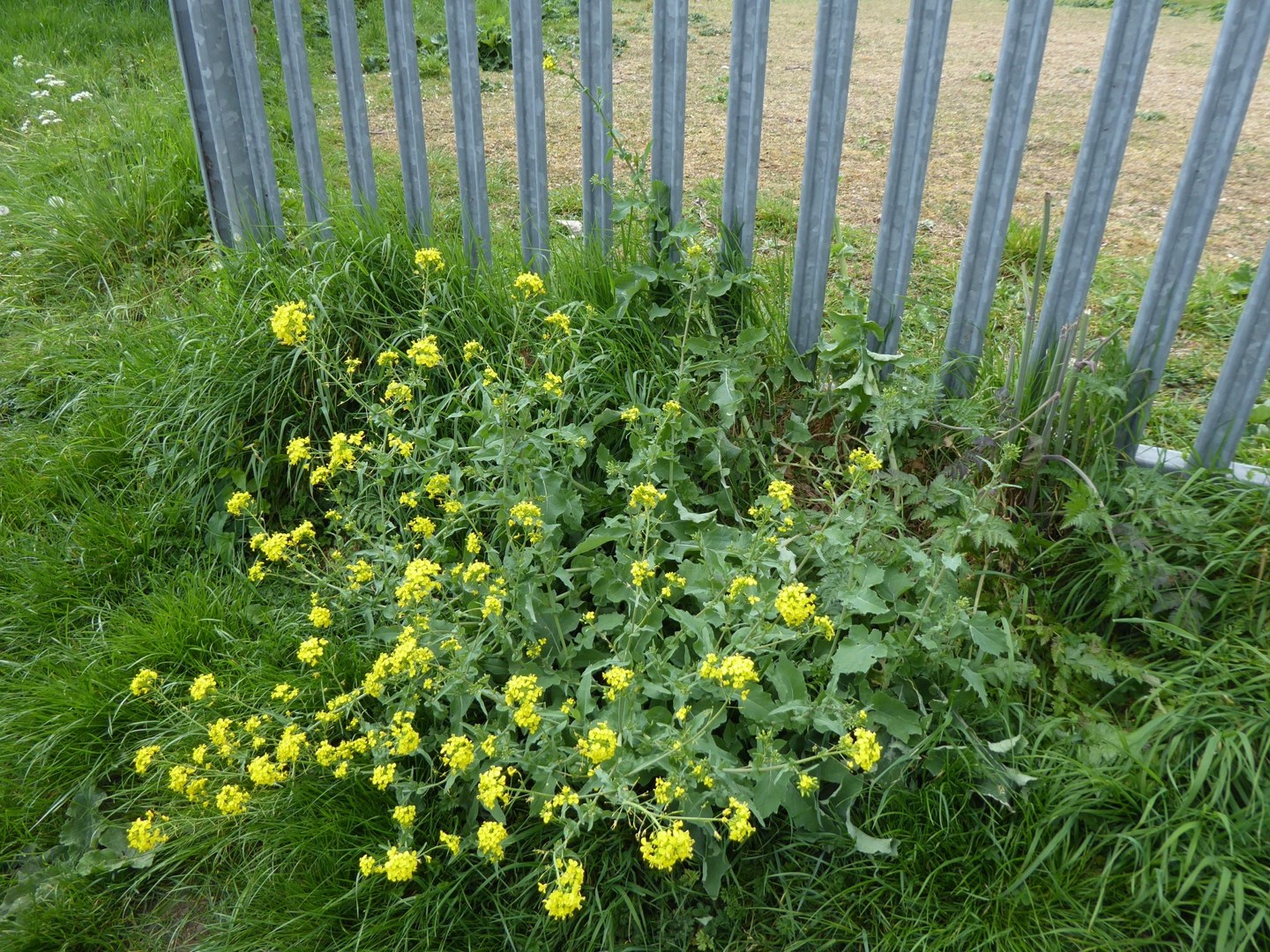
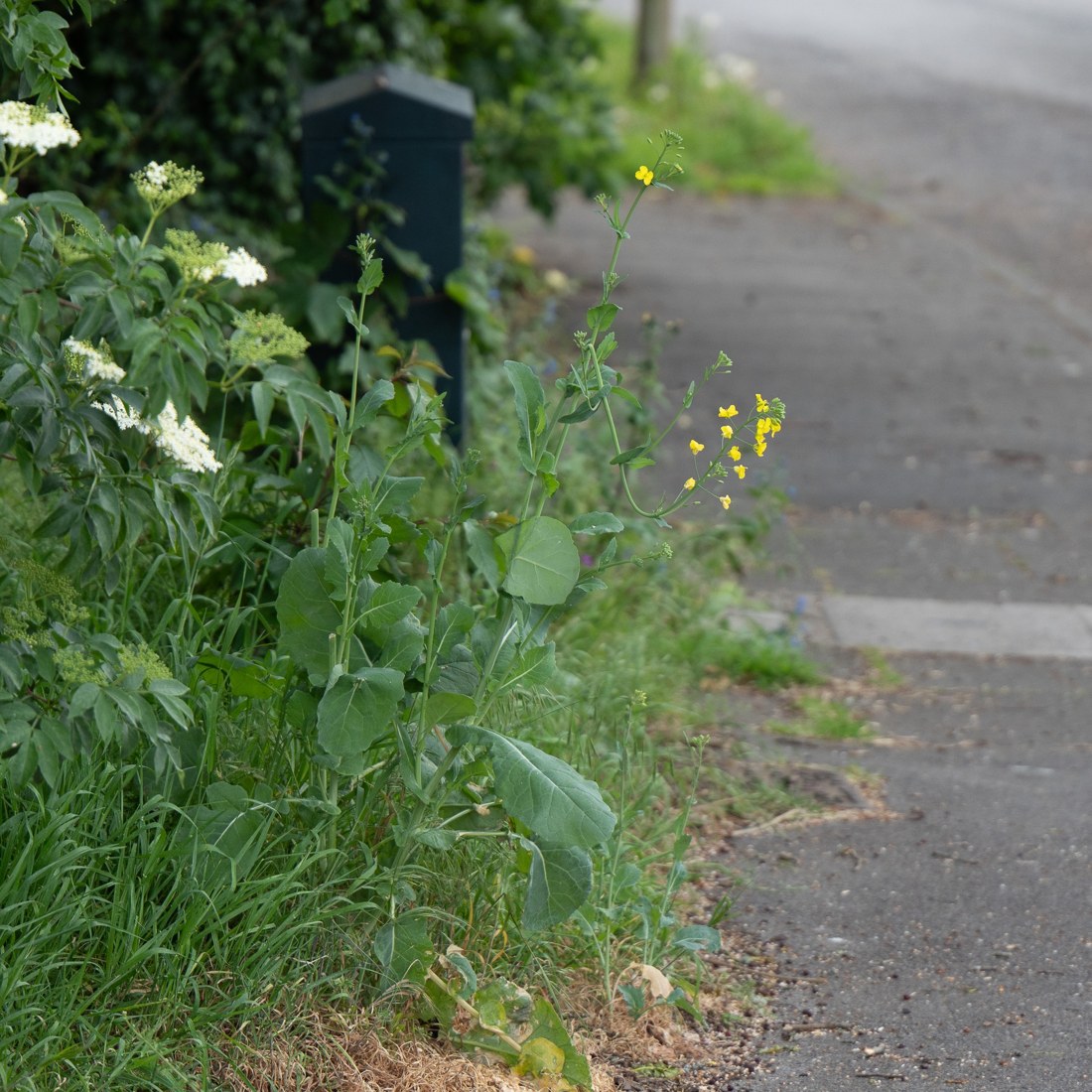
Oilseed rape is a long-domesticated crop. Its useful environmental model is a cool-season, sunny, well-drained agricultural site rather than a single pristine native habitat. Spring and winter cultivars have different seasonal requirements. The two field photographs show human-associated settings and should not be interpreted as proof of native status. [2, 4, 5]
References and related sheets
1. Canola Council of Canada — About canola
2. University of Missouri Extension — Canola A Promising Oilseed
3. Canola Council of Canada — Growth stages
4. Canola Council of Canada — Time of seeding
5. Canola Council of Canada — Effects of soil characteristics
6. Canola Council of Canada — Identifying nutrient requirements
7. Project Standard mixes — Minimal Standard Potting Mixes and Stock Inventory
8. Canola Council of Canada — Seed depth
9. Canola Council of Canada — Crop management encyclopedia
Related Information Sheet — Rutabaga
Sources reviewed 2026-09-19. The Missouri publication retains historical market and pesticide information; this sheet uses its botanical and general growing descriptions, not those dated claims.