
Home / Plant Information Sheets / Mistletoe Cactus
Plant Information Sheet
Mistletoe Cactus
Rhipsalis baccifera (J.S.Muell.) Stearn

Scan to open this Information Sheet
planteducationproject.com/mistletoe-cactus/
Identification
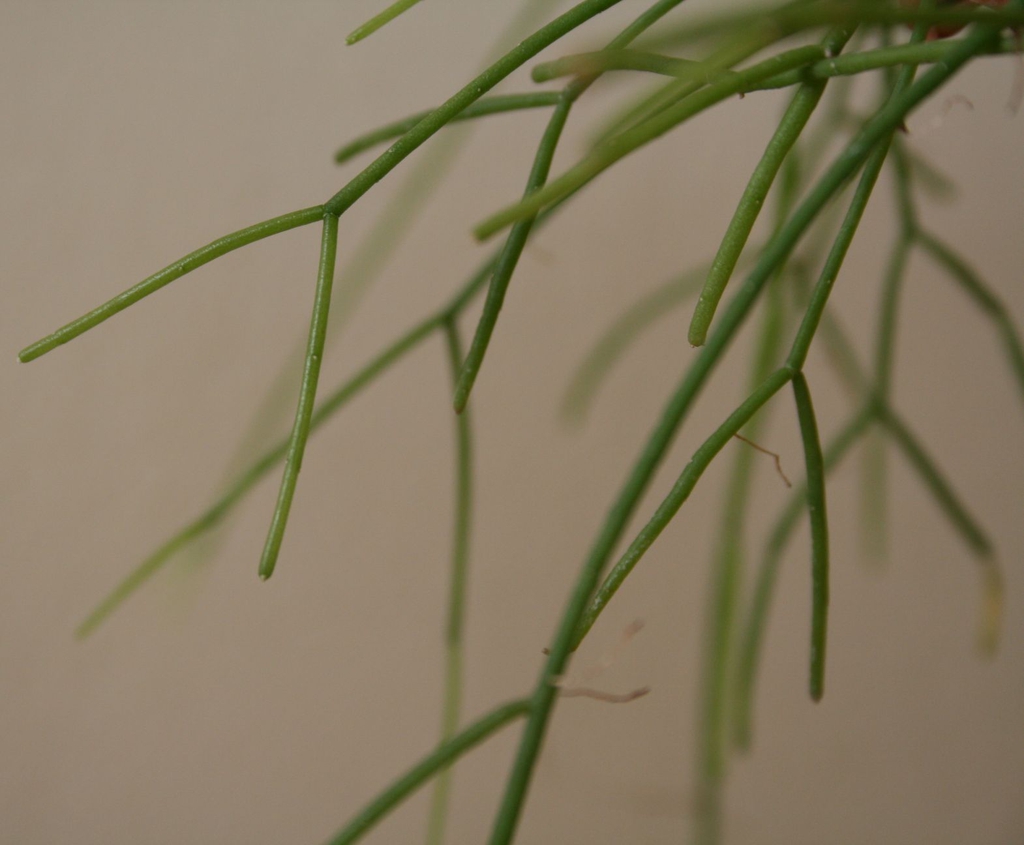
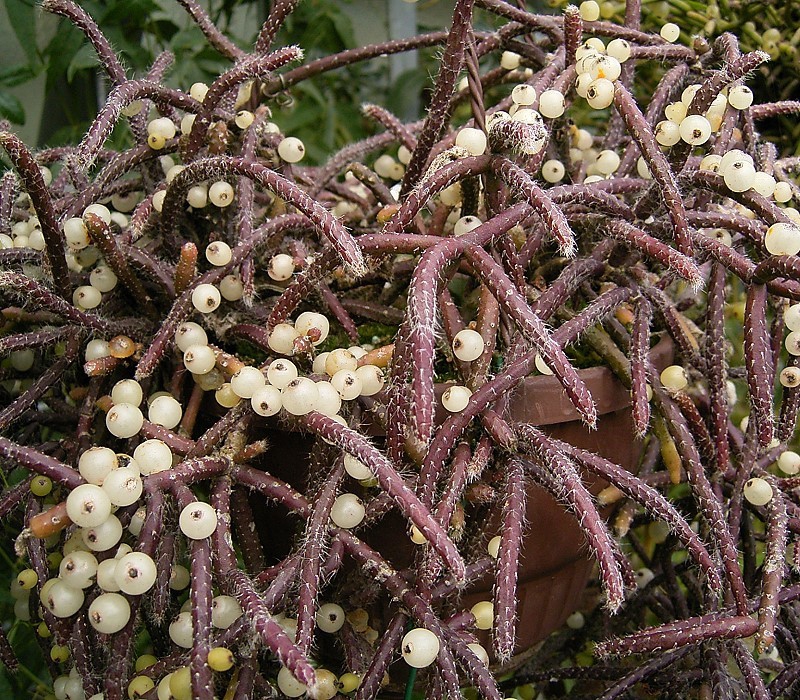
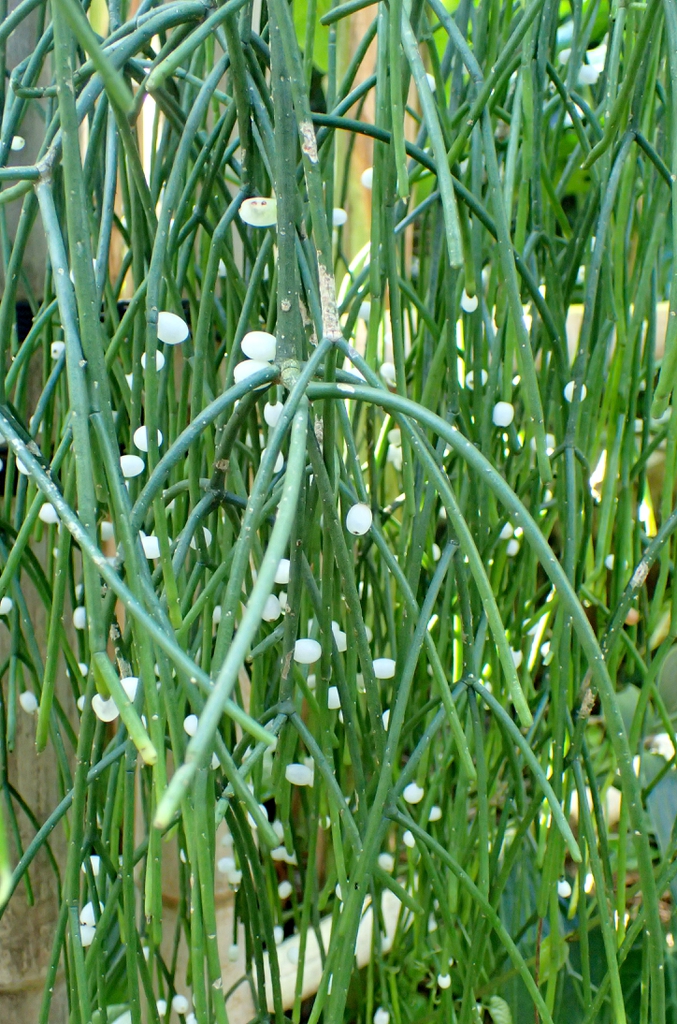
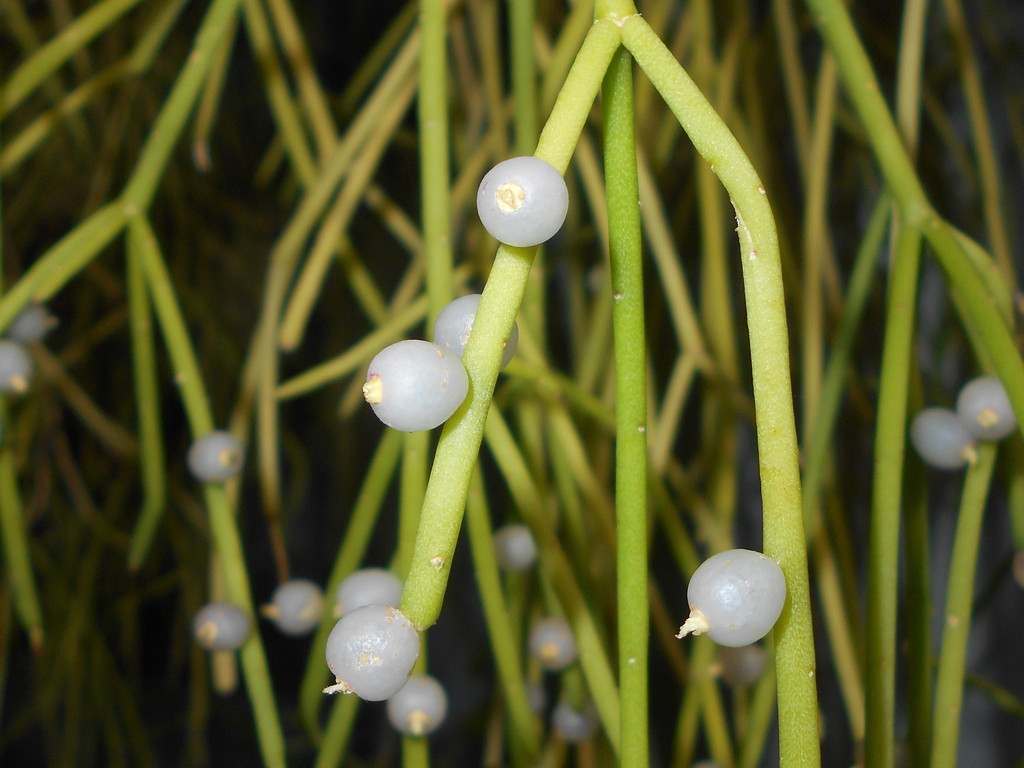
A leafless, usually spineless cactus with many slender, trailing, cylindrical green stems. Young stems may carry woolly bristles at the areoles; mature stems become smooth. Small white to greenish-white flowers appear along the stems, followed by round white or pale-pink berries.
Care
Light
Provide bright, indirect light. Strong direct sun can scorch the stems. A summer outdoors in sheltered partial shade may strengthen growth and encourage flowering; acclimate gradually and bring indoors before cool weather.
Water and humidity
This forest cactus prefers more even moisture and humidity than desert cacti. Water when the mix feels dry, drain completely, and reduce watering during slower winter growth. Puckered, limp stems suggest thirst; soft, mushy stems point toward excess water and root damage.
Temperature
Keep near 60–80°F, away from frost, cold glass, and drying heat vents. Good air movement matters when humidity is high.
Standard soil mix
Use a loose, slightly acidic, moisture-retentive but well-aerated mix in a container with an open drainage hole: two parts fine orchid bark, one part potting mix, and one part perlite or pumice. The goal is a forest-branch root environment—moisture plus oxygen, never stagnant wetness.
Flowering and fruit
Small solitary white to greenish-white flowers, about 0.4 inch wide, usually appear in late winter or spring. White or pale-pink berries may follow. Consistent bright filtered light, summer growth, and slightly drier winter care can support flowering.
Feeding
Feed lightly during active spring and summer growth with a diluted, balanced fertilizer. Do not feed a dry, stressed, or recently repotted plant, and stop during winter slowdown. The label is the law.
Propagation
Stem cuttings are the practical method. Take healthy segments, allow the cut end to dry briefly, and place in a lightly moist, airy mix under warm, humid conditions with indirect light. Seed is possible but slower.
Seed germination and light
Rhipsalis baccifera needs light for reliable germination. Sow on a moist surface without burying the seeds, and use filtered light rather than hot direct sun. A controlled study found at least 80% germination in light treatments but nearly none in darkness.
Germination source: De La Rosa Manzano and Briones, 2010, International Journal of Plant Sciences, 171, Germination Response of the Epiphytic Cactus Rhipsalis baccifera. Reviewed 2026-09-21.
Native environment and ecology
Mistletoe cactus grows as an epiphyte on understory trees in tropical and subtropical America, tropical Africa, Madagascar, and southern Florida. Its roots anchor in organic debris on bark rather than deep mineral soil. Filtered light, humidity, rainfall followed by drainage, and constant root-zone air explain its indoor needs. The berries are associated with animal dispersal.
Problems
| Mushy stems | Overwatering or airless mix; inspect roots and improve drainage. |
|---|---|
| Brown tips | Low humidity or insufficient water. |
| Pale or scorched areas | Excess direct sunlight. |
| Sticky or distorted growth | Check closely for mealybugs, aphids, or spider mites. |
| Spots in humid conditions | Improve air movement and identify possible fungal disease before treatment. |