

At a glance
- Plant type
- Hardy evergreen succulent
- Light
- Sun; light shade in extreme heat
- Water
- Dry between established-plant waterings
- Mature size
- Rosette about 4 in; stalk to 12 in
- Growing setting
- Outdoors preferred for hardy plants
- Native to United States
- No
- Native to Lafayette area
- No
- Indiana invasive status
- Not verified in this review
- Self-seeding
- Possible; local frequency unmeasured
- Edibility
- Not recommended as food
- Principal caution
- Sap may irritate skin; pet safety unverified
- County occurrence
- Tippecanoe wild record not verified
Identification and life cycle
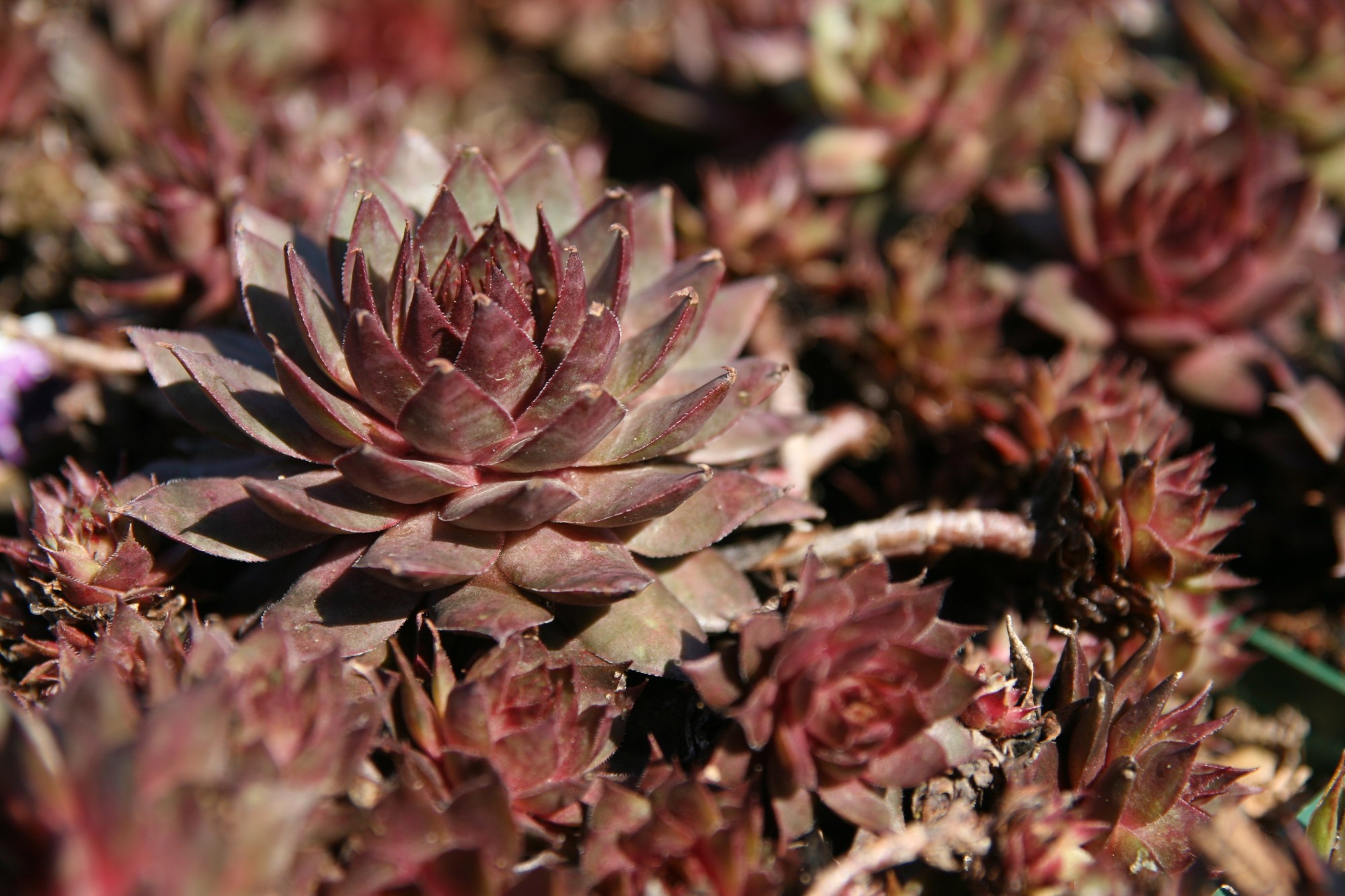
Sempervivum tectorum L. belongs to the stonecrop family, Crassulaceae. Fleshy, pointed leaves form a low rosette; daughter rosettes develop on short connecting stems called stolons. Roots establish beneath the rosettes and offsets. A fixed root-depth figure is not established here.
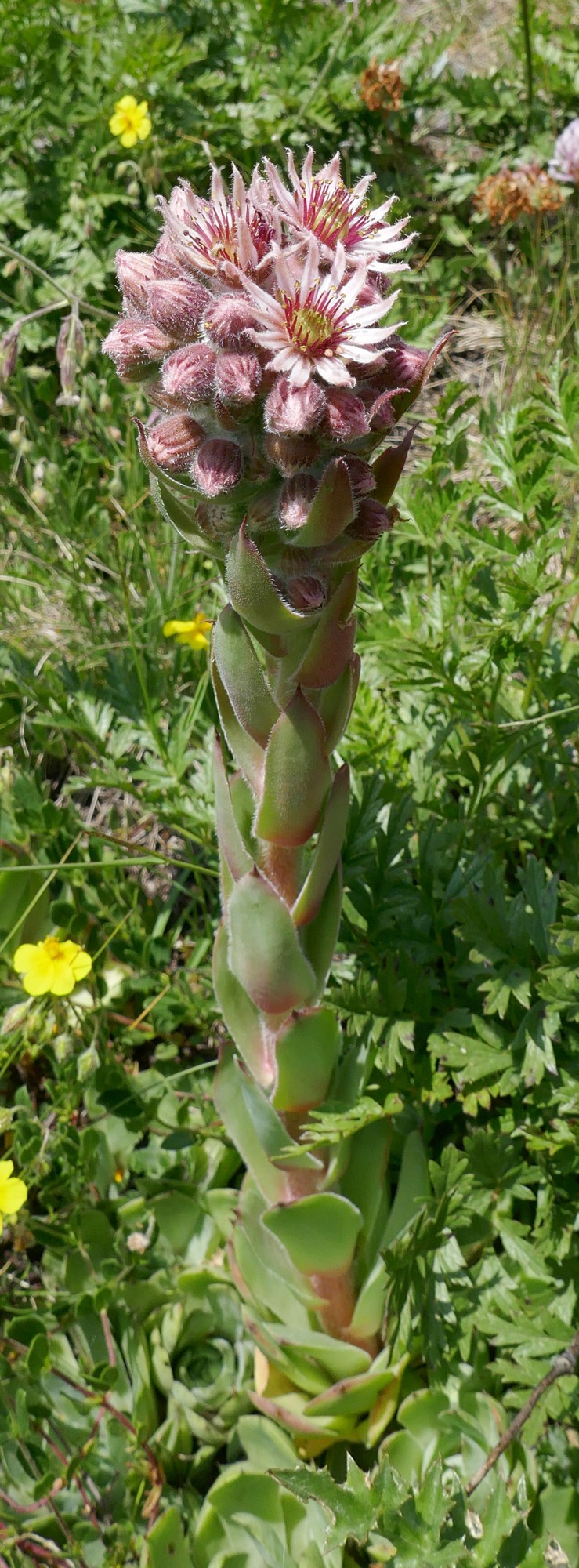
Typical rosettes reach about 4 in (10 cm) across and foliage about 4 in high. Flower stalks can reach 12 in (30 cm); a colony may spread 6–18 in (15–45 cm). Size and leaf color vary among selections. A rosette may persist for years before flowering; the colony continues through its offsets.
Sources: Missouri Botanical Garden — species size, flowering and hardiness; NC State Extension — Sempervivum genus and sap caution.
Names and look-alikes
This is a species profile, not a confirmed cultivar identification for every plant sold as Hens & Chicks. Retain a nursery label when available. The portrait shows the named cultivar Red Beauty as an example of rosette form.
Echeveria also has species called hens and chicks. Confirm the scientific name before applying outdoor winter advice. Color alone cannot establish a cultivar. Sempervivum arachnoideum and hybrids may have conspicuous cobweb-like hairs.
Sources: ASPCA — a common-name trap: its Hens and Chickens record is Echeveria elegans; NC State Extension — Sempervivum genus and sap caution.
Basic care
Choose strong light, an open drainage outlet, and modest fertility. Let an established plant’s root zone dry between thorough waterings. Check the soil before adding water after rain. Gradually increase sun exposure when moving a shaded plant outdoors.
Use the Growing and Propagation sheet for the mix recipe, new-offset care, seasonal calendar, and diagnosis guide.

Flowering and fruit
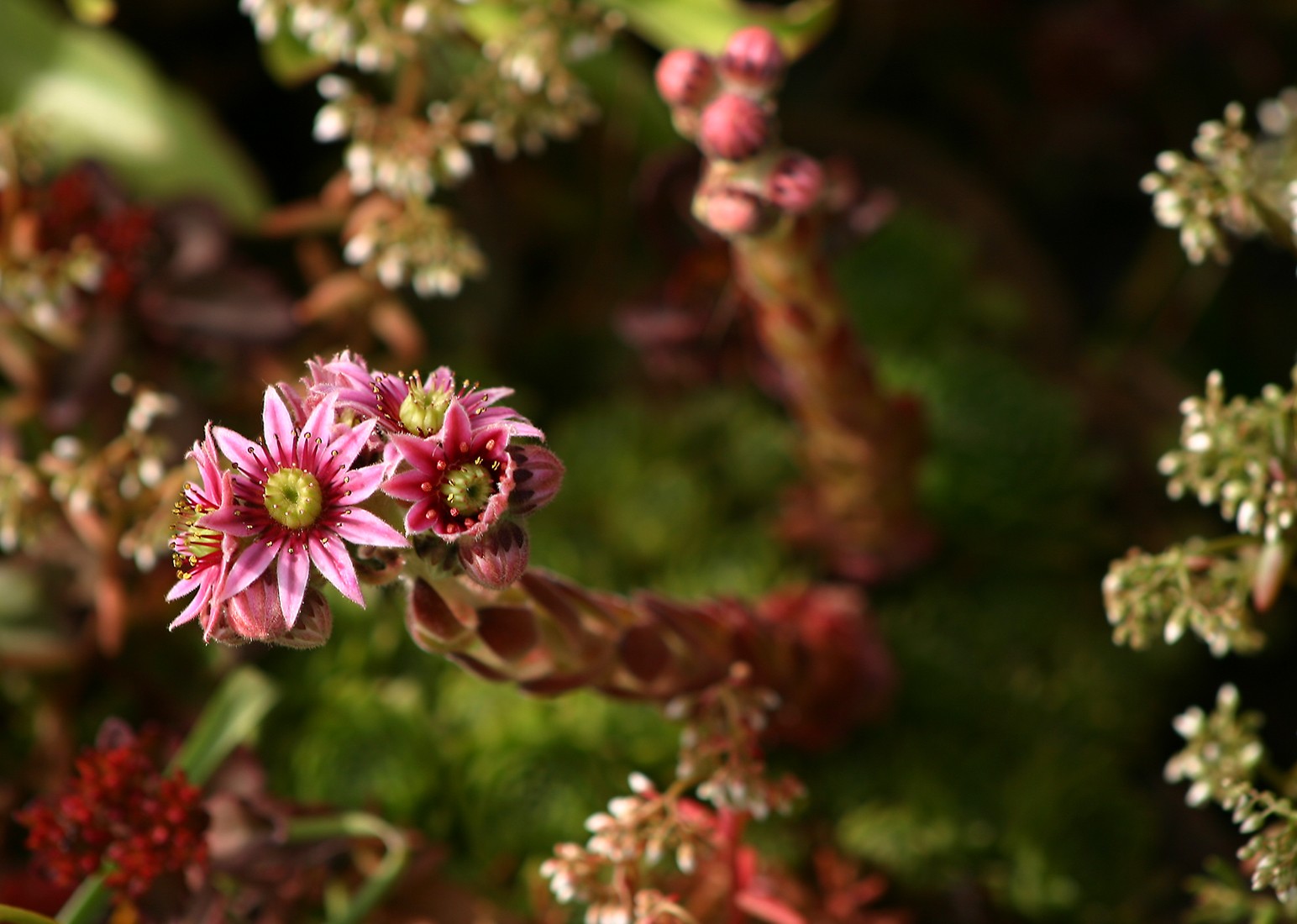
Summer stalks carry clusters of pink to reddish-purple, star-shaped flowers. Missouri Botanical Garden gives June–July as its flowering window; use that as a regional guide, not a promised Lafayette date. Dry fruits release small seeds. The flowering rosette then dies, while surviving offsets keep growing.
Sources: Missouri Botanical Garden — species size, flowering and hardiness.


Environment and native habitat
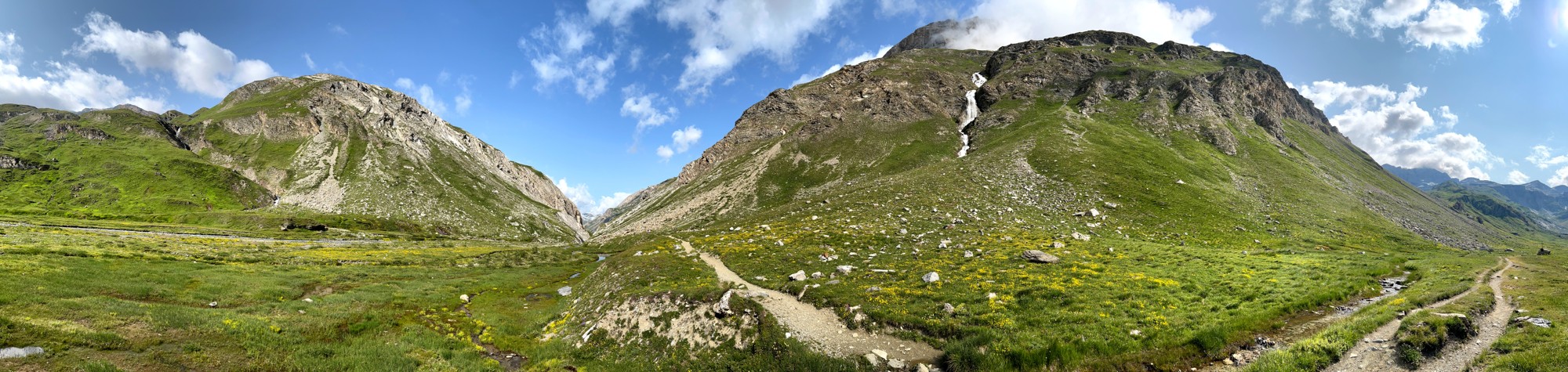
Kew places the native range from the Pyrenees to the western Balkan Peninsula. Rocky European sites illustrate the open light and drainage that matter in cultivation. The landscape photograph shows a representative setting; it does not establish plant presence everywhere in that view.
Continue with Environment and Climate for the distinction between local soil conditions and regional weather.
Sources: Kew Science — accepted name and native distribution.
Safety and responsible growing
Grow as an ornamental; do not use as food or medicine. NC State’s genus account reports possible skin irritation from sap. Avoid eye contact, wash after handling broken leaves, and use gloves if sensitive. The plant has pointed leaves rather than cactus spines.
Pet safety for this exact species is not verified by the sources used here. The ASPCA page called Hens and Chickens concerns Echeveria elegans; its non-toxic rating cannot be transferred by common name. Keep plants away from chewing pets and young children.
Use cultivated stock, retain unwanted offsets for sharing or dispose of them securely, and keep garden waste out of natural areas.
Sources: NC State Extension — Sempervivum genus and sap caution; ASPCA — a common-name trap: its Hens and Chickens record is Echeveria elegans.
Observe your plant
Photograph one marked rosette monthly with a ruler beside it. Record diameter, new offsets, leaf color, and any flower stalk. Follow both the flowering rosette and its neighbors so the life cycle becomes visible.
Sources and evidence
Reviewed 2026-09-23. Cultivation recommendations are adapted for home growers; unverified relationships are explicitly identified.
- Kew Science — accepted name and native distribution
- Missouri Botanical Garden — species size, flowering and hardiness
- NC State Extension — Sempervivum tectorum
- NC State Extension — Sempervivum genus and sap caution
- Indiana Plant Atlas — non-native status and specimen record
- ASPCA — a common-name trap: its Hens and Chickens record is Echeveria elegans
Revision record
Version 1.0 · 2026-09-23 — Standardized the five-part package, added seasonal care, observation activities and troubleshooting, clarified identification and evidence limits, and checked photo attribution. Prepared for the Plant Education Project by James Taylor with AI-assisted research and drafting.

Open this sheet online
planteducationproject.com/hens-and-chicks/