

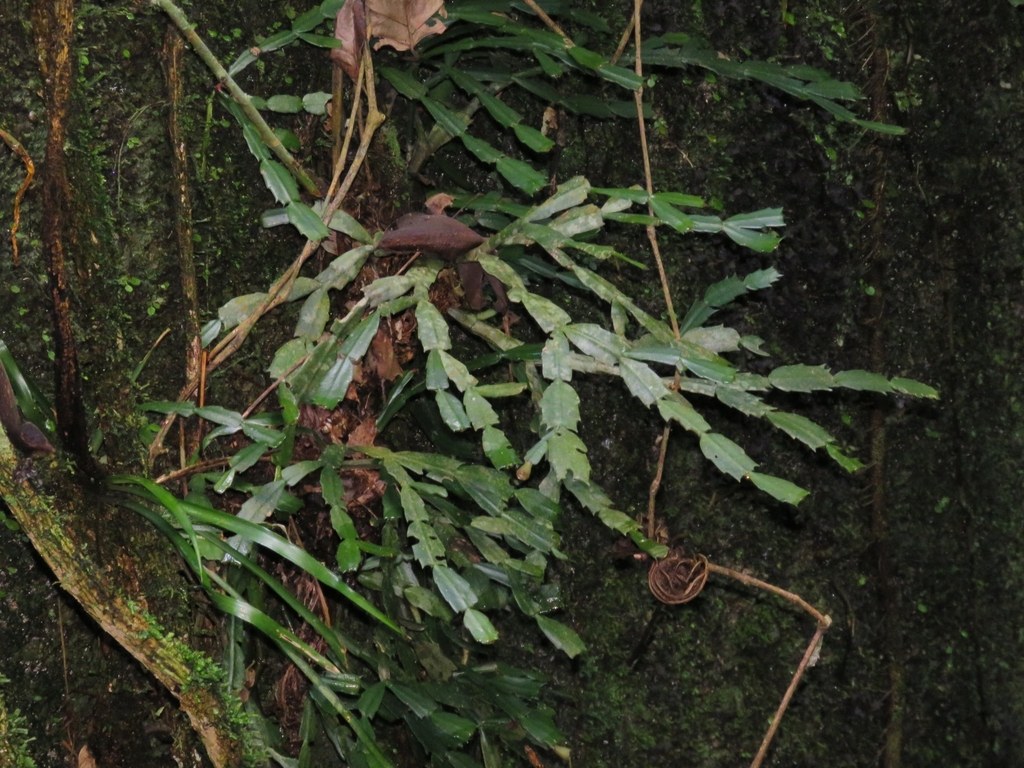
Photograph: Pablo Cauã da Silva Toledo · Original source · CC BY. Resized proportionally.
These are forest cacti. Thanksgiving cactus has pointed teeth on its stem segments; traditional Christmas cactus has rounder notches and more drooping flowers. Many retail plants are hybrids, so a holiday sales label is not a secure identification.
To understand the care of a plant, understand its native climate and environment.
At a glance
Field | Information |
|---|---|
U.S. native | No. S. truncata is Brazilian; S. × buckleyi is a cultivated hybrid. |
Tippecanoe County native | No; neither is locally native. |
Invasive status | No local invasive behavior established here; frost-tender container plants in Indiana. |
Self-seeding | Limited; requires successful pollination, viable seed, and suitable establishment conditions. |
Edibility | Not grown as food. |
Cautions | Keep plants and potting mix away from pets; protect from frost and hot direct sun. |
Light, temperature, and water
Provide bright filtered light, an airy root zone, and moderate moisture. Water when the upper mix begins drying, then drain. Avoid prolonged desert-style drought. Protect from cold drafts and abrupt changes during bud development.
Standard potting mix
Use Standard Epiphytic Cactus Mix: 4 parts generic potting soil, 3 parts compost-rich raised-bed or in-ground soil ingredient, and 3 parts coarse perlite by volume. The compost-rich material is an ingredient, not a stand-alone container soil. Mix loosely, use a drainage hole, and omit a bottom gravel layer. Monitor drying in your actual pot; this approved inventory blend does not reproduce tree bark habitat.
Feeding
Use a complete fertilizer at its labeled houseplant rate during active growth. Reduce or stop when growth slows; extra fertilizer does not replace the darkness and temperature signals for buds.
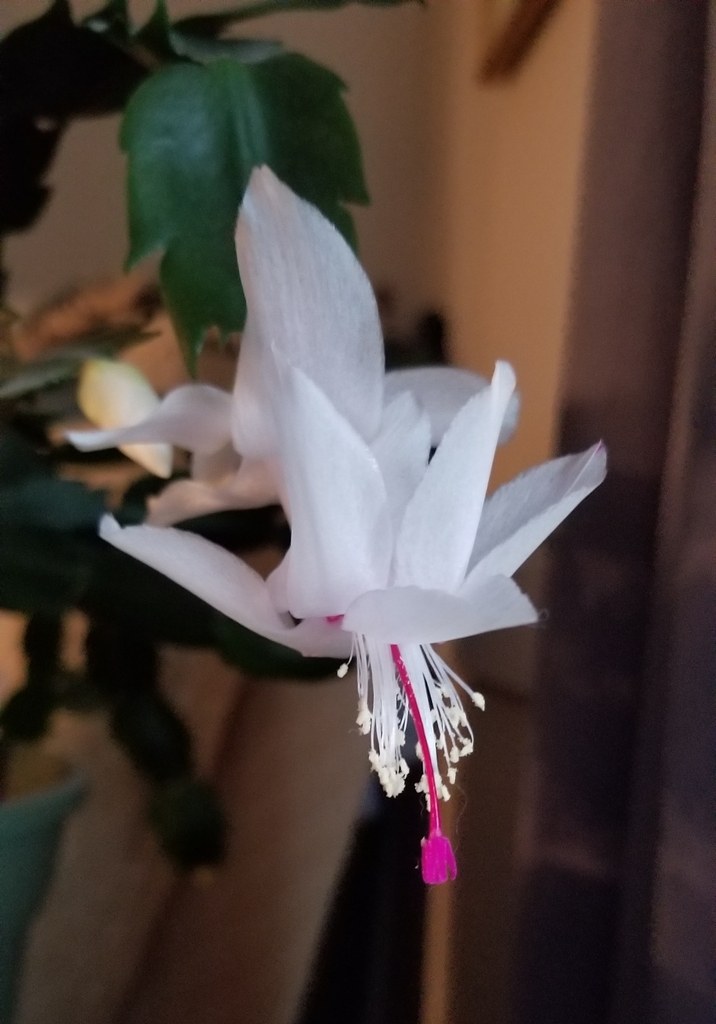
Photograph: Cindy Christian · Original source · CC BY 4.0. Resized proportionally.
Flowering
Autumn nights help initiate buds. Give roughly 13 hours of uninterrupted darkness and cool nights around 55–65°F (13–18°C), without chilling the plant. Bud timing varies by species and cultivar.
Propagation and grooming
Take healthy cuttings of two or three stem segments after bloom. Let the cut surface dry briefly, then root in a lightly moist, airy medium. The drying instruction concerns cut surfaces; it is not a rule to desiccate established roots. Pinch back overlong growth at segment joints.
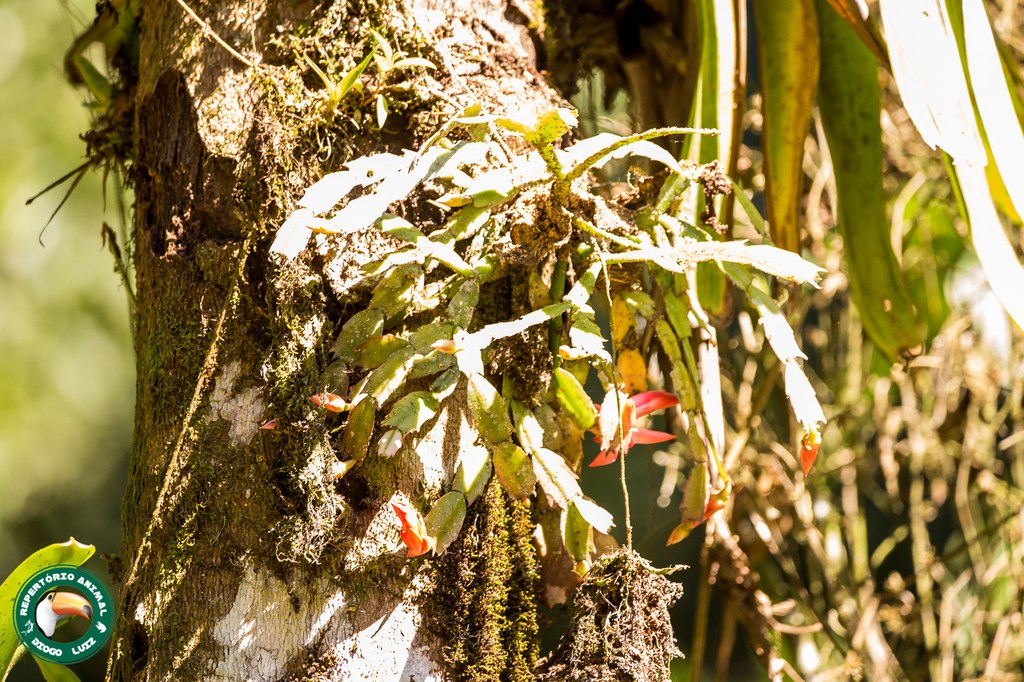
Photograph: Diogo Luiz · Original source · CC BY. Resized proportionally.
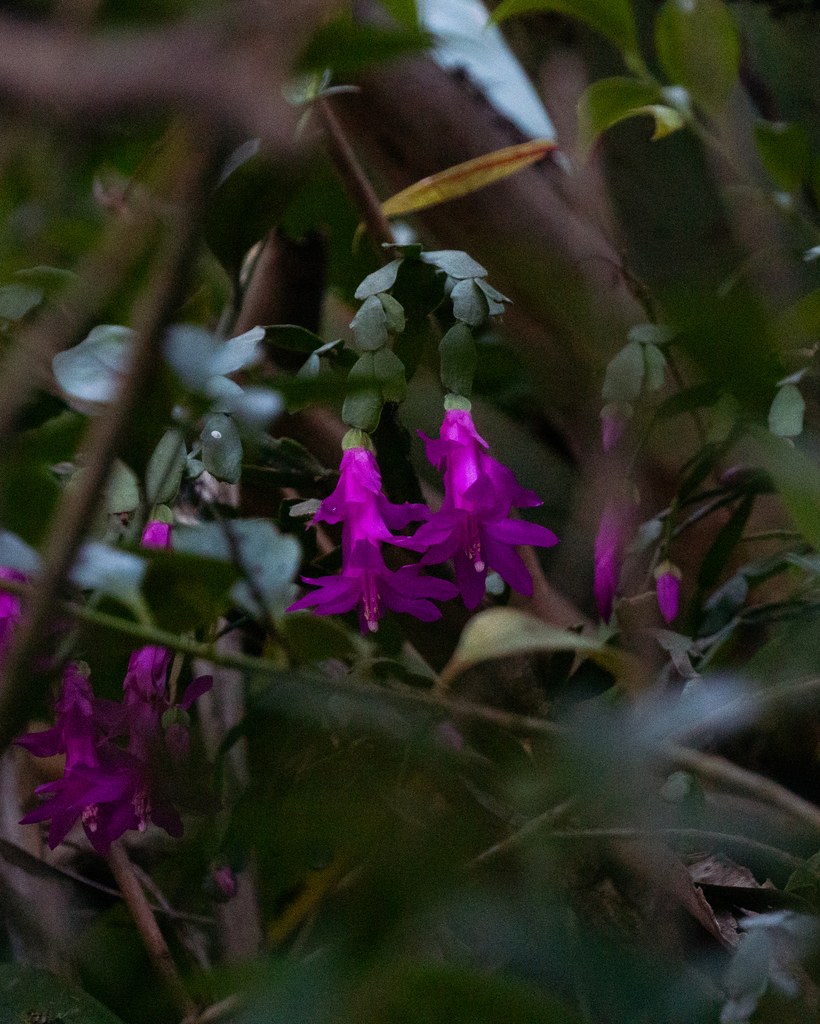
Photograph: filipeprates; CC0. Photo and license · Observation. Resized only. · Original source · CC0. Resized proportionally.
Environment / native habitat
S. truncata comes from southeastern Brazil’s humid coastal mountain forests, growing on trees or rocks. Christmas cactus combines S. truncata and S. russelliana ancestry; the hybrid has no independent wild native habitat. Their forest origin explains filtered light and moisture with abundant root oxygen.
Troubleshooting
Bud drop can follow sudden temperature, moisture, or location changes. Limp stems may reflect either drought or damaged wet roots; inspect the mix before watering again.