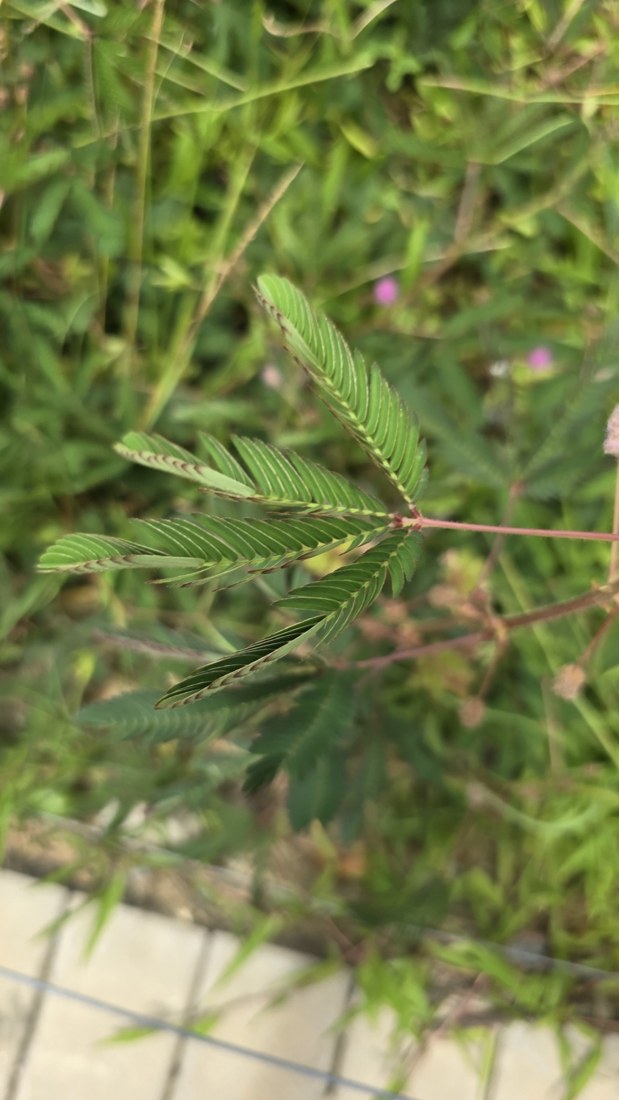
Photograph: Andrii Khokhlov · Original source · Creative Commons license. Resized proportionally.
This small, often sprawling tropical legume folds its leaflets when disturbed. Its movement is a physiological response involving electrical signals, calcium signaling, and water movement in specialized leaf joints; it is not evidence that the plant has animal nerves.
To understand the care of a plant, understand its native climate and environment.
At a glance
Field | Information |
|---|---|
U.S. native | No in the 50 states; native in Puerto Rico, a U.S. territory, according to Kew. Florida and Hawaii occurrences are introduced. |
Tippecanoe County native | No; tropical American origin. |
Invasive status | An invasive weed in several tropical regions. Contain seeds and plant waste. |
Self-seeding | Yes, where viable seed reaches favorable warm conditions. |
Edibility | No food use recommended; plant parts contain mimosine. |
Cautions | Prickles can injure skin. Keep away from children and pets; do not use it as a home remedy. |
Identification and light
Look for finely divided leaves, prickly stems, and pink spherical flower heads. Give bright light; this is not a deep-shade plant.
Standard potting mix
Use Standard Tropical Foliage Mix: 1 part generic potting soil and 1 part coarse perlite by volume. No added bark or coir. Blend evenly without compression, lightly premoisten dusty ingredients, and use a small container with a drainage hole. Do not add a gravel layer. This is the project’s container recipe, not a description of native mineral soil.
Water, temperature, and feeding
Keep warm and frost-free. Check the root zone before watering; avoid both complete prolonged drying and standing water. Apply a complete fertilizer only at the product’s labeled rate during active growth. If a plant is declining, correct its conditions before feeding.
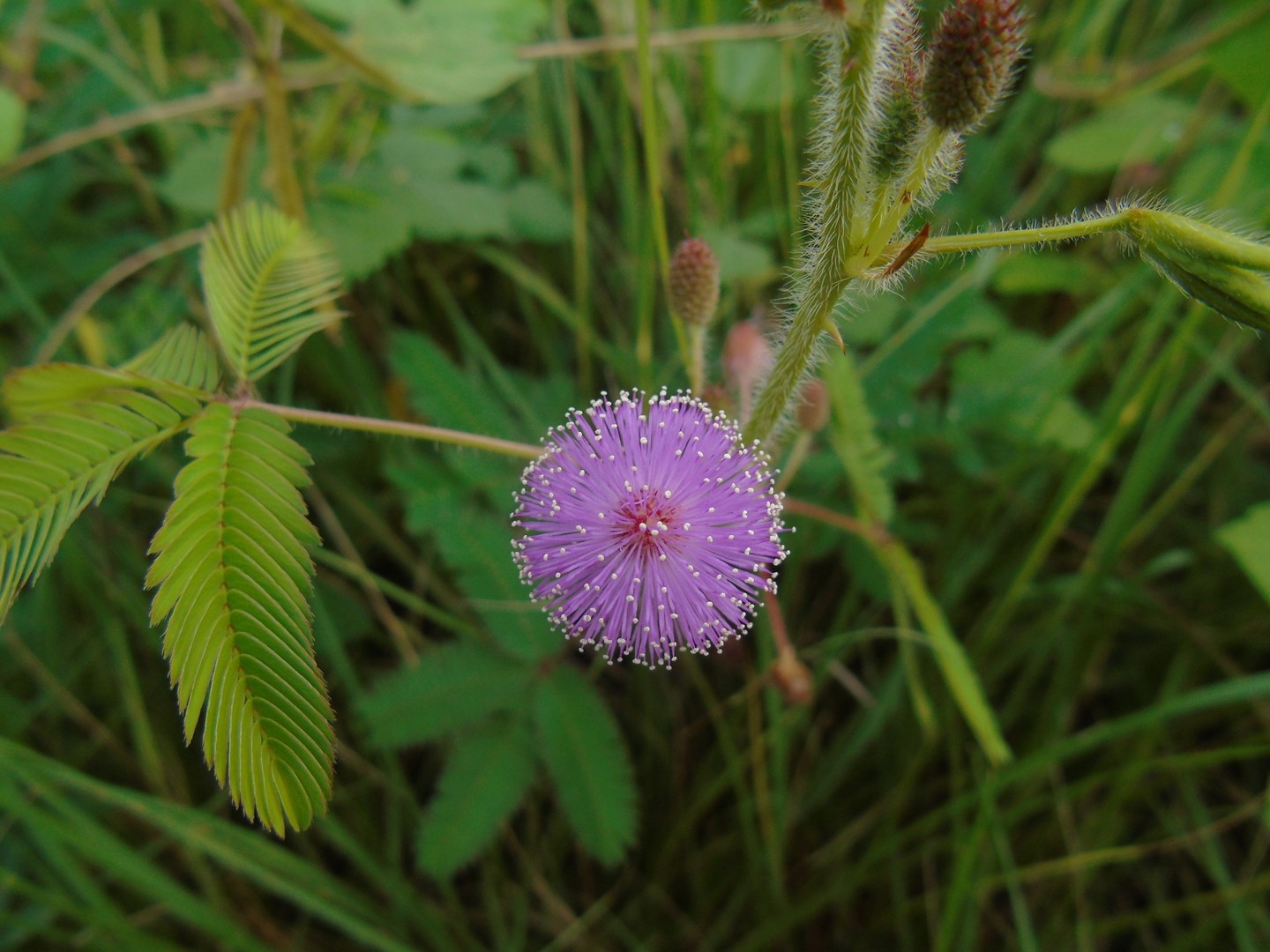
Photograph: Gabriel Jovêncio Ribeiro · Original source · Creative Commons license. Resized proportionally.
Flowering and propagation
Pink flower heads can produce bristly pods that cling to clothing or animals. Propagate from seed in a warm, clean, freely draining medium. Follow the seed supplier’s pretreatment instructions; do not improvise boiling-water treatment. Remove pods before seed dispersal when containment matters.
Watch germination
Watch Mimosa pudica progress from seed and sprout to leafy growth and flowers. The film lasts about 3 minutes 52 seconds.
Watch the germination time-lapse
Growing Sensitive Shame Plant Time Lapse (Seed to Flower in 120 Days)
Creator: eLapse. Link checked 2026-09-21.
The title describes a 120-day growth sequence, not a 120-day germination period. Filming conditions affect growth; a time-lapse alone does not establish whether light is required for germination.
Grooming and observation
Trim damaged growth using gloves and clean tools. Observe one gentle touch, then allow the plant to reopen; repeatedly triggering closure reduces time with leaves exposed to light. Record watering and light changes when troubleshooting rather than using leaf closure alone as a moisture meter.
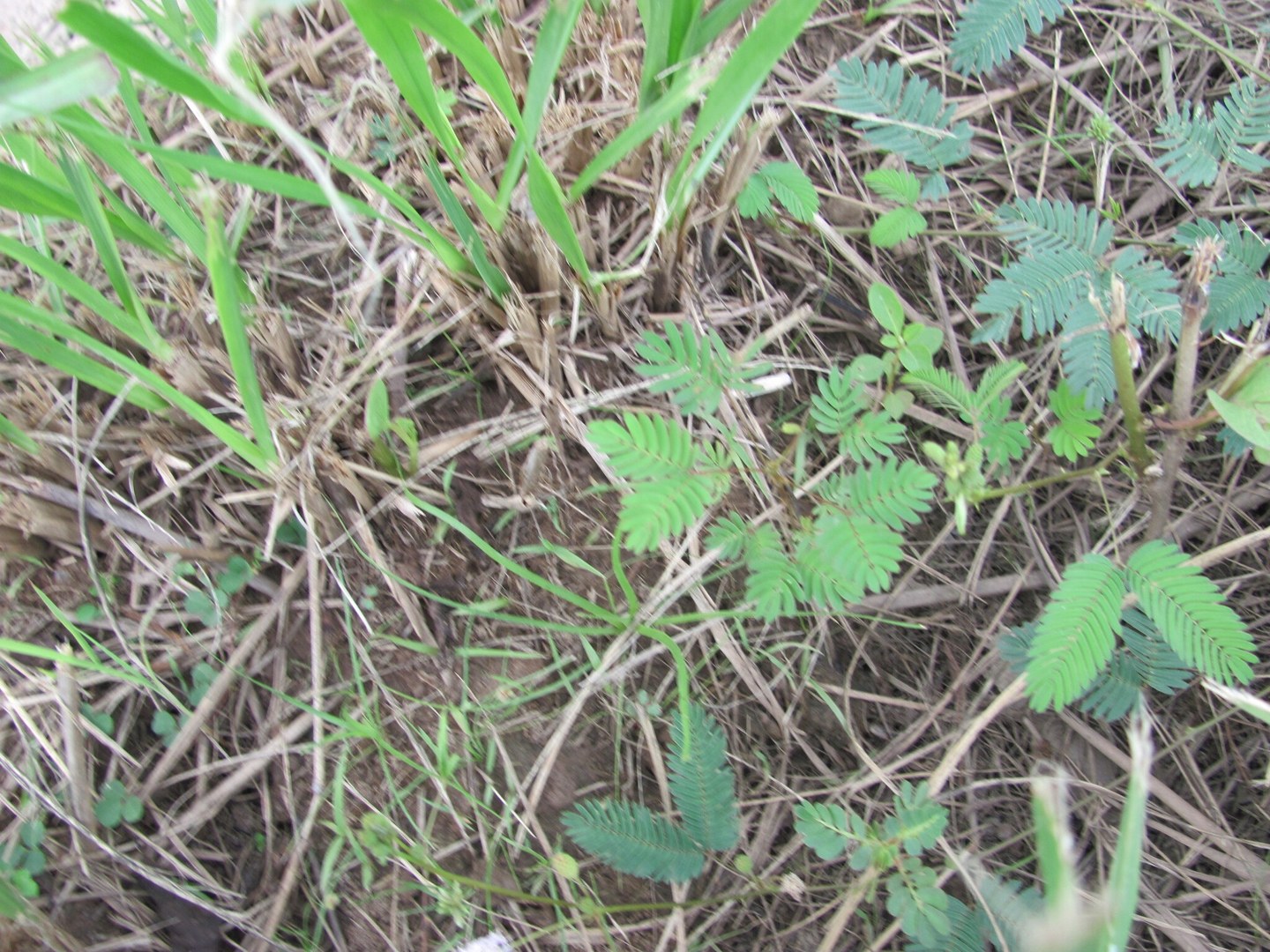
Photograph: zebedeugalinha · Original source · Creative Commons license. Resized proportionally.
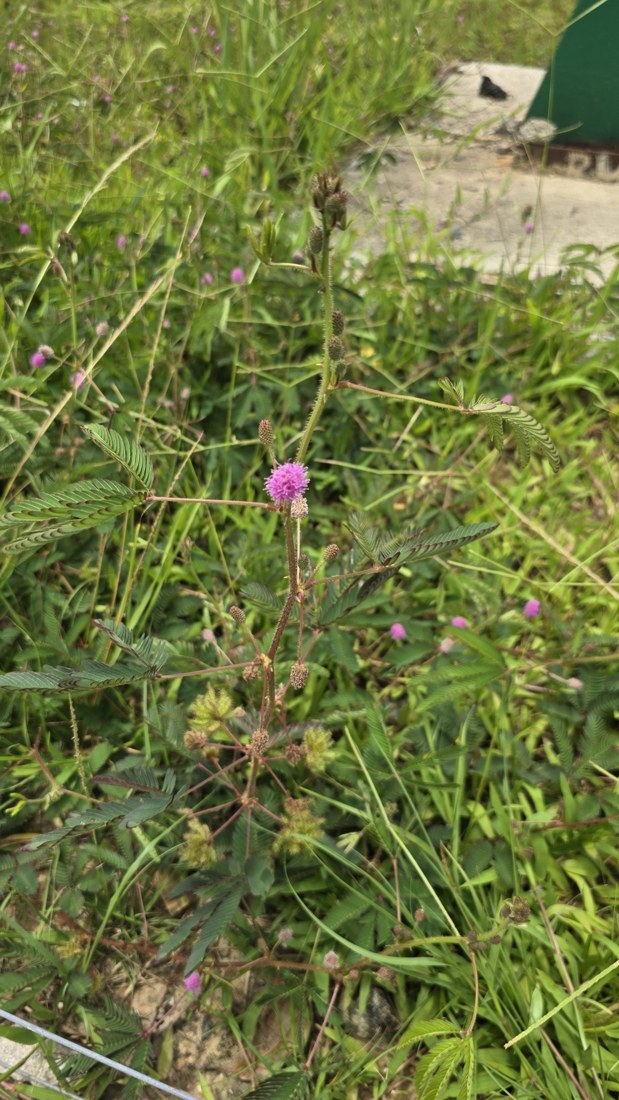
Photograph: Andrii Khokhlov · Original source · Creative Commons license. Resized proportionally.
Environment / native habitat
Native to tropical America and widely introduced elsewhere. It occupies open disturbed sites with adequate moisture and drainage. Frost sensitivity limits outdoor persistence in cold climates. Its invasive behavior elsewhere warrants containment even when grown as an Indiana houseplant.
Seasonal care
Grow indoors through cold weather or treat as a seasonal container subject. Prevent seeds and potting waste from entering natural areas. A short-lived plant can be replaced from contained seed rather than subjected to increasingly heavy fertilizer.
Sources and further reading
IUCN Global Invasive Species Database — Mimosa pudica
Hagihara et al., 2022 — Calcium-mediated rapid movements defend against herbivorous insects
Kew Plants of the World Online — Mimosa pudica native and introduced range