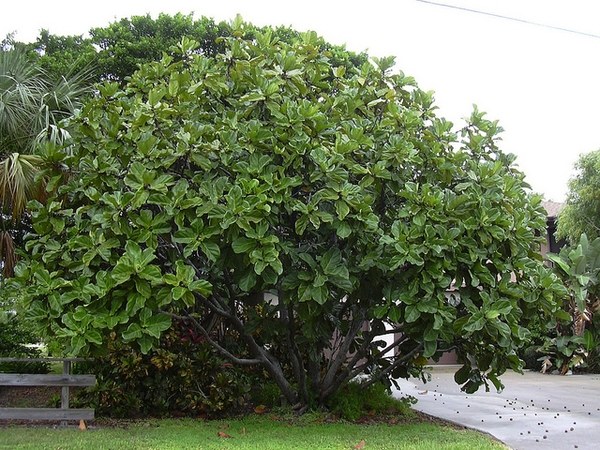
Photograph: Forest and Kim Starr · Original source · CC BY 2.0. Resized proportionally.
A tropical tree recognized by its large, leathery, violin-shaped leaves. Container plants remain much smaller than mature trees in their native range.
To understand the care of a plant, understand its native climate and environment.
At a glance
Field | Information |
|---|---|
U.S. native | No; native to tropical western and central Africa. |
Tippecanoe County native | No; an indoor ornamental in Indiana. |
Invasive status | Local invasive status not established by this sheet; frost prevents normal outdoor overwintering. |
Self-seeding | Limited; normal indoor plants do not set viable seed. |
Edibility | Not a food fig; do not eat its leaves or fruit. |
Cautions | Milky sap can irritate skin and eyes. Harmful if chewed by pets; wash hands after pruning. |
Light and water
Provide bright indirect light. Water after the upper mix dries, thoroughly wet the root ball, and empty drainage water. Keep away from cold drafts and temperatures below about 55°F (13°C).
Standard potting mix
Use Standard Tropical Foliage Mix: 1 part generic potting soil plus 1 part coarse perlite by volume. No bark or coir is added in this approved version. Moisten dusty ingredients lightly and blend without compression. Use a drainage hole and no gravel layer. Choose a container only modestly larger than the root ball; a large wet volume is harder to manage indoors.
Feeding and grooming
Feed during active growth at the product’s labeled houseplant rate. Pause when growth slows. Wipe dusty leaves with a damp cloth. Use clean tools for pruning and prevent sap contact.
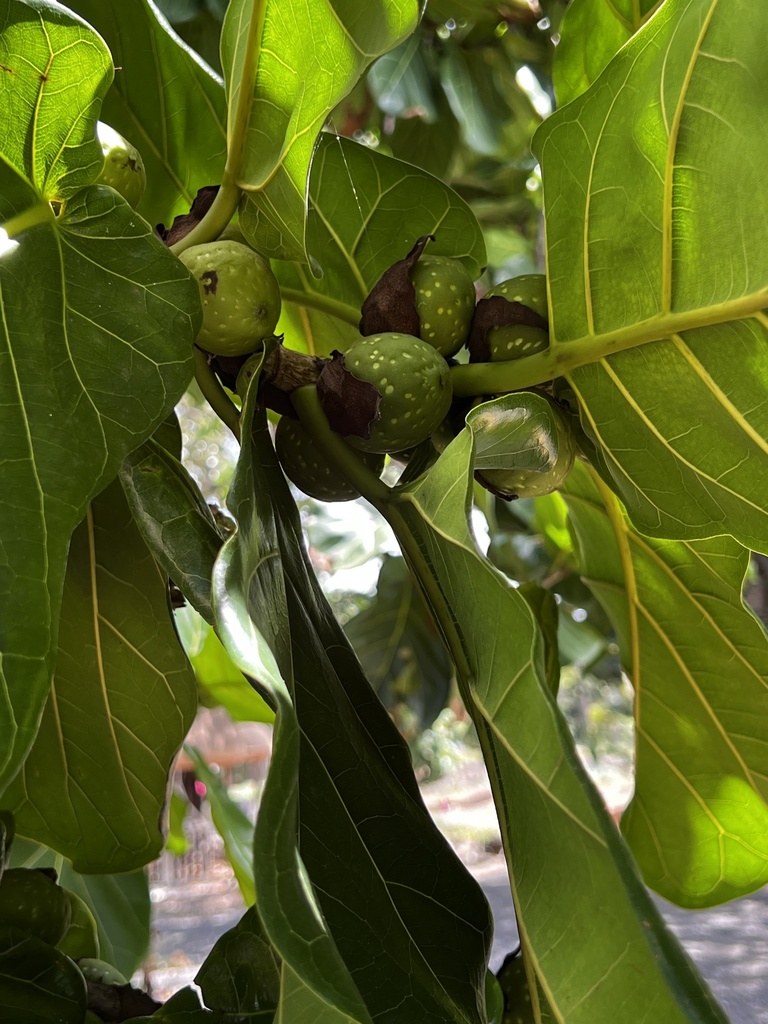
Photograph: Djibo Zanzot · Original source · CC BY-SA. Resized proportionally.
Flowering
Fig flowers are enclosed inside a specialized structure called a syconium. Ordinary indoor plants are grown for foliage, not blooms or fruit; successful seed production depends on the appropriate pollinator.
Propagation
Propagate with healthy stem cuttings. Use clean tools, an airy rooting medium, and gloves to avoid contact with the milky sap.
Environment / native habitat
Its African tropical-forest origin provides a warmer, brighter, more humid setting than many interiors. Translate that into stable warmth, adequate light, and an oxygenated root zone; constant saturation is not a substitute for humidity.
Troubleshooting and seasonal care
Brown spots have several possible causes. Check roots, watering, light, and pest signs before treating. Acclimate gradually if moving outdoors for summer and return inside before cold nights. Avoid repeated relocations during recovery.