

“To understand the care of a plant, understand its native climate and environment.”
Key Point
Its windowed leaves are adapted to sit low in the ground; compactness is normal and desirable.
At-a-Glance Growing Specifications
CARE FACTOR | PRACTICAL GUIDANCE |
|---|---|
Botanical name | Haworthia pygmaea |
Family | Asphodelaceae |
Light | Bright filtered light with a little mild morning sun; avoid sudden hot sun. |
Water | Water in the cool active season after substantial drying; reduce during hot dormancy and cold low-light periods. |
Temperature | 55–80°F; keep frost-free and ventilated. |
Feeding | ¼-strength balanced fertilizer every 6 weeks during active growth. |
Potting mix | General Succulent Standard Mix: 1 part generic potting soil + 1 part granite chicken grit. |
Toxicity | Generally regarded as non-toxic; ornamental use only. |
Native status, spread and safety
Field | Status |
|---|---|
Native to Tippecanoe County, Indiana | No. Native to South Africa. |
Native to the United States | No. |
Invasive status | Local invasive status has not been independently verified. Manage as a frost-tender container plant. |
Self-seeding | Limited; pollination and appropriate seedling conditions are needed. |
Edibility and cautions | Not a food plant. Avoid ingestion and do not substitute for Aloe products. |
Care
- Bright filtered light with a little mild morning sun; avoid sudden hot sun.
- Water in the cool active season after substantial drying; reduce during hot dormancy and cold low-light periods.
- Use a container with an unobstructed drainage hole. Do not add a gravel layer under the mix. Increase only one pot size when repotting.
- Rotate the pot periodically for even growth, inspect leaf axils and roots, and quarantine new plants before adding them to a collection.
Standard Potting Mix
General Succulent Standard Mix: 1 part generic potting soil + 1 part granite chicken grit.
Mix by volume using the same scoop. Premoisten dusty ingredients and keep the blend loose.
Feeding
¼-strength balanced fertilizer every 6 weeks during active growth. Feed only moist, healthy roots. Reduce or stop fertilizer when growth pauses, and occasionally flush the pot with plain water to limit soluble salts.
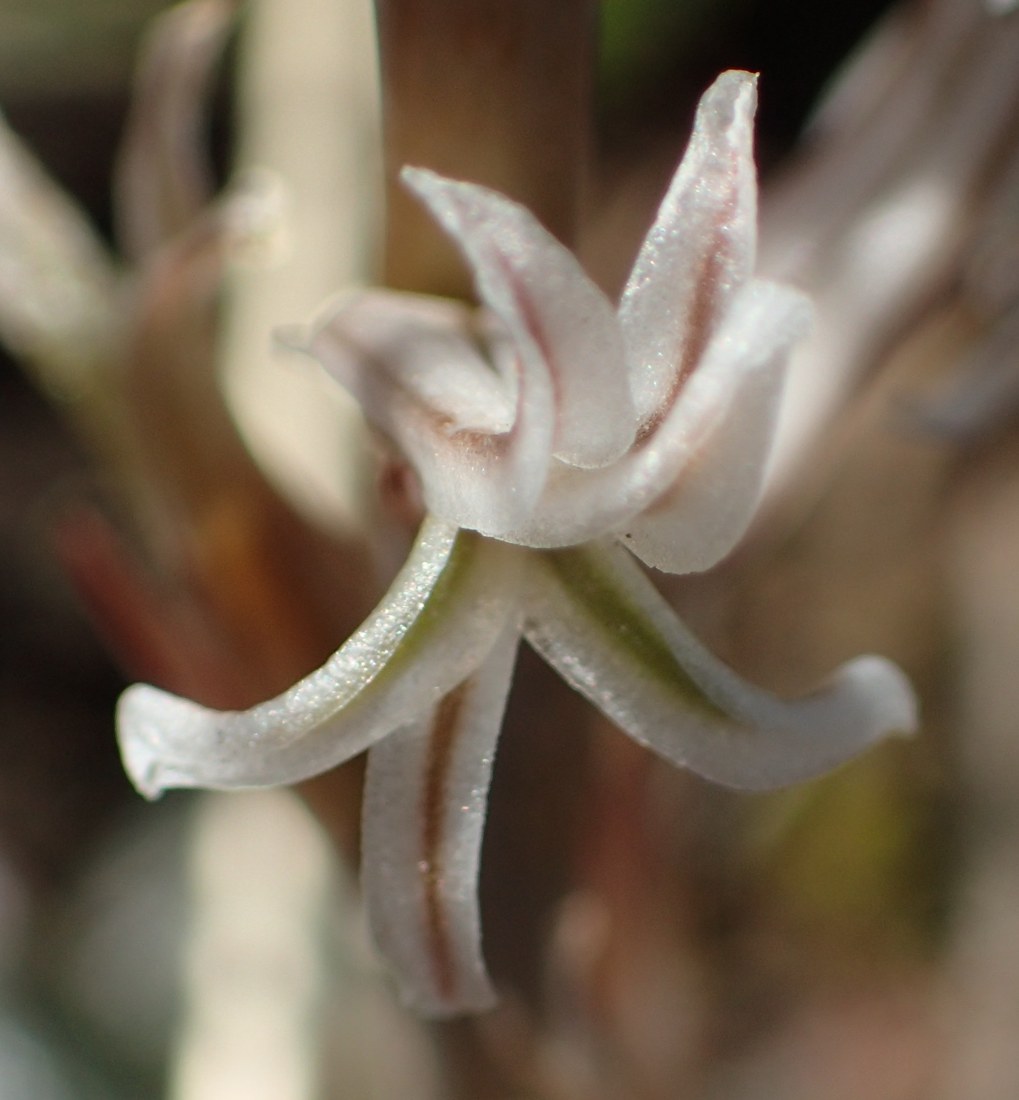
Photograph: Nicola van Berkel · Original source · CC BY-SA 4.0. Resized proportionally.
Flowering
Small pale flowers on a long wiry stalk, usually in the active season.
- Provide the correct light and seasonal rhythm; fertilizer cannot compensate for inadequate light.
- Remove spent flowering structures with clean tools unless seed or wildlife value is desired.
Propagation and Self-Seeding
Offsets when produced, leaf cuttings with basal tissue, or seed.
Self-seeding: Limited; pollination and appropriate seedling conditions are needed.
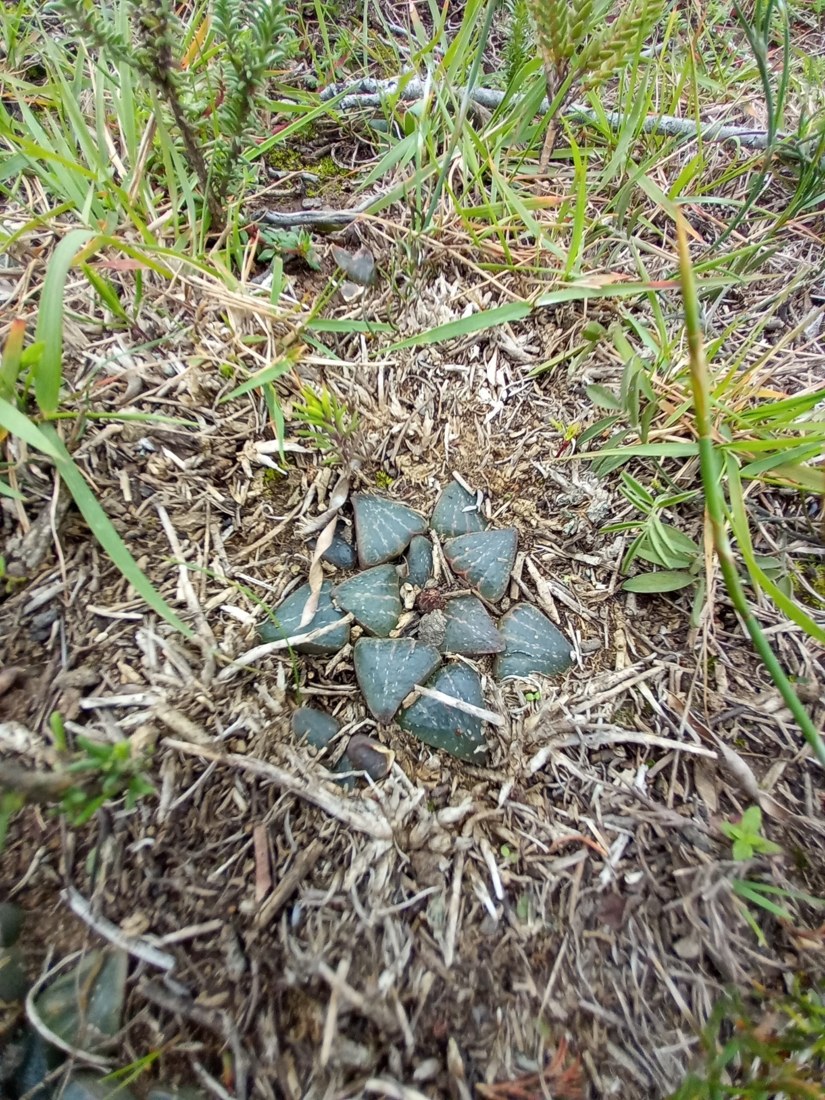
Photograph: Christiaan Viljoen · Original source · CC BY 4.0. Resized proportionally.
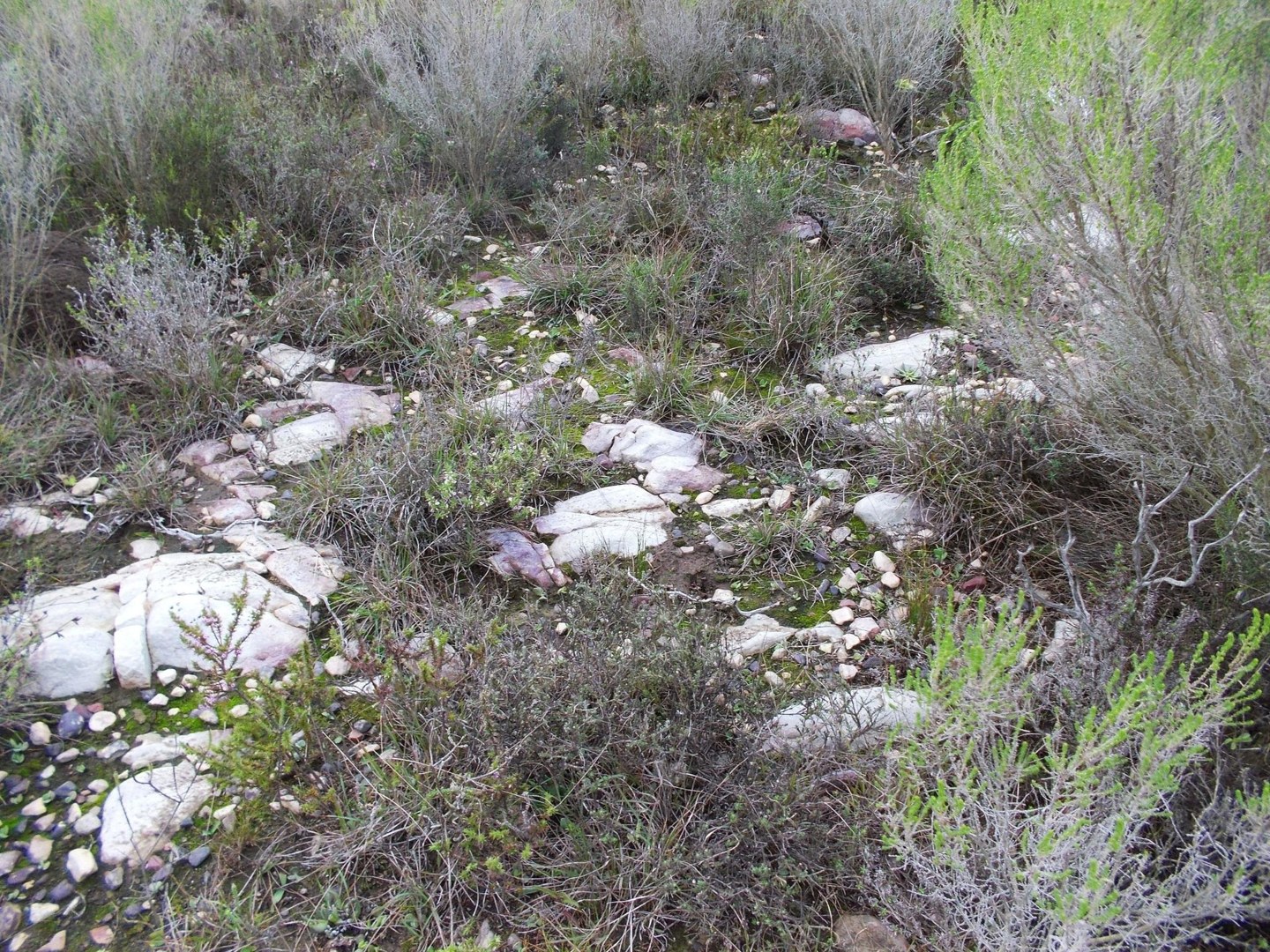
Photograph: Di Turner · Original source · CC0. Resized proportionally.
Environment / Native Habitat
Native to the southern Cape of South Africa, often partly buried in quartz-rich or gravelly ground with seasonal moisture and protection from severe exposure.
Cultivation translation: reproduce the habitat’s drainage, air movement, light pattern, and seasonal change rather than copying only its average temperature.
Troubleshooting
Raised, elongated leaves mean inadequate light. Sunken wrinkled leaves suggest drought or root loss. Mushiness means excess moisture.
CARE FACTOR | PRACTICAL GUIDANCE |
|---|---|
Plant declines after watering | Inspect roots and crown; remove rot, improve aeration, and extend the dry interval. |
Pests | Isolate first. Check for mealybugs, scale, mites, aphids, or fungus gnats; begin with physical removal and the least-toxic labeled control. |
Weak or distorted growth | Recheck light, root health, temperature, and fertilizer before adding more water or feed. |
Quick Reference
CARE FACTOR | PRACTICAL GUIDANCE |
|---|---|
Light | Bright filtered light with a little mild morning sun; avoid sudden hot sun. |
Water | Water in the cool active season after substantial drying; reduce during hot dormancy and cold low-light periods. |
Temperature | 55–80°F; keep frost-free and ventilated. |
Standard mix | General Succulent Standard Mix: 1 part generic potting soil + 1 part granite chicken grit. |
Propagation | Offsets when produced, leaf cuttings with basal tissue, or seed. |
Self-seeding | Limited; pollination and appropriate seedling conditions are needed. |
Reliable References
Bruce Bayer — field observations on the pygmaea complex
NC State Extension — haworthia
- Internal standard: Minimal Standard Potting Mixes and Stock Inventory Information Sheet (2026).
Educational reference. Species, cultivar, climate, container, and household conditions may require adjustment.
The three added photographs are linked to iNaturalist observations 331208660, 231547629 and 10852101, also published through GBIF. All three observation records were research grade and marked wild rather than captive or cultivated when checked on 19 September 2026. The 2013 observer expressed uncertainty about the variety; the species-level habitat caption preserves that limit. These examples do not establish identical conditions for all varieties or species.