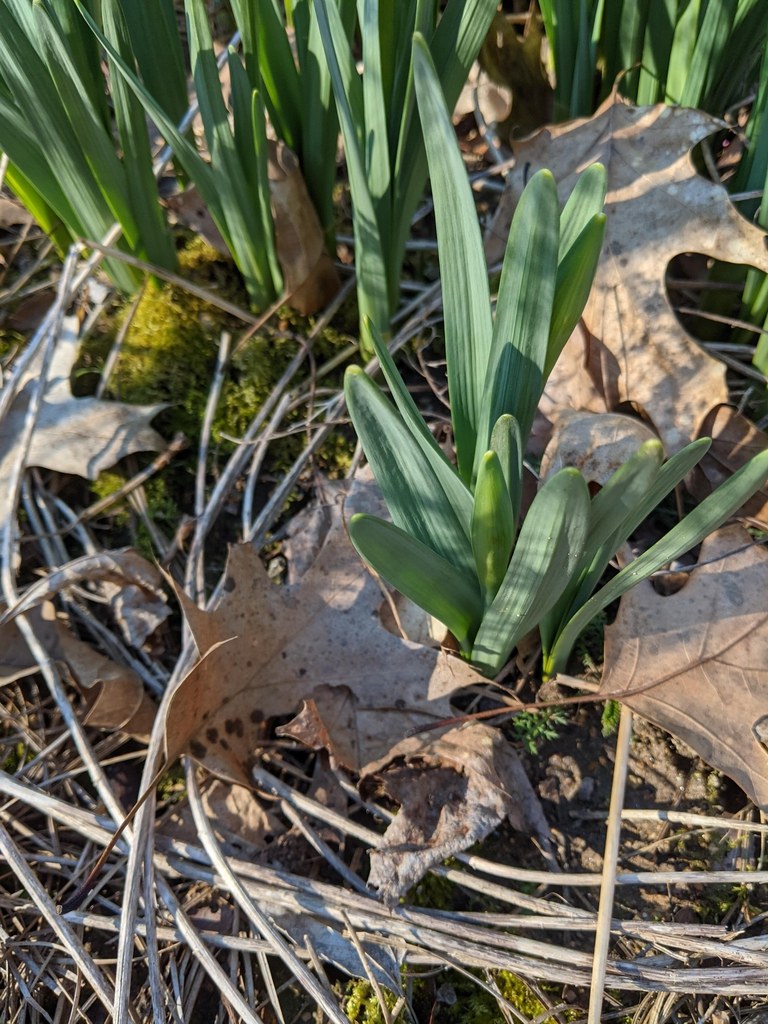
Photograph: Hope Duckworth · Original source · CC BY 4.0. Resized proportionally.
Daffodils are bulbous plants with strap-shaped leaves and a central floral cup or trumpet. This sheet covers hardy garden daffodils; tender paperwhites and individual species can need different winter treatment.
To understand the care of a plant, understand its native climate and environment.
At a glance
Field | Information |
|---|---|
U.S. native | No; garden daffodils derive from Old World Narcissus species. |
Tippecanoe County native | No; planted and sometimes naturalized. |
Invasive status | Persistence and bulb multiplication do not by themselves establish invasive status. Monitor spread near natural areas. |
Self-seeding | Limited; varies with fertility, pollination, and cultivar. Bulb offsets are more predictable. |
Edibility | No; all parts are poisonous, especially bulbs. |
Cautions | Never confuse bulbs with onions or leaves with edible alliums. Sap can irritate skin; use gloves. |
Light and planting
Plant hardy bulbs in fall in well-drained ground with sun or light shade. A general planting guide is a hole about three times the bulb’s height; adjust to the supplier’s species instructions and soil conditions.
Standard container mix
For container growing, use Standard Herb and Vegetable Mix as an inventory-based bulb-growing blend: 2 parts generic potting soil, 1 part compost-rich raised-bed or in-ground soil ingredient, and 1 part coarse perlite by volume. This is a project application of the mix, not a separate approved bulb formula. Mix loosely, use drainage holes, and omit a gravel layer. Protect containers from severe freezing and waterlogging.
Water and feeding
Water during active growth when soil is dry. If feeding is needed, follow a bulb fertilizer’s label while leaves remain green. Let foliage yellow naturally; do not tie, braid, or remove healthy green leaves.
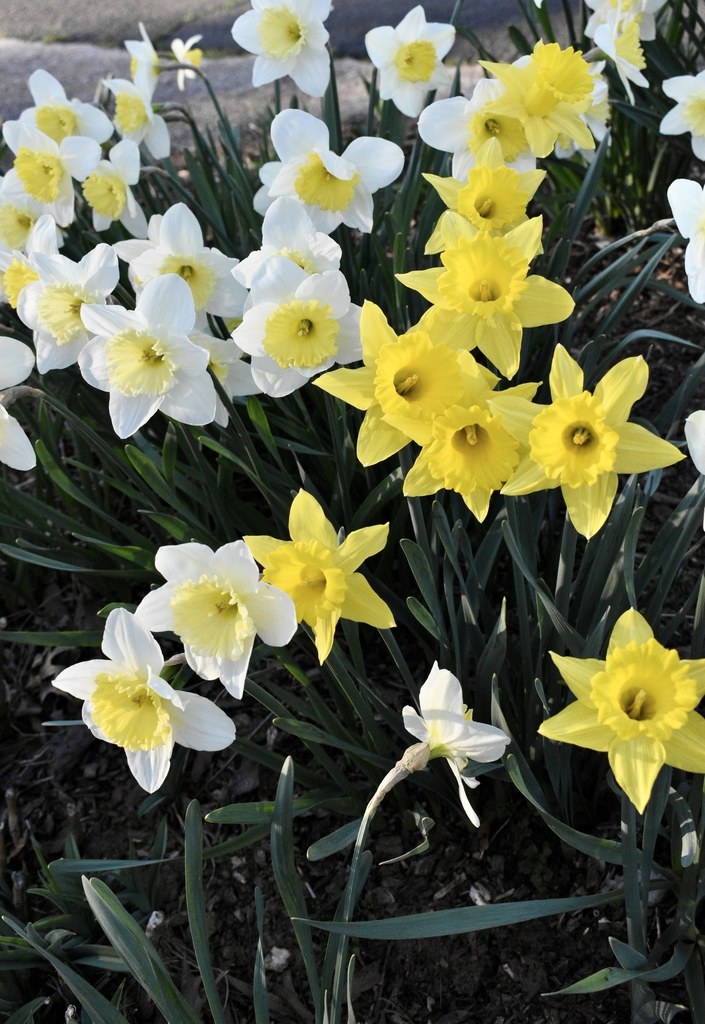
Photograph: Cathy DeWitt · Original source · CC BY 4.0. Resized proportionally.
Flowering
Bloom time ranges from late winter into spring depending on species and cultivar. Remove spent flowers if seed is unwanted, leaving the leaves to rebuild the bulb. Crowding, shade, or premature leaf removal can reduce next year’s flowers.
Propagation and grooming
Divide crowded clumps after flowering as foliage declines. Replant sound offsets at suitable depth. Seed-grown plants are slower and may differ from their parent cultivar.
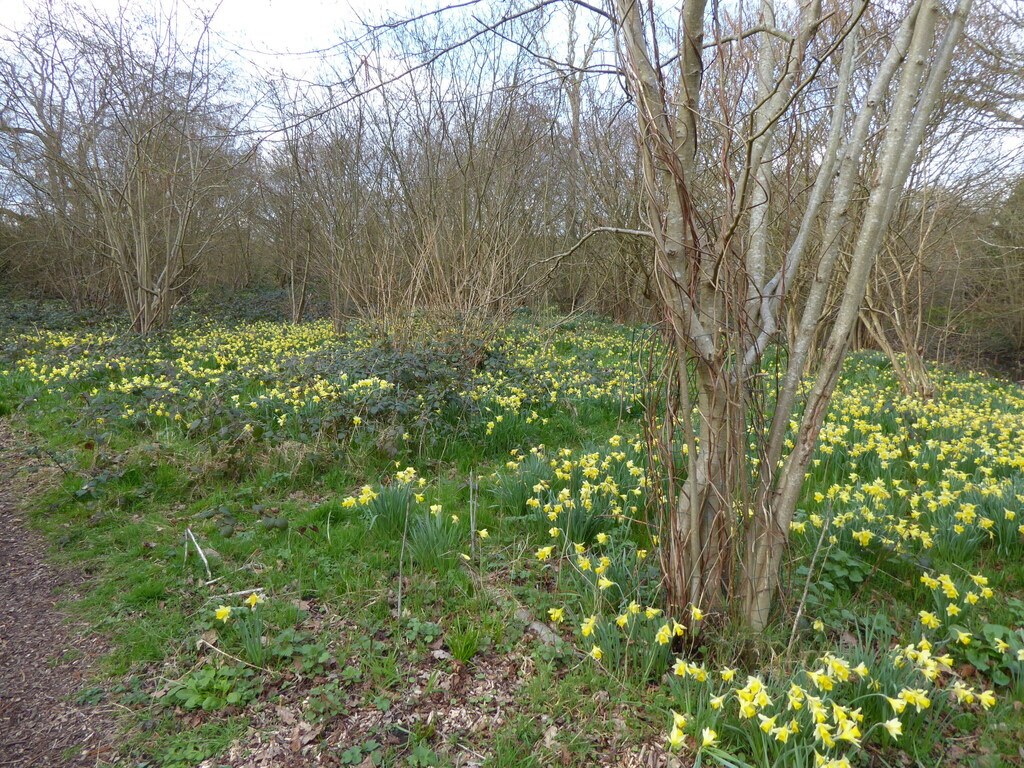
Photograph: jamie-aa · Original source · CC BY. Resized proportionally.
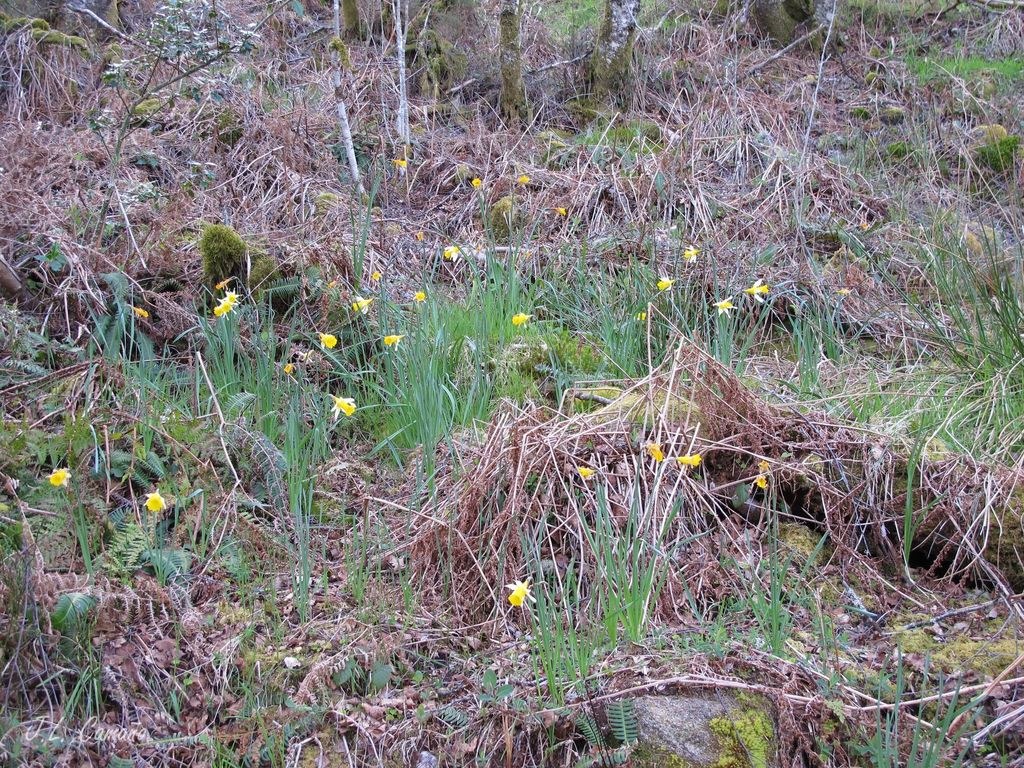
Photograph: José Luis Camaño; CC0. Photo and license · Observation. Resized only. · Original source · CC0. Resized proportionally.
Environment / native habitat
Narcissus species chiefly originate around southern Europe and northern Africa, with different meadow, woodland, and rocky-site niches. Garden hybrids combine that ancestry. Match the exact species or cultivar when evaluating hardiness and summer moisture.
Seasonal care and troubleshooting
Mark dormant clumps before leaves disappear. Check poorly flowering plants for light, crowding, planting depth, and foliage loss. Discard soft, rotting bulbs rather than storing them with healthy material.